metacool

thoughts on the art & science of bringing cool stuff to life, by Diego Rodriguez

metacool Thought of the Day

"Prototyping is valuable, and you can prototype almost anything today and make it look real. Once you've prototyped your idea, you don't have to persuade people to like it -- they can judge it themselves."
- Seth Godin

18 April 2006 | Permalink | TrackBack (0)

| |

Hat in the Creek

I'm normally not one to kiss and tell, but yesterday's session of Creating Infectious Action really knocked my hat into the creek.  It's a cliche for a teacher to say that they learn from the process of teaching their class, but with this one it's really true.  The intellectual ferment in the room was palpable.

Bob Sutton and I like to say that we're running the class "Letterman Style", which means that we're there with a monologue (dialog?) at the start and end of the show, and between those two points it's all about guests from industry, our illustrious panel of team coaches, and the students.

Leading off was Professor Chip Heath from Stanford, who told us a scintillating story about how to design ideas that stick.  Then we had the incredible opportunity to hear Asa Dotzler and John Lilly from Mozilla tell us the story of how they spread Firefox.  We're all figuring out this creating infectious action thing together, and I hope you'll see the evolution of that idea here and in other places around the web.

14 April 2006 | Permalink | Comments (0) | TrackBack (0)

| |

More Open Source Marketing

A big part of future marketing efforts will be accomplished using an open-source approach.

See the future today at Firefox Flicks.

12 April 2006 | Permalink | Comments (1) | TrackBack (0)

| |

Unabashed Gearhead Gnarlyness

David E. Davis, Jr. is back in the saddle again:  Winding Road

Download the free issue, read his column, watch his video.  It's not about the cars -- when it comes to telling compelling stories about rich experiences, DED, Jr. is the master.

11 April 2006 | Permalink | Comments (0) | TrackBack (0)

| |

TimeZone

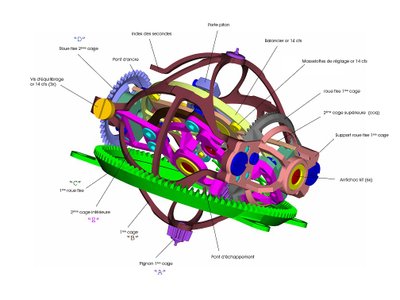
Gyro13med

Ready for something truly spectacular?:  TimeZone on the Jaeger-LeCoultre Gyrotourbillon

It's like Bespoke for mechanical engineering and design.  It's also a revealing look at the mindset it takes to really do things to the hilt.  This is another great example of what I call Director's Commentary for design thinkers, and we need more of it.

Many thanks to Scott for showing me this.
10 April 2006 | Permalink | TrackBack (0)

| |

Creating Infectious Action

Photo_home

The class I'm teaching at the Stanford d.school starts today: 

Creating Infectious Action

06 April 2006 | Permalink | Comments (3) | TrackBack (1)

| |

My second self-indulgent post of the day

metacool turned two earlier this week.  What started as a way to really understand how ideas diffuse across the Web morphed into a place to play (seriously play) with ideas about design and innovation and marketing (which, if done right, are all one and the same) and meet a lot of cool people (no assholes allowed).  Thanks for all the fun and insights, so let's keep on keepin' on.

05 April 2006 | Permalink | Comments (0) | TrackBack (0)

| |

Internet Fasting

I went cold-turkey on Internet connectivity over the past few weeks, not because I had to get stuff done, but because I had to not get stuff done.  It was good not to be so connected. 

I remember reading a quote somewhere from the great Italian designer Ettore Sottsass that went something like "The problem with computers is that people will stop painting with water colors." 

I love the Internet because of its seemingly infinite potential for engendering connectedness and depth of thought and meaning.  But I suspect that there's a curve of sorts at work here, and as one travels across that curve things start to trend toward the shallow and the trite. 

05 April 2006 | Permalink | Comments (2) | TrackBack (1)

| |

More learning from the New Golf

Continuing the "World of Warcraft is a great place to learn about the future of work" idea thread that I've been exploring here and here, John Seely Brown and Douglas Thomas have written tasty little article in Wired called You Play World of Warcraft?  You're Hired!.  Here's an excerpt:

It's learning to be - a natural byproduct of adjusting to a new culture - as opposed to learning about. Where traditional learning is based on the execution of carefully graded challenges, accidental learning relies on failure. Virtual environments are safe platforms for trial and error. The chance of failure is high, but the cost is low and the lessons learned are immediate.

Want to live a more innovative existence?  Continue to push yourself to be a more proficient design thinker?  Well -- where are you living an experiment that exposes you to new modes of being, new ways of thinking, new behaviors and people?

23 March 2006 | Permalink | TrackBack (0)

| |

Authenticity

Seth nails it:  Tom Chappell sells out

22 March 2006 | Permalink | TrackBack (0)

| |

Tribal marketing at Desmoblog

2632242_268f7a6faa_o

The gonzo motorcycle masters at Ducati -- quite possibly the stewards of the world's greatest brand -- have started blogging, and it just makes perfect sense from every angle.  Ducati goes to market using something called "tribal marketing", which is shorthand for applying the majority of their marketing spend not on silly pieces of advertising in order to lure in people who come from an unfriendly world view, but on things and activities which amplify the natural world-of-mouth tendencies of the tribe of desmo, the Ducatisti.  It works.

Federico Minoli is a dream blogger for a passion-driven company like Ducati.  He is to Ducati as Bob Lutz is to GM (and you know that Lutz is the heart and soul of GM's Fastlane blog), except that, unlike Lutz, Minoli's setup at Ducati also gives him the power to call the shots that bring to market the essential product goodness which he knows so well.  They're both great marketing and product minds, and it's a delight to live in a time where it's so easy to hear them thinking out loud.

Blogging is an essential part of the modern marketing mix.  B2C, B2B -- I think it's critical to both.  If your marketing site doesn't have some sort of RSS feed, fire your CMO.  Or at least accelerate their firing process.

And.... so as not end on a down note... Forza Ducati!

photo via Flickr

21 March 2006 | Permalink | TrackBack (1)

| |

Learning from Joi Ito

Thenewgolf

As Tom Kelley said a few weeks ago in the  NYT, "One thing I've learned is that it is important to surround yourself with the kind of people you aspire to be."  The cool part about the web is that you don't necessarily have to hang out physically with the kind of people you aspire to be in order to get the desired effect. 

I believe wholeheartedly in Tom's assertion, and that's why I spend time hanging out online with Joi Ito.  I read his blog.  We chat.  We quest together.  As William Gibson once wrote, the "...future is already here - it's just unevenly distributed."  I'd say the same, with the modifier of "... it's just unevenly distributed, so save yourself some time and check out whatever new thing Joi is up to."

To wit:

  • Buying virtual property in order to support "real world" non-profits: Buying an island on Second Life
  • Expanding on the "New Golf" meme we've been spreading about World of Warcraft as a way to model new approaches to creative work:  Leadership in World of Warcraft

What Joi does really well is to learn by doing.  He doesn't sit around and pontificate about the future of being online. He lives it.  There's no difference between knowing and doing in his world.

20 March 2006 | Permalink | Comments (1) | TrackBack (0)

| |

Unabashed Gearhead Gnarlyness

Lanciafulvia15

The Lancia Fulvia

photo courtesy of www.pidocchio.ne

15 March 2006 | Permalink | TrackBack (1)

| |

What I would be doing if I were in Pasadena March 23

Radical Craft

14 March 2006 | Permalink | TrackBack (0)

| |

Constraints

Two weeks ago I posted a quote from architect Joshua Prince-Ramus concerning the role of constraints in the process of design, and their relation to the  end goal of creating innovative, highly appropriate solutions. 

In response, my friend Scott emailed me this cool bit about Charles Eames talking about constraints in the design process (I turned off the comments feature on this blog due to the volume of inappropriate, abusive, and just plain dumb content being left behind.  The upside is that I'm getting some thoughtful emails.  Change is good).  Here's the Eames bit from Scott:

I liked Charles Eames's piece "Design Q&A" so much I found a text
version somewhere and kept it. This part is perhaps the best:

Q. Does the creation of design admit constraint?

A. Design depends largely on constraints.

Q. What constraints?

A. The sum of all constraints. Here is one of the few effective keys to the design problem-the ability of the designer to recognize as many of the constraints as possible-his willingness and enthusiasm for working within these constraints-the constraints of price, of size, of strength, balance, of surface, of time, etc.; each problem has its own peculiar list.

Q. Does design obey laws?

A. Aren't constraints enough?

13 March 2006 | Permalink | TrackBack (0)

| |

Stanford Student?

Sign up for Creating Infectious Action
Img_home

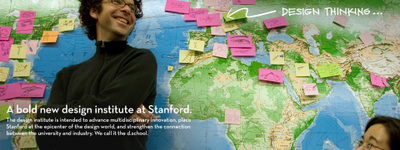
If you are a graduate student with masters standing at Stanford, you should think about signing up for Creating Infectious Action, a course to be taught by Bob Sutton and yours truly at the Stanford d.school starting in April.  We'll use design thinking to explore how to turn ideas into more than action -- into infectious action!

There's an application involved, of course:

Creating Infectious Action Application 

Not everyone who signs up will be accepted, but it's worth a try.  Why not be one of The 24?

Please follow the directions in the application, particularly when it comes to turning the application in.  If you email it to me instead of to the appropriate destination, it will get lost in the ether and you and I will be severely bummed.

09 March 2006 | Permalink | TrackBack (0)

| |

Zen, The Don, and the PRO

Package_2

Talk about viral -- if you have an Internet connection and you haven't yet seen the Microsoft I-pod PRO 2005 XP spoof video, then you're probably living on Mars (do they have broadband there?).

Garr Reynolds, whose blog Presentation Zen is one of my favorites, put together this brilliant post linking Donald Norman's idea of visceral design with the I-pod PRO 2005 to give us a great lesson in visual design.

08 March 2006 | Permalink | TrackBack (0)

| |

Quality

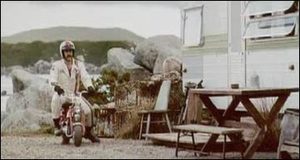
I just ran across a website containing photos of a 1968 trip which became the subject of Robert Pirsig's book Zen and the Art of Motorcycle Maintenance:

Aar

What a memory jogger.  I first read the book as part of a class I took at Stanford with the great teacher and design thinker Jim Adams.  It was a mechanical engineering class called, quite simply, "Quality".  No six sigma here, no sir.  Instead, we looked at old tractors, Japanese flutes, wrenches... and generally spent a lot of time getting a visceral feel for quality.  The two textbooks for the course really shaped my few of the world as a design thinker, and continue to do so.  The first was the formidable work The Nature and Art of Workmanship, by David Pye, the other Pirsig's book.

If you haven't read Zen, I highly recommend it.  It's a deep, chewy book, full of meditations on what makes good stuff, and what it means to live with good stuff and what it takes to keep good stuff being good stuff.  Here's a representative passage:

Each machine has its own, unique personality which probably could be defined as the intuitive sum total of everything you know and feel about it. This personality constantly changes, usually for the worse, but sometimes surprisingly for the better, and it is this personality that is the real object of motorcycle maintenance. The new ones start out as good-looking strangers and, depending on how they are treated, degenerate rapidly into bad-acting grouches or even cripples, or else turn into healthy, good-natured, long-lasting friends.

Quality is one of those intangibles which is really difficult -- maybe even pointless -- to articulate verbally, but which is essential to be able to feel and recognize and act upon.

07 March 2006 | Permalink | TrackBack (0)

| |

Happiness helps you innovate

Here's my latest column for BusinessWeek Online.  On happiness.

How does that saying go?  If you look like your column photo, you're too ill to write?

06 March 2006 | Permalink | Comments (2) | TrackBack (1)

| |

Open Innovation on Google Video

Not many speakers yet, but those that are there are notable; this could get interesting.  Relative to the traditional model of conferences and speakers, this is certainly a disruptive approach.

05 March 2006 | Permalink | TrackBack (0)

| |

On Tangible Brand Mantras, part 2

Hondadreams

A while back I wrote about BMW's initiative to build a "new" 1972 2002tii, a tangible brand mantra, from original parts.  This is a very pure form of brand building which comes from a position of strength: if you got it, it ain't braggin'.  Flaunt it.

Honda has it, too.  That's why this stunning commercial, called Impossible Dream, is in fact an exercise in tangible brand mantras.  They're simply reminding us of all their soulful technical achievements. Here's more about the making of the commercial.  Turn up the volume, and smile.

01 March 2006 | Permalink | TrackBack (2)

| |

He's blogging

gladwell.com

28 February 2006 | Permalink | TrackBack (0)

| |

metacool Thought of the Day

14873425_61748750a3_b

'We're seeing constraints as opportunities. It's not like we're getting around the constraints. We're saying, "The project's just the constraints." If we can solve the constraints, that's where the form will come, that's where the beauty will come, that's where the logic will come. And more likely than not, you can get it built, you can get it financed, you can get it on budget.'
- Joshua Prince-Ramus

photo via flickr

26 February 2006 | Permalink | TrackBack (0)

| |

Google Page Rank = 7

The Google PageRank for metacool just flipped up to 7.  Good.

I don't blog in search of ever-increasing numbers of readers.  Far from it.  I care much more about quality conversations, quality ideas, and quality insights.  But, one of the original reasons I started blogging was to get to know -- know by doing --  how  ideas diffuse across the web.  Creating infectious ideas is a fascinating topic, you know?

Reaching seven makes me happy because now I can add another data point to the diffusion curve, and that's the interesting part.  That's all.  Thanks.

feb 27 update: well, it dropped down to 6 today.   Hmmmm... a dynamic metric?  Interesting.

feb 28 update: back up to 7 today. 

25 February 2006 | Permalink | Comments (12) | TrackBack (1)

| |

Cool stuff at TED 2006

Bruno Giussani is doing an incredible job of blogging the TED conference in Monterey.

So far, I've found the presentations by Hans Rosling, Bill Joy, Al Gore, Neil Gershenfeld, Mena Trott, Richard Baraniuk, and Peter Gabriel to be more or less mind blowing.

Plus, as he did at Davos, Loic Le Meur is recording podcasts, including this one of Al Gore's TED presentation.

Feb 26 update: Loic removed the Gore speech podcast, as it wasn't in keeping with TED conference norms.  But you'll be able to see and hear an even more compelling version when the movie comes out in May. )

23 February 2006 | Permalink | Comments (2) | TrackBack (0)

| |

The Director's Commentary

32258474_0745e951b0_o

I really enjoy listening to the director's commentary track on a movie DVD.  How else could I confirm my suspicion that the closing credits of The Life Aquatic with Steve Zissou are an homage to the way the credits were presented in Buckaroo Banzai?  What excites me about the director's commentary is the idea of future filmakers learning their craft not just at film school or via personal experimentation, but with the digital equivalent of an oral storytelling tradition.

Wouldn't it be great if, in a similar fashion, we could hear and see great designers talking about their craft?  When I was a practicing engineer designing tangible things, there were tens, even hundreds of details embedded in my designs which I knew about, maybe the rest of my team knew about, but which were essentially invisible to the world at large.  Which is fine; it isn't the job of end users to be thinking about the kinds of details and decisions that interest a professional design thinker.  But for students in training, and for other professionals, what better way to truly appreciate the enormity of the task of design than to take a walkthrough around a real design with another real, living designer?

Before we move on, let me explain my irrational -- perhaps even unhealthy -- interest in the Honda Ridgeline.  Unique among pickups in that it was designed using a human-centric design process, the Ridgeline is an incredible piece of design and engineering.  Sure, the aesthetics are a bit jolie-laide, but they're the result of Honda designers thinking and acting much like designers from the Citroen of old, always pushing limits technical and aesthetic -- to the limit.   For 90% of pickup buyers, this design just works better.  It's really, really cool, and that coolness is the sum total of thousands of clever, human-centric design decisions, most of them invisible.

How do I know?  Thanks to a director's commentary.  Here are some "director's commentary" videos with Gary Flint, the leader of the Ridgeline design team, walking us around the final offering.  Even if you don't find cars exciting, take a listen to the first, upper left video -- you'll be amazed by the attention to detail and deep thinking that went into the design of the cargo area.  Amazing.

photo via Flickr

22 February 2006 | Permalink | Comments (3) | TrackBack (2)

| |

What I would be doing if I were in NYC next week

Design_20_box

I'm curious to know what the 2.0 part is all about (surely the rev number is closer to 9.0 by now?), and the topic and crew will definitely be interesting.  link

20 February 2006 | Permalink | Comments (2) | TrackBack (0)

| |

metacool Word of the week

Apophenia

definition (from Wikipedia):

The experience of seeing patterns or connections in random or meaningless data... defined it as the "unmotivated seeing of connections" accompanied by a "specific experience of an abnormal meaningfulness".

... originally described this phenomenon in relation to the distortion of reality present in psychosis, but it has become more widely used to describe this tendency in healthy individuals without necessarily implying the presence of neurological or mental illness.

If we can downplay the association with psychotic behavior, and also make it more about dealing with meaningful data, then apophenia is a pretty cool word to describe what I consider a critical aspect of design thinking.  Making connections between seemingly disparate things or ideas is a key step toward creating breakthough innovations.  And, as we discussed earlier on metacool, it's how the brain works (if we let it).

From the point of view of creating innovative organizations, one really needs to consider how the identification, care, and feeding of apopheniacs will be carried out.  Who are these people?  What makes them click?  What makes them thrive?  What keeps them from apopheniacking?

Thanks to Bob Giampietro, a truly innovative thinker and doer, for introducing me to this term. 

19 February 2006 | Permalink | Comments (3) | TrackBack (1)

| |

Let's Create Infectious Action

Nickel_tailings_34

From the Worldchanging website:

"We have a choice to make. We can build a future of green products and industry, renewable energy and leapfrogging technologies, clean water and fresh air, livable cities and healthy children. Or we can have the kind of world Ed Burtynsky shows us."

See a quick video of Ed Burtynsky's powerful images

As of late, metacool is seen by about 3,000 4,000 people a day.  Can you help me create infectious action?  Could we double that number?  Tell a friend, and a friend of a friend, about the Ed Burtynsky video, and then ask them to do something about it.

17 February 2006 | Permalink | Comments (0) | TrackBack (0)

| |

More d.schooling

A few posts back I mentioned a flashmob created by students at the Stanford d.school.  Here's another article about the class behind that event.  Some of my favorite soundbites:

"Design thinking is a different way of thinking," said Alex Kazaks, a member of the course's teaching team. "There are all different kinds of intelligences, and one of these is creative intelligence. Design thinking is an analog for that. This is not something usually taught in a university setting, and we're trying to make it available to students."

"In the GSB, we look at case studies and analyze and talk," said Management Science and Engineering Prof. Bob Sutton, a founding member of the d.school. "The whole d.school is based on doing stuff in interdisciplinary teams."

"This is a class for students interested in leading teams and leading innovation within teams," said teaching team member Perry Klebahn.

"We had to spend eight hours making changes that are meant to increase bike safety on campus, and we had to actually do something, not just plan it," said second-year GSB student Max Pulido London - one of the group that staged the White Plaza bike accident.

08 February 2006 | Permalink | Comments (0) | TrackBack (0)

| |

My obligatory Super Bowl marketing post

The best piece of Super Bowl marketing today won't be found on a TV. 

In terms of keeping it real, delivering something unique and remarkable, and just plain being interesting, nothing can hold a candle to Ben Roethlisberger's blog.

Marketing can be, could be, should be, a mouthpiece for The Truth.  It's very hard for a synthetic piece of advertising to live up to that ideal.  Sure, Rothlisberger's blog isn't something every player could produce, but it's a worthy standard of measure.   If you're a fan of the Pittsburgh Steelers, do you feel more soulfully connected to the brand if you read this or this? The answer is clearly the latter.  Why?  Because RSS combined with authentic, human content signals a new paradigm of marketing communications.   

05 February 2006 | Permalink | Comments (0) | TrackBack (0)

| |

Unabashed Gearhead Gnarlyness

Thermodynamics 101, brought to you by the warmup sequence of a Formula 1 motor.

If you "get" why I find this compelling, then... well, you're probably a gearhead!

If you don't understand the attraction of a V-10 motor spinning up to 18,000 RPM while shrieking loud enough to make ears bleed, then consider this a good example of our irrational fascination with technological aesthetics (where "our" means the human species).  We just love this stuff.  It just manifests itself in different ways.  If you're proud of your Prius, you're expressing something irrational, because the Prius is certainly not about an economically justifiable technology choice, no more than a Formula 1 car is. 

In the end, it's worth going back to Norman's Visceral-Behavioral-Reflective model of cognition.  This video is all about the power of the visceral.  It's absolutely, postively worth designing for, no matter if you're working on a financial website or a F1 car.

this video footage via Google Video

01 February 2006 | Permalink | Comments (35) | TrackBack (6)

| |

Designing Flashmobs at Stanford

Students from the Stanford d.school catalyzed a Flashmob yesterday.  They had an assignment to design a manifestation of positive infectious behavior, and this is one result.  Not a typical design assignment, but we're not running your average design school, either.

By the way, this Spring I'll be co-teaching an entire d.school course titled Creating Positive Infectious Behavior with Bob Sutton.

Who knows what cool stuff will come out of it!

31 January 2006 | Permalink | Comments (2) | TrackBack (0)

| |

Design Thinking at Davos

Bruce Nussbaum obviously had a great time at Davos, and this post sums it all up quite nicely.

It's a good time to be doing design thinking.

30 January 2006 | Permalink | Comments (0) | TrackBack (0)

| |

metacool Thought of the Day

"One thing I've learned is that it is important to surround yourself with the kind of people you aspire to be. If you hang around with deadbeats and pessimists, you'll end up with a negative view of the world."

- Tom Kelley

29 January 2006 | Permalink | Comments (0) | TrackBack (0)

| |

Diego, TED. TED, Diego

I'm doing a little bit of guest blogging over at TED Blog. 

Borrowing language from another sphere of my life, my TED stuff represents a market adjacency to my core metacool blogging activites.  Related, and pulling from the same core capabilities, but not addressing the same target segment.

In other words, different subject matter viewed through the same lens of design thinking.

24 January 2006 | Permalink | Comments (0) | TrackBack (0)

| |

All innovation is local?

Tip O'Neill pointed out that "all politics is local."  To some extent, innovation is also a local phenomenon.

Living in a place as innovation-friendly as Silicon Valley or the U.S. as a whole, it's easy to overlook the important role that society, government, and culture play in creating a supportive stage for innovators to do their thing.

In this insightful post titled Public Floggings, Joi Ito uses the Horie/Life Door drama unfolding in Tokyo to show us how easy it is to discourage innovation at the societal level.

23 January 2006 | Permalink | Comments (0) | TrackBack (1)

| |

Slow Design

In Praise of Slow Design, by Michael Beirut

Really worth a read and some soak time. 

How long should it, does it, take to design something really good?  To create an innovation of lasting value?

18 January 2006 | Permalink | Comments (1) | TrackBack (0)

| |

On Doing Both

As I make my way through this world of ours -- as Indiana Jones said, it's not the years, it's the mileage -- I'm less and less convinced that anchoring on any single thing is the best way to make progress.  Sure, focus is to be cherished, but it's energy that needs to be focused, not the target.  In other words, don't mistake a narrow field of vision (or a small target) for a focused point of view.

Simplicity should be cherished, but simplistic approaches must be shunned.

I'm still wrestling with the ideas I just threw out above, but John Maeda's post Do Both gave me a big push forward.  In it he says:

Is it cheaper to improve a product's reliability and functionality? Or is it cheaper to improve a product's desirability? Considering the marginal costs of additional research and development, combined with production, testing, assurance, and so forth, the answer is fairly clear. Investing in advertising is a cost-effective way to increase the profit for an existing product. If the campaign is any good of course.

What determines "good"? Is it the copy? Is it the visuals? Is it the celebrity that has been chosen to be the head cheerleader? Seems like there are tons of subjective variables to consider that will ultimately define success or failure... Do both.

Do both.  Do everything needed, no more, no less.  With focused energy.  I think that's a good recipe for innovation.

15 January 2006 | Permalink | Comments (5) | TrackBack (1)

| |

On Seth and prototypes and storytelling

Seth Godin wrote an interesting post about prototypes today.  I disagree with where he went with this argument, but being of a Voltaire-ish world view, I'm really happy with him saying it.

Here's how my email response to Seth went:

Hi Seth,

Part of the problem is that there are many, many levels of prototypes.   There are sketchy prototypes, rough prototypes, works-like prototypes, looks-like prototypes, works-looks-like prototypes, launched product prototypes (Gmail), you know what I’m talking about.

What I find is that prototype owners aren’t very good about setting context for their audiences.  They focus too much on the prototype and don’t tell enough of a story about it.  In fact, I’ve found the best way to get people to understand a prototype isn’t to show them the prototype on a table, but to shoot a video of someone using that prototype, or to use the prototype as a prop in a skit.  Then you can show how and why it creates value in someone’s life, which is the point of the whole exercise anyway.

So, I guess I disagree that prototypes need to be better than the real thing.  It’s the storytelling that needs to be better than reality.

Best,

Diego

So, kind metacool reader, what do YOU think?  Let's have a comment fiesta below.

13 January 2006 | Permalink | Comments (12) | TrackBack (2)

| |

Loops and venture design

My friend Jim Matheson, who is a superlative pilot in addition to being a great thinker (and doer) when it comes to anything related to the art and science of bringing cool stuff to life, wrote an intriguing blog post about the joy that flying brings to his life.  Given a day job doesn't provide timely feedback for any of his big decisions, flying a plane is anything but; every action has an immediate feedback loop, and he derives great satisfaction from managing those feedback loops in order to stay in on top of the plane.

Of course, it's about much more than flying.  On the subject of designing business ventures, Jim makes the following point:

... how do you create intermediate feedback loops in activities that are inherently not given to them so that you can gain better insights into the distant future outcome of an current activity and make mid-point course corrections which can ensure ultimate success? And in situations where there is much more immediate feedback, how do you make better initial input decisions by gaining critical information a priori or perhaps utilize simulated training so that the feedback seems less mercurial and ultimate outcomes less surprising?

Two fantastic questions.  It's something absolutely critical when it comes to creating ventures in situations of uncertainy -- designing things so that you get adequate feedback so that you know what's going on when you need to know what's going on, but not so much that it all seems like noise.

11 January 2006 | Permalink | Comments (1) | TrackBack (0)

| |

Unabashed Gearhead Gnarlyness

37459439_e27d6ddd2b_o_1

The Citroën Mehari

A variant of the famed 2CV, the plastic-bodied Mehari is a wonderful example of the kind of aesthetic that results from a design point of view which is more concerned with materials, end use scenarios, manufacturing processes, and -- above all -- cost, rather than with the vagaries of style.  It's the same type of point of view that gave us such classics as the original Jeep, Land Rover, and  Mini.  When done in a more conscious mode, it's really hard to do this kind of design. 

The new Mini does a good job of it, but modern Jeeps just don't have it.  Wouldn't it be wonderful to see  a modern Mehari?  Maybe it will happen.

I'm very emotional about the Mehari.  For me, it's evocative of the summer I spent as a boy staying with family in Spain.  My uncle Valentin Sama took me on a whirlwind tour of Southern Spain (in the summer, in a SEAT Panda, with three other people and our luggage and two dogs, and of course, no A/C.  We were hot) which included a few days relaxing in Agua Amarga.  Your quintessential fishing village with no phones, lots of beach dogs, and more than a few Meharis. 

I spent hours in Agua Amarga looking at an orange Mehari and a red 2CV.  Those two made for an aesthetic feast from Mars for this suburban Colorado boy.  I'm still figuring out how to get back there.

photo credit: Jacques Froissant, Creative Commons license, via Flickr

10 January 2006 | Permalink | Comments (5) | TrackBack (0)

| |

metacool Thought of the Day

"Confront the difficult when it is still easy; accomplish the great task by a series of small acts."

- Tao Te Ching

09 January 2006 | Permalink | Comments (0) | TrackBack (0)

| |

Bespoke

Here's a wonderful bit of storytelling  which helps illustrate the true nature of the word bespoke.

From English Cut, of course.

07 January 2006 | Permalink | Comments (0) | TrackBack (0)

| |

The case of the disappearing cup blurb

Virginia Postrel tells this tale of her contribution to Starbuck's "The Way I See It" campaign:
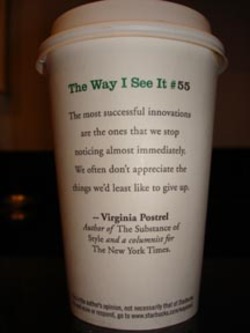
Cupquote11

Due to an unfortunate interaction between the sleeve and the cup, it's Virginia's writing that we stop noticing almost immediately:

Cupcover2

As is always the case here at metacool, my intent is not to poke fun at these kinds of sitiuations.  I'm much more interested in what there is to learn from this. 

I think the lesson here is how hard it is to successfully deliver an integrated offering.  Even for an experience delivery master such as Starbucks.   It's these kind of snafus that make the routine performance of something like a Boeing 767 all the more extraordinary. 

The remedy?  It's a bit of a cliche, but it comes back to the kind of multi-functional, multi-disciplinary teams fostered by Design Thinking.  Why not, for instance, put Virginia's quote on the sleeve in addition to the cup?  Well, that would probably require a new set of manufacturing, graphic design, marcomm, legal, supply chain, and channel experts to meet and reach agreement.  But it could happen.   Design Thinking is a team activity.

06 January 2006 | Permalink | Comments (6) | TrackBack (0)

| |

2006: The Year of Total Design

If you're any kind of soccer fan, you know the meaning of Total Football.  Wikipedia defines it as "... a system where a player who moves out of his position is replaced by another from his team, thus retaining their intended organizational structure. In this fluid system no footballer is fixed in their intended outfield role... Total Football depends largely on the adaptability of each footballer within the team to succeed."

In the world of soccer, Total Football created an entirely new paradigm for how the game should be played.  The fluidity, adaptability, and ultimately, the creativity it engendered markedly raised the performance of teams who adopted it.  And while the system of Total Football is what enabled players to play better than they ever had before, for the system to work required a special type of player.  Soccer legend Rinus Michels put it this way:

Total Football... places great demands on individual and team tactical excellence... An absolute prerequisite, to master such a team tactical aspect, is that all the players possess a positive mentality...

Back to the world of metacool.  I believe there's something called Total Design.  Total Design is to normal design as Total Football is to normal soccer.  It's what happens when you combine wickedly good design thinkers with a human-centered, business-sensitive design process.  Design thinkers who know how to work across professional boundaries, who can play any position, who are flexible, adaptable, yet capable of driving toward a unified goal.  Total Design is about tangible results that change the world for the better, and those results can be, should be, will be, awesome.

You heard it here first:  2006 is the year of Total Design.


04 January 2006 | Permalink | Comments (1) | TrackBack (0)

| |

Innovation starts in the field

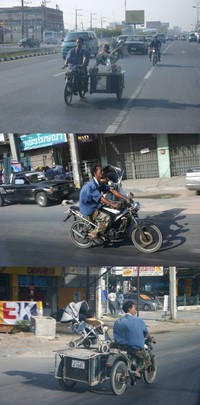
Thailand_transportThis series of photos arrived in my inbox via a friend of a friend.  They were taken somewhere in Thailand.

They show us how important it is to start the innovation process by going out into the field.  If we sit at our desks, or only seek inspiration in situations, people, and aspects of the world familiar to us, we miss out.  We miss out on witnessing the challenges that real people encounter in the course of their daily lives.

Such as trying to transport a toddler when all you have is a motorcycle and sidecar.

It's easy to be judgmental when viewing this photo.  I know I was -- "How could he do this to that kid?", I thought.  But design thinking is about empathy.  Put yourself in his place and imagine how his morning is going.  What did he eat?  Where is he going?  How is he feeling?  Does he do this each morning?  Is this a temporary arrangement?  Is it really as unsafe as it looks?  Is money a limiting factor?  If so, how?  Did he think this arrangement up or does someone else do it, too?  Is there a market for something better?

Judgment is the opposite of compassion, and by deferring judgment, one starts the process of innovation.

27 December 2005 | Permalink | Comments (3) | TrackBack (0)

| |

Design Thinking for a Monday Morning

Yawn, croak, stretch.  Well, it's Monday morning and now that all of that is over, it's time again to start thinking about the art and science of making cool stuff.  Here are some good reads that caught my attention and blew out the holiday cobwebs this morning:

Success Code for CEO's: get a design
Yet another article about the Institute of Design from the IndiaTimes.  This one features an extensive conversation with Robert Sutton, who is a core member of the d.school.  Robert and I will be teaching a d.school course at Stanford later this year.

Creativity's Economic -- and Sexual -- Edge
The always entertaining Dan Pink is writing a column called The Trend Desk, and this week's edition takes us on a whirlwind tour of mating behavior, BRIC, portion control, and sudoku mania.

Design: The New Corporate Marketing Strategy
This article by Ted Mininni ties a nice bow around a bunch of concepts involving a user-centric approach to marketing.  You need to register for the article, but it's free and worth your time.

Happy reading, and see you around the pages of metacool this week.

26 December 2005 | Permalink | Comments (0) | TrackBack (0)

| |

Come si dice "Brand Dilution"?

If you've spent any time at all wandering the halls of metacool, you know that I actively shun cynicism and empty criticism.  Design thinking, after all, is all about being generative, optimistic, and forward-looking.

But sometimes I just have to wonder what's wrong with a universe where things like this can happen: Ferrari Barbie

Enzo would not be pleased.

23 December 2005 | Permalink | Comments (1) | TrackBack (0)

| |

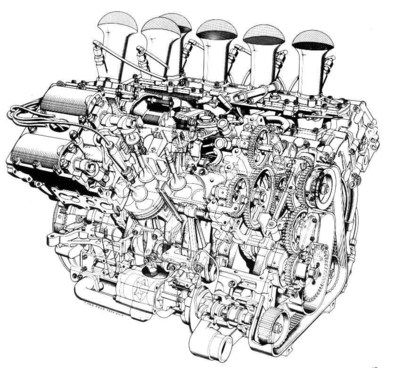
Keith Duckworth

Dfvdraw

This week, the world lost a great innovator, Keith Duckworth.

An engineer by training, Duckworth was one half of the vaunted firm Cosworth, designers of the paradigm-shifting DFV, which changed the face of motor racing and brought home 155 race victories.  Funded as a venture by Ford, the DFV acted as a modular platform around which indepdendent designers could, for the first time, create Formula 1 cars which could compete with factory efforts from the like of Ferrari. 

Duckworth was one of those fantastic engineers who, by embracing the realities of the business context they operate within, turn mere ideas into market-dominating innovations.

19 December 2005 | Permalink | Comments (1) | TrackBack (0)

| |

« Previous | Next »

Categories

  • designing
  • innovating
  • leading
  • marketing
  • meta metacool

search


About

Subscribe to this blog's feed

    follow me on Twitter

    Favorite Posts

    • A million reasons why...
    • Mo Cheeks and a fundamental question of leadership
    • Innovation Lessons from Garage Majal
    • From Obama to Pink to Oprah
    • Shinya Kimura and the primacy of doing
    • A tribute to friends and friendship
    • Strategy that makes your hands bleed
    • Quality in a switch
    • Travis Pastrana and the future of the world economy

    on the nightstand

    • : The Great Bridge

      The Great Bridge

    • : Porsche - Origin of the Species

      Porsche - Origin of the Species

    Principles for Innovating

    • 1: Experience the world instead of talking about experiencing the world
    • 2: See and hear with the mind of a child
    • 3: Always ask: "How do we want people to feel after they experience this?"
    • 4: Prototype as if you are right. Listen as if you are wrong.
    • 5: Anything can be prototyped. You can prototype with anything.
    • 6: Live life at the intersection
    • 7: Develop a taste for the many flavors of innovation
    • 8: Most new ideas aren't
    • 9: Killing good ideas is a good idea
    • 10: Baby steps often lead to big leaps
    • 11: Everyone needs time to innovate
    • 12: Instead of managing, try cultivating
    • 13: Do everything right, and you'll still fail
    • 14: Failure sucks, but instructs
    • 15: Celebrate errors of commission. Stamp out errors of omission.
    • 16: Grok the gestalt of teams
    • 17. It's not the years, it's the mileage
    • 18: Learn to orbit the hairball
    • 19: Have a point of view
    • 20: Be remarkable

    CC

    • Creative Commons License