metacool

thoughts on the art & science of bringing cool stuff to life, by Diego Rodriguez

How far? How?

If your brand is the sum total of all the things you do in the world, then how far would you go to live up to the expectations of people in that world?

Would you do something like this?

And how would you grow a culture to enable this kind of brand expression?

Good questions to ponder... and act upon.

08 August 2005 | Permalink | Comments (1) | TrackBack (0)

| |

Design Manifestos: The Cathedral and the Bazaar

This is start of a new feature of metacool, which I'm calling Design Manifestos.  These are pieces of design thinking that really had (or continue to have) a big impact on my own thinking.  Longer than a Thought of the Day, many more words than an Unabashed Gearhead Gnarlyness entry.

A great place to start is Eric Raymond's The Cathedral and the Bazaar, a wonderful essay about the "bazaar" (AKA "open source") approach to creating cool stuff.  Please do read it, but in case you can't, here are my favorite bits: 

  • "...you often don't really understand the problem until after the first time you implement a solution. The second time, maybe you know enough to do it right. So if you want to get it right, be ready to start over at least once."
  • "...I think Linus' cleverest and most consequential hack was not the construction of the Linux kernel itself, but rather his invention of the Linux development model."
  • "Release early. Release often. And listen to your customers."
  • "Given enough eyeballs, all bugs are shallow...  In the cathedral-builder view of programming, bugs and development problems are tricky, insidious, deep phenomena. It takes months of scrutiny by a dedicated few to develop confidence that you've winkled them all out. Thus the long release intervals, and the inevitable disappointment when long-awaited releases are not perfect.  In the bazaar view, on the other hand, you assume that bugs are generally shallow phenomena - or, at least, that they turn shallow pretty quick when exposed to a thousand eager co-developers pounding on every single new release. Accordingly you release often in order to get more corrections, and as a beneficial side effect you have less to lose if an occasional botch gets out the door."
  • "Often, the most striking and innovative solutions come from realizing that your concept of the problem was wrong."
  • "I think it is not critical that the coordinator be able to originate designs of exceptional brilliance, but it is absolutely critical that the coordinator be able to recognize good design ideas from others."

These are great thoughts about the process of creating good stuff.  It's important to keep in mind that this isn't just about software.  The challenge is to figure out how to make the bazaar part of your own way of getting things done.

03 August 2005 | Permalink | Comments (3) | TrackBack (0)

| |

Shedding the tyranny of the wallet

To echo an infamous statement once made about the lowly shopping cart basket, the wallet is tyranny.  In this age of the mobile phone, the PDA, the RFID fob, the massive automobile locking/alarm/ignition system remote, and the iPod, who can get away with carrying a wallet alone?  Convergence isn't going to happen any time soon, my friends, and clipping that phone to your waist band just ain't gonna cut it.  Aesthetics matter.  The solution is quite clear, and yet... and yet the pressure to conform to societal norms is intense.  Hence the tyranny of the wallet.

You heard it here first: I'm freeing myself from the shackles of walletdom, and I'm going to start toting a man-purse. 

I've been contemplating this move for a while, a long while, in fact.  Back in 1991 my engineering boss at the Nissan Technical Center in Atsugi used a man purse, and it made a lot of sense from a utilitarian standpoint: having everything in one purse made it a lot less likely that he'd leave a stray pack of cigarettes in a chassis dynamometer, misplace the keys to his diesel Sentra, or drop a data log at the test track.  It made perfect functional -- or behavioral design -- sense.

It's the visceral and reflective levels of design which kept me from taking the plunge.  But two recent developments have tipped the balance in favor of the man-purse:

  1. When a reputable venture capitalist  makes a very public endorsement of the man-purse, well, that means its societal meaning is changing.  A VC with a purse?  That's a compelling use case, a great story.  And it works well at the reflective level of design.
  2. I'm no clotheshorse, but I do care about personal aesthetics. So I can't rationalize carrying a cordura camera bag turned purse.  Or worse, a fanny pack.  Enter the Freitag Mancipation line of man-purses.  They meet all my visceral design criteria, and because they're Freitag they'll work well and stroke my mojo, too.

So watch out for me and my man-purse.  Now I've just got to figure out how to buy one of these Freitag thingies without jetting over to Davos, because I can't find it on the internet. 

Honey, where's my wallet?

01 August 2005 | Permalink | Comments (8) | TrackBack (3)

| |

metacool Thought of the Day

"Sell the Honda Odyssey. Buy a 1955 Alfa Romeo Spider Veloce.
And let the kids take a bus."
-- P.J. O'Rourke

27 July 2005 | Permalink | Comments (0) | TrackBack (0)

| |

Unabashed Gearhead Gnarlyness

timdesign

25 July 2005 | Permalink | TrackBack (0)

| |

What's new at the d.school

Img_part_01_leftBusinessWeek is running a great interview about what we're brewing at the Stanford d.school

We don't have an RSS feed on the d.school site yet, so in the meantime go ahead and sign up for our mailing list if you want to join the movement.

Viva viva!

22 July 2005 | Permalink | Comments (5) | TrackBack (0)

| |

On Leadfoot Prius Drivers

Twice in the last week I've had an encounter with the Toyota Prius brand which left me uttering a slack-jawed "Huh?"

Encounter No. 1:  While tooting along down the highway at just over the speed limit in my own car, some dude in a Prius blows by me doing about 95 mph.  What's wrong with this picture?

Encounter No. 2:  Trundling along through rush hour urban traffic, a person in a Prius in a BIG hurry tailgates me for one long minute, then finally whips out against oncoming traffic in a desperate attempt to get somewhere on time.

Now, the percentage of impatient leadfoots driving a Prius is probably quite low, but they're a good reminder that, for all the time and money you spend crafting the story behind your offering, your customers are going to write at least a few additional chapters in the book of your brand.  And those are the pages that matter to the world.  Know-nothing yuppies turned BMW from a driver's car into a social-climber's bauble.  Porsches used to be driven by people with quick wrists (the better to catch that oversteer!), but now the story is about SUV's for suburban wrists with, ahem, extra padding.

Who is going to write those chapters for your brand? 

21 July 2005 | Permalink | Comments (8) | TrackBack (1)

| |

Feld on the venture industry, ASP software, blogging and other topics

Here's a really stimulating interview with Brad Feld of Mobius Ventures (and a citizen of my homeland of Colorado.  Bonus Points!).

Definitely worth reading if you're into the art and science of creating cool stuff.

20 July 2005 | Permalink | Comments (0) | TrackBack (0)

| |

Navajo Blankets, House Painters, and Innovation

As a boy I learned that the creators of Navajo blankets purposely weave a flaw into each of their creations.

For a variety of reasons, I've been thinking quite a bit about flaws and the process of innovation, and I'd like to explore this Navajo blanket idea in that context over the next few weeks.  I have an inkling that it may be the key to unlocking the potential of heretofore crappy service experiences, such as professional house painting.  Who knows, this just might be the next Beausage.

Before we reach that point, I need your help to answer a few questions:

  1. Is (or was) this a legitimate cultural Navajo tradition, or is it a myth concocted to dupe tourists and elementary school children?
  2. If it is a real thing, does it have a name?
  3. Can you think of any examples from  your own work experience where a purposeful flaw became a beautiful thing?

Please share a comment below or drop me an email.

17 July 2005 | Permalink | Comments (10) | TrackBack (2)

| |

Marketing Lessons from Fatherhood

In the weeks since hitting my recent big ship date commitment, several people have asked me how fatherhood has affected my view of marketing and product development and design.

Yes, I suppose it has.  Here are my two personal epiphanies, as it were:

  1. I now understand why my extremely sagacious father has been telling me for years that man is fundamentally an irrational animal, because we can rationalize anything.  I'm an incredibly happy guy, but I've been doing a lot of rationalizing lately...
  2. As a Good Marketer, I recognize the the importance of matching the right message to the right group of people with the right worldview.  I now realize that a good messaging strategy may have as much to do with what you don't say as with what you do.

14 July 2005 | Permalink | Comments (0) | TrackBack (0)

| |

Good Marketing takes Guts, part 3

If marketing is about figuring out what people want, making what they want, and finding the best possible way to let them know that you're making what they want, then Bodygroom by Philips is a textbook case of Good Marketing.

Think back to the Visceral-Behavioral-Reflective model of meaing creation.  Bodygroom the product and Bodygroom the story have each been designed with all three levels in mind to create a total offering experience that just sings if you already have the "I've got to shave" worldview (not that I've ever used it, mind you... but I believe it would work...).  The visceral-reflective  sublimiity of scissors chasing dual kiwis -- well, that's marketing genius.

11 July 2005 | Permalink | Comments (2) | TrackBack (0)

| |

metacool Thought of the Day

"Is having ideas considered design? ... I would argue no. The idea is not the design. Only an embodiment of the idea is design. It is this important distinction that people so often overlook in organizations as they work on what they want to bring to market next. Everytime ideas are debated verbally, an organization wastes resources."

- Chris Conley

06 July 2005 | Permalink | TrackBack (0)

| |

The New Heroes

Be sure catch The New Heroes on PBS, a four-part series about social entrepreneurship.

Wait, shouldn't all ventures contribute to society?  Good Business can and should better the lives of employees, shareholders, and society.

Punch it in your TiVo or set the alarm and watch it in live time.

28 June 2005 | Permalink | Comments (2) | TrackBack (0)

| |

Sleepless nights at metacool

If there's a little less action on metacool over the next few weeks, please accept this apology in advance.

You see, I just shipped the introductory version of my latest creation.  She's really a beauty -- featuring, among other things:

  • a complex, powerful, yet low-power consumption bio-computer running a self-teaching, open-source operating system
  • a huge amount of information storage capacity -- won't run out for decades, hopefully even a century
  • completely cradle-to-cradle in terms of production materials
  • low mass -- all of this in a package only a few pounds heavier than a standard business laptop

Branding is still being developed and will be announced shortly.  We're looking at a premium positioning that's unique without being too exotic.

Our growth plan includes the gradual addition of mobility, moving from a quadraped motive system to eventually a biped mode, which we feel strikes the right balance between traction and agility.  We also expect to add advanced voice recognition, speech capabilities, and the ability to compose poetry and play the saxophone.  I'll keep you posted.

But I'll be busy for the next few weeks.

23 June 2005 | Permalink | Comments (14) | TrackBack (0)

| |

Unabashed Gearhead Gnarlyness

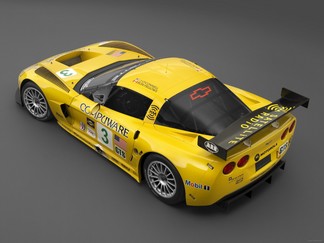
2005chevroletcorvettec6rracecarratop1920
The Corvette C6.R


(running the 24 Hours of Le Mans this weekend)

18 June 2005 | Permalink | TrackBack (0)

| |

Innovation Means Really Being There

Here's an intriguing interview with Gary Flint, chief engineer for the innovative new Honda Ridgeline.

This new vehicle redefines what a pickup can and should be.  How did Honda get there?  By getting out and observing real people.  Says Flint:

We didn't look at what people were buying.  We listened to what they wanted... During the Ridgeline's development I spent an hour every Saturday morning at Home Depot with my tasty beverage, and I watched people load things in the parking lot.

When was the last time you got out of the office and just simply observed people going through the stuff of daily life?  Out there lies the kind of inspiration that leads to game-changing innovation.

15 June 2005 | Permalink | TrackBack (0)

| |

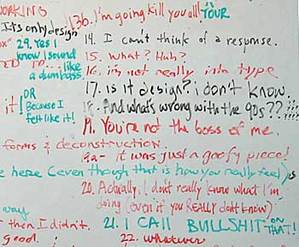
How to survive Art 60...

Top10

... things never to say during a design critique

(via Boing Boing)

11 June 2005 | Permalink | Comments (1) | TrackBack (0)

| |

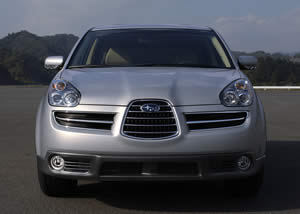
Jolie-Laide, part 6

Subaru_tribeca_lg_2
The 2006 Subaru B9 Tribeca

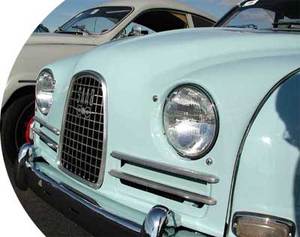
(I really like the new Tribeca.  Yes, it's definitely another example of jolie-laide, and I certainly suffer from ugly-car-itus, but I quite fancy this new Subaru.  Last year I wrote that "Subaru is the New Saab".  With the introduction of the B9, that sentiment has become aesthetically true:

Saab96snout
The 1963 Saab 96


10 June 2005 | Permalink | Comments (3) | TrackBack (0)

| |

Tooting It Without Blowing It...

In other news, metacool appeared in several legitimate (read: print) business publications over the past few months:

  • Learning From Blogs, by Virginia Postrel, in Forbes
  • The New Instant Companies, by Michael Copeland & Andrew Tilin, in Business 2.0
  • More Intelligent Design, by Jena McGregor, in Fast Company

Fast Company's article made me want to pick up the phone and call my mom:  "... Rodriguez's blog is a must-read for anyone who wants to incorporate design thinking into their work."

Beauty, eh?

And the title of this post?  From a book I heartily recommend: Brag!  The Art of Tooting Your Own Horn without Blowing it

09 June 2005 | Permalink | Comments (5) | TrackBack (0)

| |

Form Ever Follows Function - NOT

If you've been reading metacool for a while, you know how much I like Don Norman's Visceral-Behavioral-Reflective model of design.  It's a nice way to reach a deeper understanding of the design of things as varied as cars, jeans, and shopping bags.

Or even fingers (or more precisely, the lack thereof).  Here's a great example of the importance of reflective design, from Joi Ito: Differences in the meaning of finger chopping in Korea and Japan

It's fascinating how an absent digit can communicate so differently depending on cultural context.  Clearly, there's more meaning in a missing finger than can be captured in its lack of visual presence (Visceral Design) and/or its functional absence (Behavioral Design).  Reflective design is about meaning and culture and is where things get interesting in the art and science of bringing cool stuff to life.

08 June 2005 | Permalink | Comments (1) | TrackBack (0)

| |

metacool Thought of the Day

"I'm a storyteller.  I think of a designer as a processor of information -- like a scriptwriter or a novelist."

- Freeman Thomas

07 June 2005 | Permalink | Comments (0) | TrackBack (0)

| |

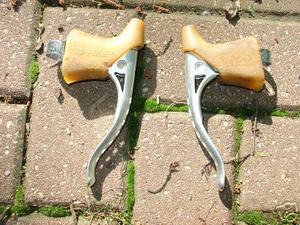
Beausage For Sale

5d_1_b_1

Want some Suntour Superbe brake levers with a sprinkling of beausage?

eBay auction # 716160266
(no, it's not my sale)

05 June 2005 | Permalink | Comments (0) | TrackBack (0)

| |

Seth Godin at metacool: An Overview

I'm all about creating beautiful user experiences, so for your viewing pleasure and ease of reference, here's an overview of Seth Godin's visit to metacool and our conversation about his new book All Marketers are Liars:

  • Design & Authenticity
  • Story-Free?
  • Emotional Design
  • Stuff Seth Digs
  • How to Create Good Lies
  • About that Title...

04 June 2005 | Permalink | Comments (0) | TrackBack (0)

| |

More Beausage, please

Okay, so it's a neologism; that won't keep me from liking the word beausage a whole helluva lot.

Here are some more examples of beausage (the beauty that comes with usage):

  • Wrinkles on a grandfather's face
  • Gouges and dents on the bed of a 1955 Chevy pickup
  • Wear patterns on a boot tread

Would love to hear about more beausage -- leave a comment below with your own example.

02 June 2005 | Permalink | Comments (16) | TrackBack (0)

| |

Contrails

When I awoke this morning, I sensed a step function increase in the power of The Force.

This could only mean one thing:  Jim Matheson is blogging.

My good friend, professional peer, and all-around partner in crime, Jim is one of those rare individuals who does just about everything to the hilt, boosts the energy of any room he enters, and is just plain fun and good to hang out with.  He cares intensely about innovating with a heart, and is a wise man (and sometimes a wise guy).

It's still very much a startup, but I have no doubt that Jim's blog Contrails will provide stimulating reading over the weeks and months to come.

01 June 2005 | Permalink | Comments (1) | TrackBack (0)

| |

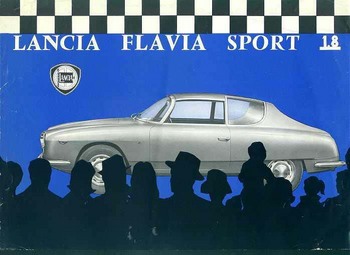
Jolie-Laide, part 5

Flavia_059

The Lancia Flavia Sport

Jolie-laide
: why worry about being beautiful when you could be interesting?

31 May 2005 | Permalink | Comments (6) | TrackBack (0)

| |

Seth Godin at metacool: About that title...

metacool:
What should we (your readers) say to all those marketing people
who are going to glance at the title of All Marketers are Liars in an airport
bookstore and get offended? What's the elevator pitch for this book
that gets people over the "liars" hump?

Seth Godin:
This is a terrific question. If I had taken my own advice and written a
book that matched the worldview of the largest possible portion of the
business-book-buying public, I would have called it THE GREEN
KANGAROO--HOW TELLING STORIES HELPS TRANSFORM YOUR BUSINESS. But I
didn't, largely out of creative desire and arrogance. That said, I
think the "lying" story is very spreadable, because it starts loud
(you're a liar) and then gives the teller enough space to actually tell
the story.

My hope is that in meetings, people will ask the questions I outline at
the end of the book. Stuff like, "what's our story?"

metacool:
Seth, thanks for taking the time to talk about your new book.  Thanks also to my friends Anthony & Tom for help with the brainstorming.  And thanks to YOU for hanging out at metacool.

Seth's Business Blog Tour party for All Marketers are Liars continues tomorrow at Brand Mantra.

26 May 2005 | Permalink | Comments (0) | TrackBack (0)

| |

Seth Godin at metacool: How to create good lies

metacool:
Good organizational design often begets good design thinking.
What are some ways to organize the "product generation" part
of a company so that it can design experiences and the business
communication and branding strategies (AKA "lies") required to bring
them to market, all in an authentic way?

Seth Godin:
The best stories come from organizations that tell the story FIRST. The
founder or manager or whomever really and truly believes it. Really
wants to make it happen. Then the product matches the story. What if
Altoids weren't strong? What if JetBlue was just cheap, not better?

You can't slap a story on later. Doesn't work.

26 May 2005 | Permalink | Comments (0) | TrackBack (0)

| |

Seth Godin at metacool: Stuff he digs

metacool:
In All Marketers are Liars you provide lots of examples of offerings with great stories. If we were to spend a day in your shoes, what are the great products with great stories that make up the life of Seth Godin?  What do you dig?

Seth Godin:
Even though I'm a little more attuned to marketing bullshit because
that's what I write about, I still like to believe it. I like to
believe that food from the Union Square Market tastes better. I like to
believe that the small advantage in UI that the Mac delivers is cause
for joy. I like to believe that driving a Prius instead of a Lotus
Convertible is an important contribution to our planet's longevity.

Psychology is filled with cleverly constructed tests that demonstrate
that even when people "know" the truth, they choose to believe a story
instead.

26 May 2005 | Permalink | Comments (0) | TrackBack (0)

| |

Seth Godin at metacool: Emotional Design

metacool:
I'm a big fan of Donald Norman's book Emotional Design, and was
happy to see it on your recommended reading list in All Marketers are Liars. What's the connection between Don's thinking and your own?

Seth Godin:
I met Don at TED and was blown away at how deeply he understood the
'why' behind design. Not to make things pretty, but to build an
emotional story into what we do and how we feel about it.

26 May 2005 | Permalink | Comments (2) | TrackBack (0)

| |

Seth Godin at metacool: Story-Free?

metacool:
What happens once everybody can create goods stories for their
brand? Will consumers become desensitized to 'story' and crave
'story-free'?

Seth Godin:
Story-free is still a story, in a twisted sort of way. The way that
black and white generic canned peaches (which appeared to be without
marketing) were actually filled with a story.

The story doesn't happen without the consumer. People feel compelled to
tell themselves stories about everything. That's why they are
superstitious, believe in religion and cry at the movies. So, while
certain stories go out of vogue, it's inconceivable to me that human
beings will suddenly become hyper-rational.

26 May 2005 | Permalink | Comments (1) | TrackBack (0)

| |

Seth Godin at metacool: Design & Authenticity

Seth Godin is gracing the pixels of metacool today from The Business Blog Book Tour to talk about creating cool stuff, remarkable stuff, and his new book All Marketers are Liars. 

I'll be posting Seth's answers to my questions over the next few hours, so let's get started, and be sure to check back later for more of his thinking.

metacool:
Can a good story be used as a substitute for bad design? Many of
the examples in All Marketers are Liars communicate their story through good design, from message to product to package. Does a good story make up for lousy aesthetics and/or functionality?

Seth Godin:
A story is worthless without authenticity. You can't say, "Well, this
was designed by Phillipe Starck, therefore it's easy to use," and
expect that to work if, in the long run, people hate using it. Sure,
some people will fall for it, but what really delivers is something
like OXO. The OXO design is totally overdone, emphasizing at every turn
just how USEFUL this must be. But it IS useful! So the story works.

There are plenty of products where bad design is part of the story. The
Drudge Report, say, or the Hummer.

26 May 2005 | Permalink | Comments (1) | TrackBack (0)

| |

metacool Thought of the Day

"It's much harder to make stuff versus just talking about it like you know what you're doing."
-- John Maeda

23 May 2005 | Permalink | Comments (2) | TrackBack (0)

| |

May 26 is Seth Godin day at metacool

ItsahemisethSeth Godin will be discussing the state of the art of marketing remarkable stuff here at metacool on May 26.

Mark your calendar, check the air pressure in your brain lobes, and be sure your RSS reader is gassed up.

20 May 2005 | Permalink | Comments (0) | TrackBack (0)

| |

Enjoyment = Flow = Innovation

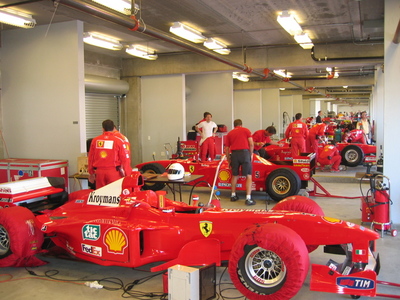
Ferrarigaragemetacool
Next time your hear someone couching innovation in terms of complex processes, jargon, and esoteric management theories, challenge them with this simple question: how do you plan to enable people here to enjoy their work?

The more I learn about innovation, the more I believe that the organizations who innovate year over year over year are those who treat people well, who build cultures where enjoying one's work -- routinely reaching a state of flow -- is not the exception, but the rule.  If you want to be sustainably innovative, these places teach us, then solve for human happiness.  Think JetBlue.  Gore.  Honda.

Or even Ferrari.  Ferrari, the grandest brand in the world, red speed incarnate.  Because it operates within the byzantine world of Formula 1 racing, where teams spend upwards of $200 million per season to design, build and campaign two tiny cars around the globe, Ferrari could easily be a nasty, brutish place to work.  But it isn't, and therein lies the secret to its formidable record of victory: helping its people get into flow. Jean Todt, the scuderia's leader, says this about his approach to culture:

People will give their best at work if they are happy.  If people respect their co-workers, both professionally and personally, they will want them to be happy too, and will help each other when there are problems.

Could enjoyment really equal innovation?  Yes.  It's as simple (but difficult) a proposition as this: to innovate well, treat your people well.

19 May 2005 | Permalink | Comments (4) | TrackBack (2)

| |

Beausage

I'd like to tell you about a new aesthetic term called "beausage".  It sounds French but it's not; instead it's a synthetic combination of the words beauty and usage, and describes the beauty that comes with using something.

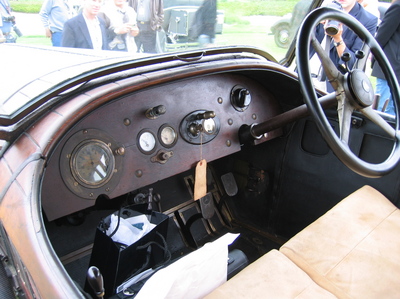
Metacool1914mercedes

Beausage is:

  • Roman amphitheater steps whose faces are worn away by the tread of thousands and thousands of shoes
  • Stone chips on the hood of a Ferrari 250 which has been run hard and put away wet
  • A bike seat whose adapted form reflects that of its owner's posterior
  • The look and feel of the cockpit of the old Mercedes pictured above (a jumble of replacement gauges and parts, obviously used a lot) -- that's 91 years of beausage!

How, you may ask, is beausage any different than patina?  Well, it's certainly related, but different.  Patina is really more about surface level changes happening at a chemical level: oxidation, chemical stripping, and so on.  Beausage describes changes that happen in 3D where atoms get torn and stripped away, as occurs with scratches, tears, chips, and wear marks.  I used to say "patina" when what I really meant was "beausage".  It's nice to have both.

I wish I could say I coined it, but the term beausage is the brainchild of Grant Petersen, grand pooh-bah of Rivendell Bicycle Works and probably the single most brilliant, holistic, and intuitive brand creator out there.  I mention Grant not only for intellectual attribution, but because he's going to help us bring this back into the world of creating cool stuff.  Grant states that "In general, real materials develop beausage, and synthetics look like old junk.  It's like a cowpokes's old denim jacket, versus an old polyester leisure suit...". 

Beausage is something for all products and their designers to aspire to.  When the chrome on the back of my iPod scratched away, the resulting exposed grey plastic made the thing feel cheap and ephemeral -- the opposite of what a good chrome finish should have done.  Imagine an iPod that looked better (beausage) the more it got used.  When you start to conceive of finishes not as veneers but as reservoirs of meaning via beausage, then you're giving your customers something that will continue to provide satisfaction through the ages.

16 May 2005 | Permalink | Comments (5) | TrackBack (6)

| |

Venture Design, part 9

A few weeks ago I wrote a post called "What's Good Enough?"

Which is why I positively love this idea:  Good enough is the new perfect

13 May 2005 | Permalink | Comments (0) | TrackBack (0)

| |

The importance of being non-trivial

My friend George sent me a link to this great set of joke product concepts from the Onion.

It's very funny stuff -- but also a good reminder that bringing non-trivial value propositions to market is often a non-trival undertaking. 

11 May 2005 | Permalink | Comments (0) | TrackBack (1)

| |

Venture Design, part 8

AutoWeek has a great "compare and contrast" profile of Jesse James (from Monster Garage) and Paul Moller (Mr. Skycar).  Their respective forays into the realm of flying cars represent two very different approaches to venture design.

In one corner, we have Moller, who has spent millions and millions and years and years developing Skycar.  He has a PhD, and his venture is very much a left-brain, Master Plan kind of effort: lots of costly (time + money) engineering and analysis, supported by a huge machine for consuming large of amounts of money with big, complex prototypes.  So far he's gotten the Skycar to hover a few feet off the ground.  It looks cool, though.

In the opposite side of the ring, we have Mr. James, ace welder and intuitive designer, an entrepreneur who knows his way around an English Wheel.  If you've ever seen Monster Garage, you know that Jesse is all about building things now, and doing things to the hilt.  Talk is cheap in the land of Jesse, and its a place where you build to know.  In stark contrast to Moller, Jesse's flying car venture was a two-week, multi-thousand dollar affair, and it resulted in a Panoz Esperante that flew 350 yards.

Who learned more?  Big budget, big schedule, or lean budget, scrappy schedule?  Ventures that seek to crack open new market spaces (like flying cars -- not a good market, mind you, but a new market nonetheless) face a central challenge of closing critical information gaps.  If you have suitcases of cash, and a lot of extra time on your hand, try the Moller model.  Otherwise, as a proponent of appropriate venture design, metacool has no choice but to endorse Mr. James.
09 May 2005 | Permalink | Comments (1) | TrackBack (2)

| |

Unabashed Gearhead Gnarlyness

The CarBone carbon fiber pet bowl

06 May 2005 | Permalink | Comments (1) | TrackBack (1)

| |

Wired Meaning, Glamour's Grace

Virginia Postrel has written a wonderful NYT piece about the meaning of wires.  She writes:

One of the best places to find wireless glamour isn't in ads for high-tech products. It's in images of stylish lamps in catalogs for companies like Crate & Barrel and Chiasso. Whether through careful composition or a little digital magic, the lamps seem to have no cords. Like bills piled on the kitchen counter or muddy footprints on the floor, the utilitarian realism of electrical wires would break the spell of domestic perfection. Glamour's grace is the art that conceals art... What is truly glamorous about wireless technology is the fantasy that it requires no wires.

Is it possible to tell an authentic story made up of little lies?  I'm not so sure... a good story, maybe, but authentic, no.  Perhaps I don't need to be told an authentic story to get me to buy a lamp or a laptop, just a good one.  I wonder.

04 May 2005 | Permalink | Comments (0) | TrackBack (0)

| |

Apple = Fractal

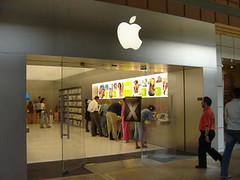
Alex Pang of IFTF tells this charming tale of brand fractalness:

"At Stanford Shopping Center yesterday, we walked by this fine retail establishment.


Apple Store, Stanford Shopping Center, via Flickr

As we passed, my son (who's three) shouted, "HEY! THAT'S THE IPOD STORE!!!"

Update, 28 April 2005
: This morning I asked him, "How did you know the iPod Store was an iPod store? Did you see the iPods in it?"

He said, "No! It looks like an iPod!"'

He's right.  It does look like an iPod.  When you're doing this fractal brand thing right, everyone knows it.  Especially three-year-old, precocious design critics.

03 May 2005 | Permalink | Comments (4) | TrackBack (0)

| |

Again, good marketing takes guts

A few months ago we were talking about Scoble's observation to the effect that any marketing website without a RSS feed should be flushed down the toilet. 

He's right, and here's why:  synthetic fables created by ad firms simply can't compete with honest, soulful stories told direct to you and me from another human being.

Case in point:  if you're a fan of the Pittsburgh Steelers, do you feel more soulfully connected to the brand if you read this or this?  The answer is clearly the latter.  Why?  Because RSS combined with authentic, human content signals a new paradigm of marketing communications.  The brands and people who will succeed in this new paradigm are the ones with real stories and the guts to tell them without the mediocrity-inducing filter of marketing "professionals".  Good marketing takes guts.

02 May 2005 | Permalink | Comments (8) | TrackBack (2)

| |

metacool Thought of the Day

"It's the vehicle's design that first forges that emotional bond between product and consumer... So often it simply boils down to this:

'Do I like the way this car looks or not?' 

And I think that's part of the reason this industry is headed for a new golden age of design. That's great news for all of us who dream about beautiful cars and trucks. It makes it a very exciting time to be in this business. Because we're getting back to what it's all about: Building the stuff that dreams are made of."

- Bob Lutz

01 May 2005 | Permalink | Comments (3) | TrackBack (0)

| |

Designing Meaning, Creating Value

John Maeda of MIT's Media Lab wrote a delightful post about meaning and design, and how deep meaning can be embedded into a designed offering.  And as he tells the story, meaning can even be designed into something as mundane (yet vitally important) as a restroom door:

There is nothing more powerful in the visual vocabulary of an artist than the power of establishing contrast. Anything big and fat appears bigger and fatter when placed next to something flaccid and skinny... Thus the contrast between the Mens Room and Ladies Room at The Plaza Hotel reaches epic proportions in this architectural statement that doubles as a political statement of old... Nothing could be appreciated in a simpler way than these gilded restrooms of New York City.

Chew on that stew of thoughts for a moment: how could you use the concept of contrast as a way to embed helpful, behavior-shaping information into your next design, be it a website, a camera, or a flower vase?  I love Maeda's notion of contrast because of its all-encompassing nature; it demands that one consider all the levels of design that create meaning: visceral, behavioral, and reflective.

27 April 2005 | Permalink | Comments (0) | TrackBack (0)

| |

Coming May 26: Seth, Lies, and metacool

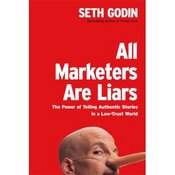
159184100301_aa400_sclzzzzzzz__1_1Tap this one into your calendar: come May 26, Seth Godin will grace the pixels of metacool to talk about (among other things) his new book All Marketers are Liars.  This appearance is courtesy of the Business Blog Book Tour.

Since I'm a market-centric kind of guy, please let me know what topics, issues, themes you'd like to see Seth address (if he wants to) during his metacool sojurn.  I'm all ears. 

Until then, check out Seth's blog about the book.

26 April 2005 | Permalink | Comments (1) | TrackBack (0)

| |

Bu'wicked Virtual Marketing, revisited

Earlier this month I pondered the existence of the Bu'wicked Special in Polyphony's GT4 video game, and whether this was an intentional product placement by Buick or just a happy accident.

Ford gets it.  They played an active role in placing the new Mustang in GT4 (and also the Ford GT, which is an integral element of GT4's branding).  In a recent Automotive News story, Killol Bhuta, assistant marketing manager for the Mustang, said, "One out of every four Mustangs we sell is to an individual under the age of 34.  Chances are very good they are also game players".  Myself, my first test drive of the Mustang came in GT4. 

What are all the virtual places where your offerings could live in order to help people understand your brand?

25 April 2005 | Permalink | Comments (0) | TrackBack (0)

| |

Designing Meaning, Creating Value

$600 jeans?  That's the power of reflective design

22 April 2005 | Permalink | Comments (1) | TrackBack (0)

| |

What's Good Enough?

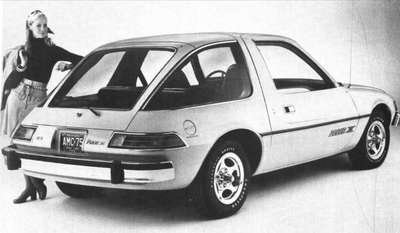
Pacerx75

My post last week on Venture Design sparked an interesting discussion about the topic of "good enough" in the world of innovation.  Victor Lombardi made this point:

Some recent experience with teaching product development to the "linear business types" taught me to be careful with explaining the concept of "good enough." For example, a business analyst I spoke with pointed out we should only develop a product far enough to exceed customer expectations; anything further is wasted development money and results in lower profit margins. To him, this was "good enough" design. But this thinking can lead to, for example, series of incremental improvements and leave a company vulnerable to a competitor's breakthrough design.

Here's my perspective:  "Good Enough" is a worldview.  It's a way of approaching challenges where the appropriate solution path is not obvious.  In that situation, 50% accurate information today is an order of magnitude more valuable than 100% accurate data tomorrow, because having that data allows you to take action now, and the act of moving takes you one real step closer to a workable solution -- perfectly accurate info is always a day away.  Perfection equals paralysis, and the way to reach a more innovative mode of existence is to accept "good enough" as permission to go ahead and get stuff done.  Life is short.

In reality, taking a "good enough" approach to developing your offering is the key to reaching greatness.  Per Victor's point above, if you view "good enough" as a one-shot deal and ship a turd to market and leave it there to fester, you're only fooling yourself into a state of perpetual mediocrity.  But, if you say "this is good enough today, and I have a plan for good enough in a week, a month, a year," then you'll be iterating your way to success, learning all along the way.  The first generation iPod was a "good enough" effort done quickly, and it taught Apple a lot about a new (to Apple, at least) marketspace.  Subsequent iPod offerings capitalized on those lessons learned -- real information from real customers in a real market.  The "good enough" worldview allows you to stand on the shoulders of giants of your own making.

(metacool disclaimer:  the AMC Pacer pictured above should be used only as an educational example of how a "good enough" offering not tied to a strategic development plan will result it in a mediocre turd.  Yes, the Pacer influenced the design of the Porsche 928, but there's no accounting for taste)

21 April 2005 | Permalink | Comments (2) | TrackBack (2)

| |

David H. Liu Memorial Lecture Series in Design

Topbanner1_1

The 2005 David H. Liu Memorial Lecture Series in Design is here again at Stanford starting Thursday, April 21.  The list of speakers scheduled so far is impressive:

  • Paul Saffo
  • Amelia Rudolph
  • Ned Kahn

Last year's lecture series was inspiring, so I'm looking forward to this new season.

20 April 2005 | Permalink | Comments (0) | TrackBack (0)

| |

« Previous | Next »

Categories

  • designing
  • innovating
  • leading
  • marketing
  • meta metacool

search


About

Subscribe to this blog's feed

    follow me on Twitter

    Favorite Posts

    • A million reasons why...
    • Mo Cheeks and a fundamental question of leadership
    • Innovation Lessons from Garage Majal
    • From Obama to Pink to Oprah
    • Shinya Kimura and the primacy of doing
    • A tribute to friends and friendship
    • Strategy that makes your hands bleed
    • Quality in a switch
    • Travis Pastrana and the future of the world economy

    on the nightstand

    • : The Great Bridge

      The Great Bridge

    • : Porsche - Origin of the Species

      Porsche - Origin of the Species

    Principles for Innovating

    • 1: Experience the world instead of talking about experiencing the world
    • 2: See and hear with the mind of a child
    • 3: Always ask: "How do we want people to feel after they experience this?"
    • 4: Prototype as if you are right. Listen as if you are wrong.
    • 5: Anything can be prototyped. You can prototype with anything.
    • 6: Live life at the intersection
    • 7: Develop a taste for the many flavors of innovation
    • 8: Most new ideas aren't
    • 9: Killing good ideas is a good idea
    • 10: Baby steps often lead to big leaps
    • 11: Everyone needs time to innovate
    • 12: Instead of managing, try cultivating
    • 13: Do everything right, and you'll still fail
    • 14: Failure sucks, but instructs
    • 15: Celebrate errors of commission. Stamp out errors of omission.
    • 16: Grok the gestalt of teams
    • 17. It's not the years, it's the mileage
    • 18: Learn to orbit the hairball
    • 19: Have a point of view
    • 20: Be remarkable

    CC

    • Creative Commons License