metacool

thoughts on the art & science of bringing cool stuff to life, by Diego Rodriguez

Lessons in avoiding assholes, part 2

My previous post on the importance of avoiding assholes as a way to be more innovative is the single most popular post in this blog, so in the name of creativity, progress, and better workplaces everywhere, here's another serving of asshole-bashing.

Dan Pink's blog has an interesting link to a study done by economist Armin Frank, who studied the effect of close managerial supervision on employee motivation.  His conclusion is not startling to those of us who have labored under an asshole, to wit:

"Anyone who is suspicious of the willingness to work of their employees is in fact punished by poor work levels; whoever is optimistic and gives them free rein is rewarded."

I really believe in this.  I spent my formative career years doing skunkworks R&D inside of the old, original incarnation of HP.  I had an enlightened manager who always got the best out of his engineering teams.  We didn't have any weekly supervisory meetings -- you just worked to do your best, and when you had a question or needed some guidance, you'd stop by his cube.

One cold, rainy February day he  happened to walk by my cube (hadn't seen each other in weeks) only to catch a whiff of raw Bondo, the automotive body filler (of course, I was wearing a gas mask).  Toxic fumes!  I was using it to create a quick prototype of some mechanism I had sketched up, nothing that I wasn't used to doing in my college dorm room 12 months earlier.  What did he do?  Well, he didn't pull the asshole maneuver and tighten the "circle of trust" noose upon my neck by forcing me to start clearing every little work decision with him.  No, instead, he just said (calmly),  "There are very few things that will get you fired here.  Working with hazardous materials inside of an office space is one of them.  Cool stuff you're working on, by the way."  And then he strolled away.

For this guy, for this kind of leader able to make this kind of optimistic, trusting gesture, I redoubled my efforts to get the prototype to work. 

Outside in the rain.
19 April 2005 | Permalink | Comments (0) | TrackBack (2)

| |

Brand Fractalness

Attachment_preview_document

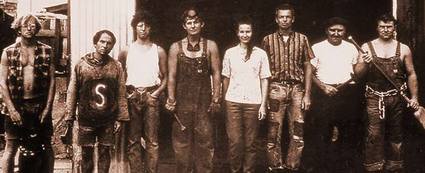
As my good friend Alex pointed out to me today, "How could these guys NOT start a cool company?"

The dude with the Superman "S" on his chest is Yvon Chouinard of Patagonia.  You know the rest of the story.

How much of your organization's brand is in you?  And vice versa?  Patagonia still vibrates in sync with every fiber of Chouinard's body.  That's brand fractalness -- I think if you're doing things right, you are your offerings, and your offerings are you and everyone else who produces them and adopts them into their own lives.

15 April 2005 | Permalink | Comments (0) | TrackBack (1)

| |

Bu'wicked Virtual Marketing

First things first: this is not a post about cars.  This is a post about good marketing.

Do you know this car?  Not the make of car -- it started life as a vanilla 1962 Buick -- but this car, which its owner/builder calls "Bu'wicked"?

Chances are you don't, unless you own a PlayStation 2 and are an avid player of Gran Turismo 4.  But there are millions of video gamer ten-year-old kids who positively worship this car, even though it's a Buick.  Why?  Because it's fast fast fast fast, and stomps Jaguars and Corvettes and Porsches around the world's (virtual) racetracks like nobody's business. 

But how, you may ask, does a crazy old Buick hot rod wind up parading around a 21st century video game?  Chalk it up to a clever promotional strategy on the part of the producers of GT4, who awarded its builders, Ted and Sue Richardson, the honor of having their car digitized and placed in the game after it was awarded Best in Show at SEMA last year.  In the game, the car ends up looking like this:

14_1

Gran Turismo introduces cars and brands to kids and young adults who don't own cars.  In many ways it's the ultimate marketing sampler machine -- play hard for a while and you'll have the (virtual) money to buy and drive any car on the planet.  It made the Subaru WRX and the Mitsubishi Evo into total cult cars in the US even though they weren't yet sold in this country.  So when those cars were finally introduced here a few years later, they sold like hotcakes.  I'd wager very few marketers think of video games as part of their promotional mix, but the smart ones are already out there using them to tell authentic stories about their products. 

Is some clever Buick brand manager ultimately behind the GT4 Bu'wicked?  I doubt it, but if I were a marketer trying to put some luster back into that brand, I know what I'd be doing, and it has nothing to do with big, expensive magazine ads.

13 April 2005 | Permalink | Comments (1) | TrackBack (3)

| |

metacool Thought of the Day

"Teaching elephants to dance may be easier than teaching managers how
to innovate... Managing organizations is important. But managing creativity is the must-have skill for today's managers."
- Bruce Nussbaum

12 April 2005 | Permalink | Comments (0) | TrackBack (0)

| |

Innovation, Empathy, and the Internet, part 3

7apr05closeup

Yet another example of how the Internet can help us get outside of ourselves, to see the world through the eyes of others or from a completely new point of view:  mezzoblue writes about Google Map's new satellite imagery feature being used as tool to tell a compelling, authentic story about the devastating environmental impact of clearcutting. 

I'm beginning to believe that the emergence of design thinking in our society is somehow related to the rise of the Internet as an ubiquitous source of information, entertainment, and stimulation.  Never before have we had ready access to so much complexity.  Design thinking -- with its emphasis on empathy for humans, iterative problem solving via prototyping, and an entrepreneurial mindset -- is the best way I know of to work with that complexity.

11 April 2005 | Permalink | Comments (1) | TrackBack (0)

| |

Guerilla Marketing 101, part deux

The Counter Counterfeit Commission

09 April 2005 | Permalink | Comments (0) | TrackBack (0)

| |

Venture Design, part 7

In an effort to resuscitate a riff about venture design that I wrote about a few months ago, I'm going to point you (and myself) to this nice Bill Breen Fast Company piece about design thinking, Roger Martin, and the Stanford d.school.  Here are two paragraphs I particularly like:

The trouble is, when confronted with a mystery, most linear business types resort to what they know best: They crunch the numbers, analyze, and ultimately redefine the problem "so it isn't a mystery anymore; it's something they've done 12 times before," Martin says. Most don't avail themselves of the designer's tools -- they don't think like designers -- and so they are ill-prepared for an economy where the winners are determined by design.

And:

Organizations that embrace a design-based strategy also employ the practice of rapid prototyping. Whereas conventional companies won't bring a product to market until it's "just right," the design shop is unafraid to move when the product is unfinished but "good enough." Designers learn by doing: They identify weaknesses and make midflight corrections along the way.

The subtlety here is that "design shops" don't typically ship products, they only create them.  The trick is to create a culture within a product organization that is willing and able to ship products that are only "good enough", as this is the enlightened path to creating products that are "wow".  I think this may require having design thinkers working across every discipline in the organization -- finance, marketing, sales, service, manufacturing, engineering, etc...  one needs to design a venture that can only be staffed with design thinkers.  I'll be revisiting this topic as I get into Dan Pink's new book.  Stay tuned.

08 April 2005 | Permalink | Comments (2) | TrackBack (0)

| |

On Authentic Lies

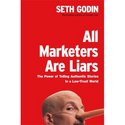
159184100301_aa400_sclzzzzzzz__1I just finished reading Seth Godin's All Marketers are Liars, an ode to the art of crafting, telling, and transmitting authentic stories (or lies).  Seth was kind enough to set me up with a galley of his new book, and if you have even one iota of interest in storytelling as a tool to create good stuff, put this one on your reading list. 

But, you may ask, is Liars really about design?  Yes.  Think of it as Purple Cow II: if Purple Cow was about mindfully applying visceral, behavioral, and reflective design to create remarkable offerings, then Liars is an extended riff upon the subtle art of reflective design alone.  Reflective design is about creating meaning, and in Liars Godin offers a design process to help make your stories sing.  As usual, you always know where Seth stands on an issue, and as a result the stories he tells, such as one about the genesis of Fox News, are engaging and instructive all at once.  The companion blog for the book is nifty, too. 

06 April 2005 | Permalink | Comments (0) | TrackBack (0)

| |

Creatiing Cool Stuff with Storytelling, part 5

What would happen if you approached your next presentation as a design challenge?

05 April 2005 | Permalink | Comments (0) | TrackBack (0)

| |

Some cool new blogs

When not blogging, or thinking about blogging, all of us here at metacool spend our waking hours scouring the net for other blogs that might help all of us get to a better place vis a vis the art and science of creating cool stuff.  In short, metacool aims to provide you with a fully edited user experience, saving you time and energy.  Kind of like Costco.

So, here are the latest additions to that most dynamic of lists, COOL BLOGS (at lower left):

  • Future of Marketing:  from the people at IFTF, this is Gizmodo for marketing types.
  • Noise Between Stations: thoughts on design & business.  Like metacool without the fluff.  Oh, wait, I just scanned his site and he's linking to me.  Ships that pass in the night, indeed.
  • Orange is the New Pink:  Daniel Pink's blog about this new book.  Should be interesting!
  • Simplicity:  I wrote about John Maeda's simplicity workshop last year.  Here's the blog -- it'll blow your mind.

31 March 2005 | Permalink | Comments (3) | TrackBack (0)

| |

Unabashed Gearhead Gnarlyness

The Bugaboo Frog

30 March 2005 | Permalink | Comments (2) | TrackBack (2)

| |

metacool Thought of the Day

"Anyone developing new products and new technology needs one characteristic above all else: hope. This comes down to a few elements:

  • having high expectations that you will succeed - despite any setbacks or frustrations
  • having the sense to break down an imposing task into smaller, manageable ones
  • believing that you are able to achieve your goals, whatever they may be. Be dogged and determined
  • and don't be afraid to be different."

- James Dyson

29 March 2005 | Permalink | Comments (0) | TrackBack (1)

| |

Mindful Marketing

Each day on my way to work, I walk by the big glassy windows of Darshana Yoga.  What's unusual about Darshana is that the yogis and yoginis do their practice in an airy room just behind these windows.

Most yoga studios that I know of are kind of like massage parlors -- there's the shingle out front, but the activities within happen behind closed doors.  I can understand this need for privacy; were I doing a downward-facing dog pose, I wouldn't want everyone on the street ogling my rump. 

But by being mindful of theirr appearance to the street, Darshana turns these windows into a wonderful marketing opportunity.  Just as the white earbuds on an iPod signal to the world that you're a Jobsian rip-mix-burner, Darshana's window makes private yoga consumption a public act.  When I see other Silicon Valley technogeeks doing Virabhadrasana behind those panes, I start to believe that I could be a yogi, too. 

The icing on the cake is the fact that glass is translucent to kindness.  Walk by Darshana, and if you catch the eye of owner Catherine De Los Santos, she'll give you a nice, warm smile.

28 March 2005 | Permalink | Comments (0) | TrackBack (0)

| |

Creating Cool Stuff with Storytelling, part 4

I can’t tell you how much I learn from good blogs.  One I particularly like is Presentation Coach.  Scott Rayburn writes pure gems about making good presentations, telling better stories.  His latest post,  “About fear…” is wonderful, because it acknowledges the fact that we’re all human, and nothing in life ever reaches a state of 100% perfection:

Will you make mistakes? Of course.

Will there be flashes of panic? Yes.

Will you forget details? Most likely.

Give yourself permission to make mistakes, to be anxious. Then carry on. Just don’t make yourself a liability for your message. It’s too important for that.

I love Scott's approach to public speaking.  When was the last time you did anything worthwhile without  making a mistake or two?  Giving yourself permission to make mistakes is about much more than effective public speaking, it's about being innovative across your entire life.  Just go do it!

27 March 2005 | Permalink | Comments (0) | TrackBack (0)

| |

Marketing = Design = Marketing

If caskets can be made sexy and interesting, well, maybe there's still room for innovation in the realm of vacuum cleaners:

The Ball

If you're Dyson, how do you make a better vacuum cleaner?  You can't make it lose less suction, because it doesn't lose any to begin with.  Instead, you break the existing paradigm of maneuverability, producing something that broadcasts its unique value proposition loud and clear. 

Does The Ball need mega advertising to succeed?  No way, because its marketability is embedded in the remarkability of its design. 
Marketing = Design = Marketing.

24 March 2005 | Permalink | Comments (4) | TrackBack (1)

| |

Design = Marketing = Design

Tim Manners, whose Cool News is listed in the metacool blog roll, has an interesting column in Fast Company called "Marketing to Death".  In it he expounds upon the theme of Godin's Purple Cow: it's not about marketing something that sucks, it's about building things so remarkable that they market themselves (and make you look even better if you spend some additional marketing bucks, too).  Along the way, he tells some pithy stories about things like:

  • Caskets
  • A library
  • Artificial Xmas trees
  • A trip to the dentist

All of these seemingly moribund market offerings can be transformed into delightful human experiences if you just spend some time and energy to listen, take notes, and invest in making them have intrinsic value.  Such as the Seattle Public Library pictured above.  It's the zone where design = marketing = design.

23 March 2005 | Permalink | Comments (2) | TrackBack (0)

| |

A Good Blanket Story

The folks at MBDC are marketing a baby blanket that's fully compliant with their cradle-to-cradle environmental design guidelines.  Designed for the cradle, this blanket's value proposition also has everything to do with cradle-to-cradle design thinking:

... using only the highest quality and healthiest available materials and chemicals... It's safe enough to eat (if you need the roughage) and can be safely composted after use, to build healthy soil.

And though MBDC is not doing a good job of marketing it (no reach, zero awareness!), the blanket itself is rather compelling from a marketing point of view.  Yes, the graphic design they chose is hard ugly, but there's some beauty underneath, to wit:

First, the value proposition is awesome.  Think about it: a blanket that's safe enough to eat, safe enough to plant as fertilizer in case.... er, em... in case it ever becomes so impregnated with fertilizer of the baby kind as to become unwashable.  Which makes it something you'd feel very comfortable putting next to your new baby's skin.  No weird, endocrine-disrupting chemicals.  No worries at all.

Second, this blanket demonstrates the value of storytelling as a way to market environmentally sound products, be they "sustainable" or "cradle-to-cradle" or whatever.  Why?  It isn't making the mistake of trying to change the worldview of a parent who drives a Suburban.  Instead, it tells a story of total ecological integrity perfectly tailored to an audience of Prius-driving parents worried about a world where you can't eat the fish, can't play in the grass, and can't wear chemically-grown cotton.  With that ugly MBDC logo woven into the blanket, it's a rolling advertisement for cradle-to-cradle thinking, and it will trigger storytelling wherever it goes.  It's a story these parents are ready to hear and transmit, and that's all that matters.

That's great marketing.

21 March 2005 | Permalink | Comments (2) | TrackBack (0)

| |

How to Compete with Google

Brainboost

20 March 2005 | Permalink | Comments (0) | TrackBack (0)

| |

How about a Sound and Smell Tasting session?

In both professional and academic settings I've had good success helping non-designers partially "get" what the whole design/brand/quality/experience furball is all about just by having them bring in their favorite object and then talk a bit about what makes it good.  There's something about the process of having to articulate mushy subjects like quality, heft, smell, taste, and feel that wakes the formerly dormant "goodness sensitivity" gene in people.  Deep down inside our modern brain, we all know what good is all about, but somewhere along the line we forget how to listen to our senses.  It's there, can you here it whispering?

I'll never forget the time a co-worker brought a piece of her underwear (okay, okay -- it was just a t-shirt) to one of these meetings.  She spoke from the heart about why this was the absolute best undergarment in the world for her.  It taught everyone in the room about quality in a deep way, and we just couldn't have gotten there via PowerPoint.

A little while ago I wrote yet another episode in my "Sound Matters" series.  It generated some good feedback and ideas: 

  • Ryan suggested that we also add "smell" to products to push them over the top.  Absolutely, man!  I got a whiff of a 1962 Porsche 356 the other day, and it smelled like Germany!!  Now that's what I call brand essence!  What if you could buy a new 911 that really smelled the way a Porsche should, instead of smelling exactly the same as a 2005 Camry?
  • Valentin came up with the nifty, nifty idea of holding a "sound tasting" party.  I can just imagine it: you walk into a room, you get blindfolded, and then you listen to a series of 20 or so vintage mechanical cameras being put through the paces...  Voigtlaender Bessamatic, Leica II, Exakta Varex VX IIa, Robor Star.... it would be an aural fiesta, a feast for the ears.  The sound of quality.

I think design thinkers need to be able to feel design quality in their bones.  Why not hold a sound and smell tasting party of your own?

17 March 2005 | Permalink | Comments (1) | TrackBack (0)

| |

Empathy and the Business of Innovation

In case you haven't seen it, allow me to point you to this great Bruce Nussbaum article about design thinking.  "All the B-school-educated managers you hire won't automatically get you the outside-the-box thinking you need to build new brands -- or create new experiences for old brands," Nussbaum says.

"The truth is we're moving from a knowledge economy that was dominated by technology into an experience economy controlled by consumers and the corporations who empathize with them."

Amen, brother.

15 March 2005 | Permalink | Comments (1) | TrackBack (0)

| |

Innovation, Empathy, and the Internet, part 2

6384132_035a4eb0a7Here's another example of how easy it could be to use Internet-enabled observations as a source of inspiration for your innovation process: whatsinyourbag

Think of each of these photos as a unique story about how one human gets through modern life. 

There are easily hundreds of wants and needs here waiting to be solved.

14 March 2005 | Permalink | Comments (1) | TrackBack (0)

| |

Unabashed Gearhead Gnarlyness

The Senft Tandem

(The world's largest tandem bike.  While you're at it, why not do it to the hilt?)

11 March 2005 | Permalink | Comments (1) | TrackBack (0)

| |

metacool Thought of the Day

"If someone preaches profit-maximizing as a company's highest goal, then that's simply wrong. Hell, it's criminal."
-- Dietrich Mateschitz

10 March 2005 | Permalink | Comments (4) | TrackBack (0)

| |

The Stanford Institute of Design in TIME

School of Bright Ideas

09 March 2005 | Permalink | Comments (0) | TrackBack (0)

| |

"Just enough is more", and other pearls of wisdom

Here's some deep wisdom from Milton Glaser, who says, "I am going to tell you everything that I know about the practice of design. It is a sort of collage of bits and pieces that I have assembled over 50 years...This is what I’ve learned."  You'll need at least an hour to soak all of this in.  Here's an overview:

  1. You can only work for people that you like
  2. If you have a choice never have a job
  3. Some people are toxic; avoid them
  4. The good is the enemy of the great
  5. Less is not necessarily more
  6. Style is not to be trusted
  7. How you live changes your brain
  8. Doubt is better than certainty
  9. Solving the problem is more important than being right
  10. Tell the truth

I particularly like no. 5:  "Just enough is more". 

via Seth Godin

09 March 2005 | Permalink | Comments (0) | TrackBack (1)

| |

Nike Considered: Simply Remarkable

Nike has just launched its new Considered family of shoes, designed from a Cradle-to-Cradle-ish Point of View.  To create the Considered line, Nike's designers went back to first prinicples, questioning basic design traditions in order to get to a new and better product outcome which addresses the environmental footprint required to source, manufacture, and recycle shoes.  Here are some highlights:

  • Leather (a renewable resource) pieces are stiched in an overlapping fashion so as to produce smooth internal seams, obviating the need for comfort liners and reducing the shoes's material mass.
  • All of those leather pieces are tanned using a vegetable-based process
  • Again, to save material mass, metal eyelets aren't used
  • The two-piece outsole is designed to snap together, eliminating harmful adhesives and simplifying recyclability
  • No use of PVC
  • Where possible, materials are sourced locally to reduce transportation energy use

The result?  Considered shoes generate 63% less waste in manufacturing than a typical Nike design.  The use of solvents has been cut by 80%.  And a stunning 37% less energy is required to create a pair of shoes. 

Is Considered a perfect example of green design?  No, but when was the last time anyone did anything to perfection?  I'm just happy to see a big, public company like Nike -- with everything to lose, and not so much to gain -- take a leadership role in trying to forge a new market space for environmentally friendly, socially relevant products.  This is a wonderful first step.

The result is a new sub-brand of shoes whose differentiation is rooted not in the multi-million dollar marketing endorsement of a basketball player, but in the physical makeup and design of the offering itself.  That's real, and I hope it's for keeps.

08 March 2005 | Permalink | Comments (3) | TrackBack (1)

| |

Bono's Important TED Talk

Bono gave an inspiring, audacious speech at TED about changing the world, and it's worth watching.

07 March 2005 | Permalink | Comments (0) | TrackBack (0)

| |

It's Not About the Blog, part 2

Last month Scoble said "You should be fired if you do a marketing site without an RSS feed."

I propose a stronger wording: "You should be fired if you conceive of your marketing site as being anything other than an RSS link to and from your audience." 

Why go through all the bother of creating a slick online "brochure" when everyone else can create the same thing by spending cubic dollars?  Flash tours, splashy graphics -- they're all so commonplace, so boring.  And how many times do I visit a non-transactional marketing site?  Once, maybe twice?

Instead, create a site around what's unique: you and your offering.  Speak with a real voice.  And listen and learn.  Use RSS, and not a glossy brochure, to strike up a relationship with a potential or current customer. 

Here's a great example.

06 March 2005 | Permalink | Comments (1) | TrackBack (0)

| |

Help change the world, visit WorldChanging

I admit it: I'm a bit late to the party on this one.  WorldChanging is one of the most remarkable blogs around, but I didn't know of its existence until late last week.  No matter, now I'm hooked.

From their unique mission to their strong point of view to the depth and breadth of their content, the crew at WorldChanging will change the way you approach being a global citizen.  So, pay WorldChanging a visit.  If you have a child, talk to her about the things you learn there.  If you have a blog, give 'em a link.

There's too much important stuff at WorldChanging to ignore.  Like this.  Or this.  And this.  Wow.

03 March 2005 | Permalink | Comments (1) | TrackBack (0)

| |

Unabashed Gearhead Gnarlyness

The Laverda SFC 1000

02 March 2005 | Permalink | Comments (0) | TrackBack (0)

| |

Innovation, Empathy, and the Internet

Observing our fellow human beings work their way through life can be a rich -- arguably the richest -- source of inspiration for innovations.  Sony's Walkman grew from Akio Morita's insight that, given a choice, people want to listen to music whenever possible.  Henry Ford's Model T, and later Pierre Boulanger's incredible 2CV, both came from the realization that would soon be wealthy enough to want and use basic, affordable transportation devices.  Scott Cook succeeded in a crowded market by building Quicken's user interface around insights gleaned from watching people -- including his wife -- balance paper checkbooks.

But getting out of the office to go observe real people can be intimidating, difficult, maybe even impossible.  As organizations grow and work roles become more specialized, talking to real people becomes the job of the research department instead of the people actually doing the development work.  And as things grow even bigger, the research department hires outside research firms to do the work.  Bye bye human empathy!  Real people and their vibrant stories and true needs get reduced to PowerPoint bullets, statistical tables, and cheesy clip art.  Can we really expect inspired, breakthrough innovations to come from that?

If you work in the kind of situation I just outlined above, I think you have three choices:

  1. Accept the status quo, get your "user insights" from your research group's hired help, and watch your organization slowly ossify and become functionally unable to innovate.
  2. Don't tell anyone what you're doing, go observe users, start a blog, listen to support calls -- anything.  You might hit a home run.  Or not. This takes guts and runs the risk of derailing your career because you're undermining the research bureaucracy.

The third choice?  Ask yourself this:  how hard is it to go out and observe real people in an age where, without leaving your desk, you can:

  • observe humans at a conference in Tokyo
  • watch people stroll through an aerospace museum
  • quickly learn what 120 believe to be true even through they can't prove it

I have a sneaking suspicion that this is yet another case where the Internet really does change everything.  Let's embrace Internet-enabled observations as yet another source of innovation inspiration.  It's cheap, it's there -- why not?

01 March 2005 | Permalink | Comments (0) | TrackBack (1)

| |

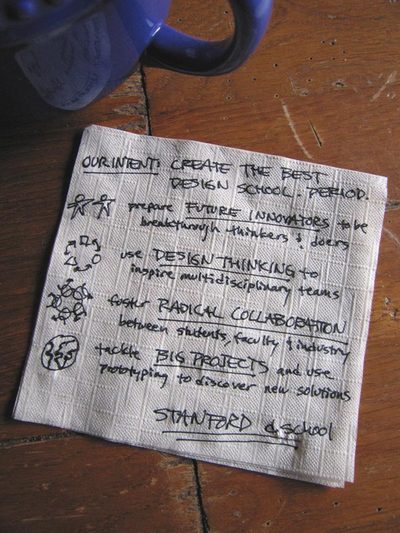
Stanford's new Institute of Design (aka the "d.school")

Ds_manifesto_1

A secret informant slipped me this manifesto from Stanford's new Institute of Design (aka the "d.school"). 

Pass it along to your friends!  Join the design thinking movement!

27 February 2005 | Permalink | Comments (1) | TrackBack (2)

| |

Venture Design, part 6: Beating the Commodification Monster

Most business magazines would have you believe that a big, nasty monster called "commodification" really does live under the bed.  Or perhaps in the closet. This view of world believes that dwindling margins, shrinking revenues, outsourcing to China, and the great sucking sound of WalMart are all inevitable parts of doing business circa 2005.  The monster is going to get you...

Hogwash.  Creating cool stuff that matters is the best way to avoid the commodification trap, and cultivating the ability to create that cool stuff in a cool way makes things even sweeter.  To illustrate this point, I'd like to point you to economist Virginia Postrel's recent NYT article on American Leather, a furniture manufacturer using lean manufacturing, enlightened employment practices, and a modular design philosophy to create (and claim) real value in the marketplace.  In an industry rife with cost and price pressures, American Leather's sales are growing 17% per year year.  And their products are pretty nifty.

Not that it's been an easy ride for the firm.  Its co-founder Bob Duncan came from an engineering background, which enabled him to implement the innovative manufacturing culture that defines American Leather, but that training didn't prepare him for what it really took to get something to market.  Says Duncan:

At the end of the day, you have to sell the stuff.  You can have the coolest products. You can build it in 20 minutes and deliver anything you want. But if nobody buys it, it's irrelevant. As an engineer, the biggest thing I've learned in the whole process is how hard it is to sell things.

I love what American Leather has done and what they stand for.  Designing your venture to create the products people want in the way they want them is the best way to beat the commodification monster.

26 February 2005 | Permalink | Comments (2) | TrackBack (0)

| |

Jolie-Laide, part 4

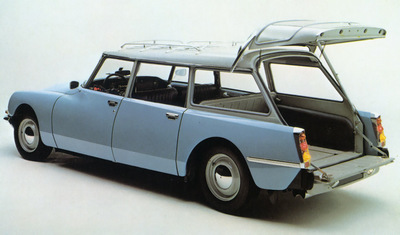
1971_citroen_ds_break
The Citroen ID Break

(why settle for beautiful when you could be interesting?)

24 February 2005 | Permalink | Comments (0) | TrackBack (0)

| |

metacool Thought of the Day

"To me, doing design doesn't mean giving form to a more or less stupid product for a more or less sophisticated industry.  Design for me is a way of discussing life, sociality, politics, food and even design."

- Ettore Sottsass

23 February 2005 | Permalink | Comments (1) | TrackBack (0)

| |

Building a Product Dynasty: Gran Turismo 4

Five simple steps to creating a product dynasty, a la Kazunori Yamauchi:

  1. Tap into your abiding love for cars and racing to create a vision of the best damn driving game/simulation around.
  2. Hire only programming maniacs and monster artists who share your extravagant automotive fetish.
  3. Do everything totally, massively, to the hilt.
  4. Ship the best damn game to market.  See what works and what doesn't, and take notes for future editions.
  5. Wait a few years, go back to Step 2 and repeat.  Wait a  few more years and repeat again.  Let another presidential term slip by and repeat once more.

Today is one of those hallowed days that makes even this thirty-something professional giggle like a kid on Christmas morning.  Why?  Because today -- today!! -- the talented crew of Polyphony launches Gran Turismo 4, a tribute to focused vision, technical virtuosity, and the entrepreneurial moxie it takes to design every fractal element -- from large to small -- to the hilt.

Excuse me while I go flog my Toyota Celica WRC rally car through the snowy forests of Finland.

22 February 2005 | Permalink | Comments (1) | TrackBack (0)

| |

Expanding the Definition of Your Offering

Where does your offering start and end?  Where should it start and end?  What could you do at the borders of your existing offering to help it deliver a more delightful user experience?

The people behind the Everquest online fantasy video game asked themselves these questions and came up with something pretty special:

While playing EverQuest II just type /pizza and a web browser will launch the online ordering section of pizzahut.com. Fill in your info and just kick back until fresh pizza is delivered straight to your door.

How cool is that?  Pizza on demand isn't a traditional video game feature like better graphics and more complex story lines, but it is an amazing way to enhance the video game experience.  And it's a good example of how customer-centric innovation doesn't always need to be something big and scary.  It might just be about asking the right questions.

21 February 2005 | Permalink | Comments (1) | TrackBack (0)

| |

Creating Cool Stuff with Storytelling, part 3

I've always worked in product development.  It's an intensely social environment where people are constantly telling each other stories to get their point across.  Accordingly, I've probably sat through at least one PowerPoint presentation for each day I've spent in the office. 

It's often painful.  So painful, in fact, that next time someone stands up in a meeting and begins reading directly off their PowerPoint prezo, I swear I'm going to every-so-politely inform them that the last person to read to me out loud was my mother and that procedure ceased circa 1974.  Trust me, I can read, and if there's some text around, I'd rather digest it myself than try to listen to you and read it myself at the same time.

Here's the problem:  PowerPoint wasn't designed as a tool for documenting complex thoughts or piles of information.  As a wise man once said, trains of thought need tracks.  And those tracks are best constructed of prose, which is what Microsoft Word is for.  So when people use PowerPoint as a medium for complex and complete sentences, tables, lists of bullets, etc... they're not helping their story or their audience get to a good place. 

Cliff Atkinson shows on his blog that removing text from PowerPoint improves both information retention and transfer.  And I recall Seth Godin advising that we use no more than six or so words on any PowerPoint slide.  Use a photo or drawing instead, he says.  Removing text from your PowerPoint decks forces you to become an active storyteller, and that's fine, because that's what we humans do when we're around one another. 

So.  Word = Prose Documentation.  PowerPoint = Active Storytelling.  If you need both outcomes, use each program to write up two different documents.

21 February 2005 | Permalink | Comments (0) | TrackBack (1)

| |

It's Not About the Blog

Today Robert Scoble said something terribly trenchant about marketing: 

"You should be fired if you do a marketing site without an RSS feed."

He's right. 

Really Simple Syndication (RSS) isn't about blogs.  It isn't about geeking out and being a blogger, either.  Forget blogs.  RSS is about giving your customers the ability to say "Yes, I'd like to continue to hear what you've got to say."  You'd have to be a total coward of a marketer not to try using a RSS feed (whether you call it a blog or not) to have a conversation with your customers.  It'll take a bit of work, and you're going to have to put some writing and thoughts and feelings out into the public domain and maybe take a risk or two, but that's life. 

Good marketing takes guts.

19 February 2005 | Permalink | Comments (1) | TrackBack (0)

| |

Creating Cool Stuff with Storytelling, part 2

As a design thinker, I wouldn't dream of embarking on a development project without first establishing my point of view (POV).  Establishing and growing a POV is an integral part of my design process.  Think of a POV as your take on why whatever you're creating merits a place in the universe.  What makes it remarkable? 

As it turns out, establishing a strong POV has everything to do with good storytelling.  For help in illustrating this idea, I direct you to the writing of Scott Rayburn, who is growing a tasty new blog around teaching great public speaking, and to some extent, storytelling.  He insists that to create a good story, you need to understand your Big Idea:

First, wade through all the fact and figures and themes of a subject and distill everything down to an idea that can be expressed in fewer than 10 words.

Next, shape your message around those 10 words... When your audience hears your presentation, what is it you want them to remember above all else?

So the concept of the Big Idea is to storytelling what POV is to design: don't leave home without it.  Now, I believe that to make your designs take hold in the world, you need to be a good storyteller.   So it's delightful to think that perhaps design thinkers already know the right process for designing -- and telling -- good stories. 

17 February 2005 | Permalink | Comments (3) | TrackBack (0)

| |

Sound Matters, part 3

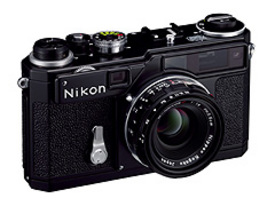
Niksv

Do you care -- really care -- about expressing your brand as best you can?

The people at Nikon really care.  They recently reissued their famed SP 35mm camera from 1957, and it's incredible the length they went to make this new offering look, feel, and even sound like the brand-defining original. 

How incredible?  Well, Nikon engineers used computers to create a sonic "fingerprint" of the original and then fine-tuned the materials of the new SP to make it sound exactly the same.  For example, rather than using modern titanium for the focal plane shutter, they chose to employ rubberized silk -- the way things were circa 1957.  This is an expensive design decision, not to be taken lightly.  Assembly lines for this kind of shutter are way more expensive to run because the fabric precludes a modular, streamlined production flow, and demands a very tricky fine tuning of each unit.  By the way, this is not the sort of thing they teach you at Harvard Business School.  Can you imagine standing up in your next marketing meeting and saying "We're going to go with this production method from the Eisenhower decade because it's the best thing for our brand.  Oh, and it costs a bundle and isn't technically advanced, either."?  It would be tough for me, too.

But it's absolutely the right choice, because it makes the new SP sound right, and that's worth everything here.  Sound really does matter.  How far would you go to make your brand sound the way it needs to sound?

Read Sound Matters & Sound Matters, part 2

thanks to Valentin Sama for the reference

15 February 2005 | Permalink | Comments (7) | TrackBack (0)

| |

Creating Cool Stuff with Storytelling

For a whole host of reasons, I've become obsessed with the idea that most of process of bringing cool stuff to life is about telling great stories.  Great stories are a way to communicate a complex value proposition, evoke emotions, relate a new offering back to its brand, or to shape the Reflective elements of a design that create "brand" in the first place.  And storytelling is a wonderful way -- perhaps the only way -- for innovators to convince key stakeholders, partners, and collaborators of the worth of their quest.

Storytelling holds the potential to take business thinking from the cold, dry left-brain world of 4P's and 5C's and 6 sigma to a warm, rich world of ethos and pathos.  It's about being human. 

Example:  when I was marketing QuickBooks Online, I had a helluva job on my hands:  how do I convince really busy, really technology wary, really penny-wise small business people to adopt a non-sexy accounting software solution that requires the use of a scary new technology platform (the Internet) and a strange business/transaction model (software as service)?  I spent months iterating my way to what, in retrospect, is an obvious solution: tell stories.  And not just any stories, but stories told by users themselves, telling them in a "keep it real" kind of way.  As you can see here, I created stories using raw, basic photos, and didn't do anything to edit the verbatim words of my customers.  Zilch, nada, nothing.  In turn, these stories are compelling to prospective customers because they ring true, plain and simple.  They're good stories in a way that a traditional software industry white paper could never be.

This is why I can't wait to start reading John Winsor's book Beyond the Brand.  On his blog he provides a nice excerpt which explains the key elements of compelling storytelling:

  • Context
  • Simplicity
  • Interest
  • Trust
  • Meaning
  • Connectedness
  • Magic
  • Relevance
  • Immediacy

See the rest of his blog post here.  I, for one, look forward to using his wisdom to enhance my ability to tell good stories.

14 February 2005 | Permalink | Comments (2) | TrackBack (0)

| |

Title Inflation: Do it to the hilt!

Seth Godin is blogging about English Cut's bespoke suits.   "In an era where you don't have to wear a suit," says Seth, "a $3,000 suit is nothing but remarkable."

He has a point, but at a time where progressive organizations have dumped formal job titles, and where title inflation runs rampant in those companies where they're still in use, to be truly remarkable one needs to go beyond mere Savile Row tailoring.  No, in this era of the post-modern economy, to be well and truly remarkable demands nothing less than a good old fashioned peerage.  If it's clothes that make the man, it's a royal title which makes The Man.

I'd quite fancy an org chart tag like Consignore Rodriguez. 

Want to be remarkable?  Why not do it to the hilt?

thanks to Alex for the tip

13 February 2005 | Permalink | Comments (0) | TrackBack (0)

| |

Blogging and the Creative Process

I get quite a few questions that go something like this: "How does a busy fellow like you find the time to blog?"

To which I answer,  "Blogito ergo sum" -- "I blog therefore I am (creative)". 

I try to make blogging an integral part of my creative process.  I find it a great way to slosh thoughts across the right and left sides of my brain and, on occasion, come up with something interesting.  This humble blog of mine is a sandbox, a place for creating quick idea probes which I launch on a whim.  Blogging is a nice way to be fast, cheap and out of control.

It does take time, but a lot less than you might think.  Along with flying planes and racing cars, being a writer was something I aspired to even as young boy.  Actually, books, writing, and literature have always played a more central role in my life than even cars (and if you know me, that's really saying something).  However, though I wanted to be a writer, I never thought I had the time to be a good writer.  But while perusing William Gibson's blog early last year, I came to understand why it might be worthwhile to start doing even a little bit of writing here and there.  And how little time it might take.  Says Gibson:

I suspect I have spent just about exactly as much time actually writing as the average person my age has spent watching television, and that, as much as anything, may be the real secret here.

That's a remarkable thought, isn't it?  And so I took Gibson's word for it and started writing this blog.  I don't know what I dropped in my schedule to make it happen, for I wasn't a big watcher of TV, nor did I feel like I had oodles of empty time sitting around waiting to be used.  But still, I find the time and by finding it, I make the time.

I honestly believe that blogging has made me more creative, if creativity can be defined the ability to see patterns and make connections.  Forcing myself to write on an almost daily basis about foggy topics has been like an injection of neural lube for my design-thinking brain cells.  I may not actually be creative, but for sure my fingers are more limber and thoughts flow more easily through to full expression -- much as they did musically back when I used to play my saxophone at least three hours a day.

Perhaps blogging is a perfect form of structured procrastination, a term coined by Stanford professor John Perry.  Structured procrastination, Perry says, is a way to ".. be motivated to do difficult, timely and important tasks, as long as these tasks are a way of not doing something more important."  Think about that.  Instead of procrastinating and not getting anything done, why not procrastinate as a way to get some other cool stuff done while you're mustering the will to tackle that big gnarly thing slouched over in the corner?  Per Perry's definition, blogging certainly qualifies as difficult, and if you believe that at least one soul, somewhere, somehow is hoping that you'll post something soon, well, then you've got the timely and important part there, too.

Blogging isn't the most important or urgent or important/urgent thing I do.  Far from it. But it is a way of getting to good stuff that makes the really important stuff I do work better. 

11 February 2005 | Permalink | Comments (2) | TrackBack (0)

| |

metacool Thought of the Day

"What would you attempt to do if you knew you could not fail?" - Thomas Keller

10 February 2005 | Permalink | Comments (1) | TrackBack (0)

| |

von Hippel on Innovation & Interesting Users

As of late I've been getting reacquainted with the thinking of Professor Eric von Hippel of MIT, who studies the innovation process.  It's intriguing stuff.  Here's an excerpt from his paper "Breakthroughs to Order at 3M":

Not all users are created equal with respect to the development of commercially-important innovations and innovation prototypes.  Research shows that almost all user-developed ideas and prototypes of general commercial interest tend to be developed by “Lead Users” – that is, users that: (1) expect to get high benefit from an innovation and so have a strong incentive to innovate and; (2) that are ahead of a target market with respect to one or more important trends...

The point is, if you want to find users that are actively exploring and testing new ideas, it is a waste of time to survey users in the center of the target market.  Instead, you must develop methods to seek out users that are at the leading edge with respect to needs that are important to that market – even if such lead users are rare and hard to find - because that is where interesting user idea generation and innovation is concentrated.

You can see more of his writing here.

07 February 2005 | Permalink | Comments (1) | TrackBack (0)

| |

Unabashed Gearhead Gnarlyness

The Yamaha Chivicker  

03 February 2005 | Permalink | Comments (0) | TrackBack (0)

| |

Power to the People

Why you should really focus on creating net promoters (not net detractors):

Untied

01 February 2005 | Permalink | Comments (2) | TrackBack (0)

| |

Creating an Organization around Customers

A while ago I wondered what would happen to an organization whose CEO really understood its line of market offerings.  Then I asked what the ramifications would be if a CEO was able -- and willing -- to blog.  Now I think the biggest and best question is: what if your CEO were willing to create an org chart with the customer somewhere on the page?

What sparked this question was this interesting thought from Vincent Grimaldi I found while reading Interbrand's 2004 User's Choice Awards (top brand of the year?  Apple):

...conventional organization charts contribute to reinforcing the wrong behaviors, as they show the CEO at the top and the receptionist at the bottom. Notice that the customer is not part of this picture... When the customer calls on the phone, it is the receptionist who picks up, not the CEO. Who is the most important person in that scenario?

So, what would happen if you mapped out your own organization from a customer's point of view?  You could start by asking these four simple questions:

  • What is the user experience of our organization like today?
  • What should the user experience actually be like?
  • Who in our org actually delivers that experience?
  • How can we better allocate resources to help those key brand representatives? 

Everything should be fair game in this exercise: from how customer support calls are handled, how incoming resumes are sorted and evaluated, how content gets created for the company blog (you do have one, don't you?), how the FedEx guy gets treated each day, to how the corporate website is structured.  The results of this exercise should help your organization really "get" how to create wonderful end-to-end customer experiences by becoming more aware of the human aspects of the brand impression your company makes in the world.

In essence, it's about making your org chart a catalyst for fractal brand thinking.  At every point from the janitorial staff on down to The Office of the CEO.

31 January 2005 | Permalink | Comments (0) | TrackBack (0)

| |

metacool Thought of the Day

“Brand management is fake." -- Carlos Ghosn

28 January 2005 | Permalink | Comments (0) | TrackBack (0)

| |

« Previous | Next »

Categories

  • designing
  • innovating
  • leading
  • marketing
  • meta metacool

search


About

Subscribe to this blog's feed

    follow me on Twitter

    Favorite Posts

    • A million reasons why...
    • Mo Cheeks and a fundamental question of leadership
    • Innovation Lessons from Garage Majal
    • From Obama to Pink to Oprah
    • Shinya Kimura and the primacy of doing
    • A tribute to friends and friendship
    • Strategy that makes your hands bleed
    • Quality in a switch
    • Travis Pastrana and the future of the world economy

    on the nightstand

    • : The Great Bridge

      The Great Bridge

    • : Porsche - Origin of the Species

      Porsche - Origin of the Species

    Principles for Innovating

    • 1: Experience the world instead of talking about experiencing the world
    • 2: See and hear with the mind of a child
    • 3: Always ask: "How do we want people to feel after they experience this?"
    • 4: Prototype as if you are right. Listen as if you are wrong.
    • 5: Anything can be prototyped. You can prototype with anything.
    • 6: Live life at the intersection
    • 7: Develop a taste for the many flavors of innovation
    • 8: Most new ideas aren't
    • 9: Killing good ideas is a good idea
    • 10: Baby steps often lead to big leaps
    • 11: Everyone needs time to innovate
    • 12: Instead of managing, try cultivating
    • 13: Do everything right, and you'll still fail
    • 14: Failure sucks, but instructs
    • 15: Celebrate errors of commission. Stamp out errors of omission.
    • 16: Grok the gestalt of teams
    • 17. It's not the years, it's the mileage
    • 18: Learn to orbit the hairball
    • 19: Have a point of view
    • 20: Be remarkable

    CC

    • Creative Commons License