metacool

thoughts on the art & science of bringing cool stuff to life, by Diego Rodriguez

Finding Steve Fossett

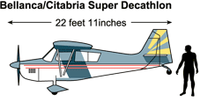
I just spent part of an hour looking for Steve Fossett via Amazon's Mechanical Turk.  Fossett has been missing since he took off in a Citabria on September 3.

Planedimensions_2

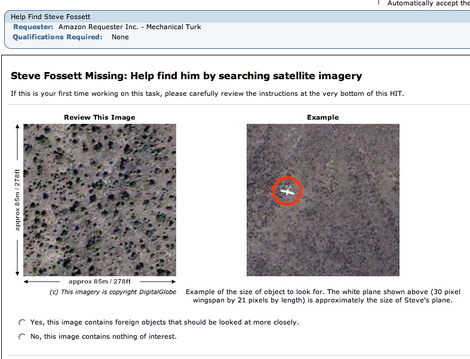
It was very easy.  I searched about 7 square kilometers of Nevada in just 40 minutes.  Here are the directions given by Amazon:

Instructions

You will be shown a single satellite image. The task is to flag any satellite images which contain foreign objects that may resemble Steve's airplane or parts of a plane. Steve's plane will show up as a regular object with sharp edges, white or nearly white, about 21 pixels long and 30 pixels in wingspan.

Notes

If in doubt, be conservative and mark the image. For complete coverage, we've set up this HIT such that multiple people will cover the same area several times over. Please do your best, but do not worry that missing one little detail will be tragic. It will get caught.

Marked images will be sent to a team of specialists who will determine if they contain information on the whereabouts of Steve Fossett.

Friends and family of Steve Fossett would like to thank you for helping them with this cause.


You basically just scan, and click "yes" or "no".  Here's what the interface looks like:

Stevefossettmetacool

Per the open source dictum that many brains make deep bugs shallow, I hope that in this case many turks make a lost plane findable.  This a striking yet tragic example of the power the web has to facilitate networked collaborations of broad scale and scope.  You can help here.

13 September 2007 | Permalink | Comments (2) | TrackBack (0)

| |

Everything matters

I flew on a name-brand airline the other week.  Airplanes are my reading room, so I packed my usual array of reading material:  The Economist, Monocle, and Octane. 

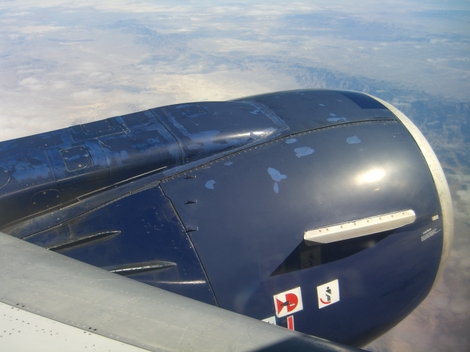
But who needs a couple hours of reading material when something as fascinating as this is hanging just outside your window?:

Cimg8556

Where to start.  First, there's a bunch of mismatched paint that's been dabbed on with a brush clearly stolen from a preschool play center.  And there's the variety of panels -- some are deeper blue, some are more oxidized, so we can be sure that a variety of airplanes have been cannibalized to get this hunk of junk in the air.  Personally, I admire that look on the Millenium Falcon, but not so much on a device I'm trusting my life to.

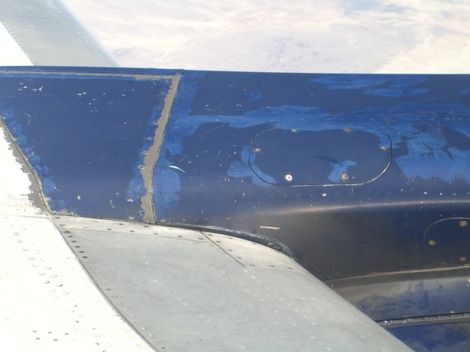
But wait, there's more.  Let's look back toward the wing:

Cimg8559

I applaud the airline for taking the time to locate, hire, and train the one individual capable of laying down a more dribbly line of caulk than yours truly.  And look at that grease swirl at the junction of the engine nacelle and the leading edge of the wing.  How artful -- you can't get that kind of fluidity of application by accident.  There's real technique at work here.

All joking aside, I actually don't blame the mechanics who work on this plane.  They're probably good people who went in to the business because they were gearheads who liked working on airplanes.  The root source of bad blue paint and the lack of time (and will) to do things right is more likely to be someone controlling a marketing budget who believes that cash spent on the rights to Gershwin tunes is more important than keeping the planes looking like the vessels of safe passage they need to be.  Where would you spend your dollars? 

I'm a believer in smoothing the transmission of the truth, so I'd spend the dollars it on matching paint, a new caulk gun, a buffing wheel, some rags, and the time and permission to do things right.  Brands are about truth, and that truth must be fractal.  Everything matters.  Or else everything comes untied.

12 September 2007 | Permalink | Comments (3) | TrackBack (0)

| |

Director's Commentary: the Ferrari F2007

Here's a Director's Commentary by proxy.  Former Formula 1 mechanic turned author and commentator Steve Matchett walks us around some of the aerodynamic details on the Ferrari F2007 Formula 1 car. 

Warning!  There's a lot of gearheadedness here.  It's a quick watch though, and even if you're not in to the extreme technological thinking that goes in to a modern F1 car, it is worth thinking about this:  what might happen if all the human ingenuity currently being poured in to carving out the tiniest margins of relative performance were instead focused upon creating paradigm shifts in the way we move across the planet?  That would be mind-boggling, I suspect.

Unfortunately, motorsports has become largely a game of incremental innovation.  It needs to be a place where revolutionary innovation is not just encouraged, but essential.

Well, a guy can dream.  Until then, tomorrow's Grand Prix is at Monza, my favorite circuit on the calendar.  It's the hallowed ground were the greatest racers like Nuvolari, Fangio, and Moss all plied their craft.  I might even get up at 4am to watch it live. 

Go Massa!  Forza Ferrari!

08 September 2007 | Permalink | Comments (0) | TrackBack (0)

| |

metacool Thought of the Day

1

"The beauty of Italy continues to amaze me.  Maybe you need to be non-Italian, new to the country, to really notice it.  I love it here.  Every day feels like a Sunday."

- Frank Stephenson

07 September 2007 | Permalink | Comments (0) | TrackBack (0)

| |

Power is the greatest...

... way to release your inner jerkdom.

Selffocused

A really chilling study: More Evidence that Getting a Little Power Turns You into a Self-Centered Jerk

04 September 2007 | Permalink | Comments (0) | TrackBack (0)

| |

Director's Commentary: John Barratt on the Boeing Dreamliner

Boeing_787_interior_shots_released

Here's a great Director's Commentary centering on the new Boeing Dreamliner.  In this video interview, Fortune's David Kirkpatrick interviews Teague CEO John Barratt about the development of the Dreamliner's passenger experience.  I enjoyed hearing about the design process used to get to the final result, which looks quite promising.

Though I have to admit that at a personal level I'm a bit reticent to fly in a plane made largely of carbon fiber, I do admire Boeing's return to a structural paradigm pioneered by aircraft of seventy years ago, such as the innovative Lockheed Vega, piloted by the equally groundbreaking innovator Wiley Post.

I had the pleasure of meeting John at DMI's International Design Management Conference last year, and we will both be speaking at a Marketing Science Institute conference in October.

31 August 2007 | Permalink | Comments (2) | TrackBack (0)

| |

A wonderful book about an amazing innovator

Dsc02707

The past few weeks I've had the pleasure of making my way through a wonderful book about the amazing life and times of Bill Milliken.   The title is Equations of Motion: Adventure, Risk and Innovation.  An MIT engineer by training, Milliken's varied and exciting life makes Indiana Jones seem a wimp by comparison, and places Buckaroo Banzai in the category of simpleton.  Here's his bio from the publisher of the book:

William F. Milliken was born in Old Town, Maine in 1911. He graduated MIT in 1934. During World War II he was Chief Flight Test Engineer at Boeing Aircraft. From 1944, he was managing director at Cornell Aeronautical Laboratory (CAL/Calspan), retiring as the head of the Transportation Research Division, which he founded.

Bill joined the SCCA in 1946 (Competition License No. 6) and contested over 100 races as well as holding many responsible club positions. Milliken Research Associates was founded in 1976 and continues as a foundational research asset to the automotive and auto racing industries. Bill remains active in MRA, which is now run by his son, Douglas L. Milliken.

Bill is co-author of Race Car Vehicle Dynamics and Chassis Design. He is an SAE Fellow, member of the SCCA Hall of Fame, recipient of the SAE Edward N. Cole Award, the Laura Taber Barbour Air Safety Award and many other citations for innovation.

Today Bill lives in the Buffalo, New York area with his wife, Barbara. He continues to consult with racing and chassis engineers. He jogs around the half-mile track behind his home and spends several evenings at the gym.

This book works on many levels.  It's a fascinating look at the world of aviation pre- and post-WW II.  You get a ringside seat at the dawn of the sports car movement in the United States.  It is an honest glimpse at what life was like in America around the turn of the Twentieth Century, and what it feels like to enter early adulthood under the weight of a major economic depression.  Most of all, it's a tribute to what it means to be a racer, to be an entrepreneur and a generative person, to get up each morning and say "How am I going to change the world today?".

I believe "design" is a verb and "innovation" is best thought of as the outcome of relatively tight set of behaviors and life attitudes embodied to their fullest by people like Bill Milliken.  He designed his life, and continues to live a remarkable one today.   

I love this book.


PS:  if you don't have the time (or inclination) to read Equations of Motion, please take a look at this charming profile of Milliken written by Karl Ludvigsen: Mister Supernatural

28 August 2007 | Permalink | Comments (0) | TrackBack (0)

| |

Imagining innovative behavior, vividly

I don't believe creativity is about thinking outside of the box.  I think it's about making connections across otherwise unconnected boxes; it's about pattern recognition.

So, if you will, please indulge me as I communicate a creative link I just made across the writing of two of my colleagues/friends/fellow bloggers, Bob Sutton and John Maeda.  Lately I've been thinking a lot about what happens when human nature meets the need for organizations to be scalable and sustainable, and I think Professors Sutton and Maeda have -- quite independently -- hit upon a key point.  First, Maeda:

When I was younger, I often tended to think the worst of others when I felt sleighted in some seemingly unfortunate way. "I have been wronged because other person X has intentionally wronged me with motive Y." I punish the other person by publicly expressing person X's (alleged and) imagined motive Y.

Often you discover that your imagination has done its work the way it should -- it imagined something happened in elegant detail without ever actually happening. The net result is not only embarrassment, but even worse your own poor intentions or habits with respect to others are revealed. You imagine most vividly what you do yourself.

The best route is to avoid situations of thinking ill of others by enacting exemplar behaviors yourself. You are likely to be in a better position as you are in a better mood and more resilient to adopting negative behavior -- thus affecting your surrounds with the positive energy necessary to do amazing things in this world.

And then Sutton, as expressed in two points from his "15 Things I Believe" manifesto:

6. You get what you expect from people. This is especially true when it comes to selfish behavior; unvarnished self-interest is a learned social norm, not an unwavering feature of human behavior.

8. Avoid pompous jerks whenever possible. They not only can make you feel bad about yourself, chances are that you will eventually start acting like them.

I believe quite strongly that people are more likely to engage in innovative behavior when they are in a flow-like state of happiness.  It's hard to be innovative when you are unhappy yourself, because as Maeda says, "You imagine most vividly what you do yourself."  And it's hard to engage in innovative, value-creating behavior when you're only looking out for Number One -- all the innovative cultures I've had the pleasure to work in were notable for their relative lack of narcissistic behavior.  If, as Sutton says, "... unvarnished self-interest is a learned social norm...", then innovative behavior should be one, too.  People aren't innovative or not, but their behaviors, thoughts, and attitudes are.

Thank you for the connection, John and Bob.

25 August 2007 | Permalink | Comments (0) | TrackBack (0)

| |

Why is the Sky high?

23auto600

Before the Saturn Sky was released to market, I wrote an essay for BusinessWeek talking about why, if I were to buy a sports car, the Sky would be at the top of my list.  My point was that it's not just about the car -- it's about what the ownership experience should be and can be.  In other words, it's about brand, where brand is about what you do rather than what you say you do.

The New York Times ran an article today titled 2 G.M. Brands, a Similar Car, but Very Different Results.  It compares and contrasts the wildly different market fortunes of the Pontiac Solstice and the Saturn Sky, which share a common platform and the majority of their mechanical bits:

Sales of the Solstice are down 19 percent this year through July, and G.M., which apologized for not building enough Solstices initially, now has nearly a five months’ supply in inventory, double the carmaker’s average. Sales of Pontiac-branded cars and trucks are off 17 percent, compared with 9 percent for all eight G.M. nameplates, according to Autodata, which tracks industry statistics.

“It was such a radical departure from what people expected out of Pontiac that it created a tremendous buzz when it first hit the market,” said Wes Brown, an automotive consultant and a partner in the Los Angeles marketing firm Iceology. “It looks pretty cool, but ultimately it’s not able to overcome some of those barriers people have within their mind with regard to the brand image.”

Meanwhile, demand for the Solstice’s fraternal twin, the costlier and more angular Saturn Sky, has shown no signs of subsiding. G.M. has about one month’s worth of the Sky available, and many buyers still have to wait several weeks or months for their Sky to arrive.

From a behavioral design perspective, they're virtually identical but where they depart is in their visceral design elements -- the Pontiac is swoopy mango yogurt where the Sky is crisp Prada suit -- and in their reflective design elements.  The latter is touched on briefly in the article, but I think it's at the core of the issue here:  what people buy is reflective design and, by extension, the experience of what it will feel like to participate in the brand over time.  While I'm a believer where Pontiac can go (their new G8 sedan bodes to be a BMW 5-series killer), for most folks Pontiac is a golden screaming chicken decal on the hood of a muscle car piloted by a guy with a mustache.  Saturn is a group of people who will help your daughter out when her car has broken down in the desert.  In other words, Pontiac is about (the old, wrong) product, while Saturn is about a having a nice experience.

It's not just about product anymore.

23 August 2007 | Permalink | Comments (3) | TrackBack (0)

| |

metacool Thought of the Day

"If you're not prepared to be wrong, you will never come up with anything original."

- Sir Ken Robinson

22 August 2007 | Permalink | Comments (1) | TrackBack (0)

| |

Sometimes the best brainstorms...

... can happen as "estorms". 

It's all about maximizing variance.  So if you can include 20,000 people instead of 20, why not go for it?

You go, Brad!  Can't wait to pay it a visit when I'm out in Boulder.

20 August 2007 | Permalink | Comments (0) | TrackBack (0)

| |

A school for learning

01

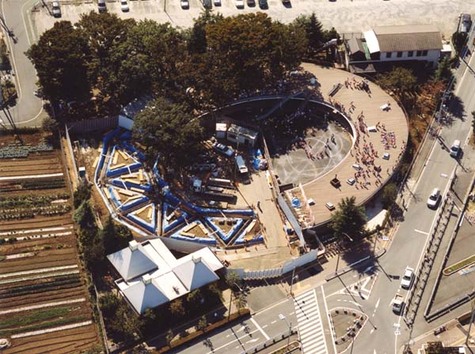
I'm fascinated by Fuji Kindergarten, as profiled by Fiona Wilson in Monocle magazine.  Fuji Kindergarten is a school whose building was designed by Tezuka Architects.

I wish my kids could go to Fuji Kindergarten.  I wish I could have gone to Fuji Kindergarten.  I wish I could go now.  Fuji Kindergarten, I reckon, is what happens when "chutes and ladders" meets a thought experiment about education which goes back to first principles.  What  makes it so unusual an educational institution is that it places the most emphasis on learning, rather than on teaching.  And on students rather than teachers (and, I'd wager, on teachers rather than administrative staff...).  Think about that one for a while.

Next time I travel to Japan, I'm going to try and visit Fuji Kindergarten.  In the mean time, I'm going to try and apply some of its lessons to our own school project over here at Stanford, called the d.school.  Perhaps we can work harder to make the architecture really support the learning process behind design thinking.

By the way, I'm beginning to really dig Monocle magazine.

Cover_05

19 August 2007 | Permalink | Comments (1) | TrackBack (0)

| |

Unabashed Gearhead Gnarlyness

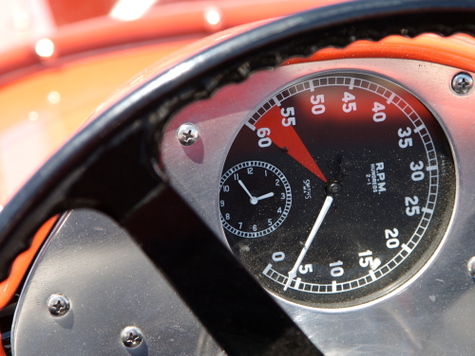
Tachometers with telltales...

Ugg1_2

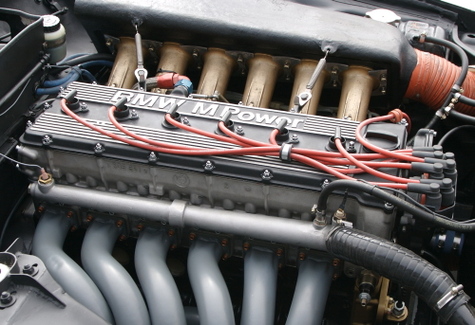
... and straight-sixes from M Power...

Ugg2

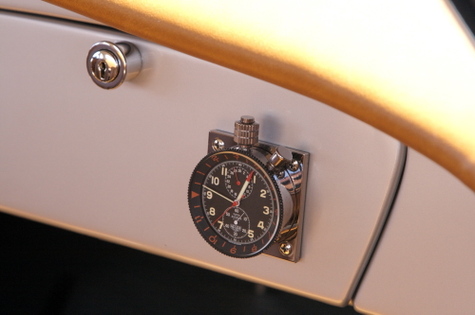
... rallye timepieces...

Ugg3

... it's the Monterey Weekend!

Forgive my lame attempt to ape the Sound of Music.  I'm just so excited about the gnarlyness I will experience over the next 48 hours or so! 

I'll be hanging around the Monterey Historics and BarCamp this weekend.  Two days of atoms and bits, dorks and geeks.   Drop me a line if you'll be at either one -- I'd love to meet up.

Props to the gnarly boys at Bring a Trailer for the tasty photos.

17 August 2007 | Permalink | Comments (0) | TrackBack (0)

| |

The Name of the Game is Work

The big thing about playing video games used to be that they were the new golf, a novel way to hang with friends and business associates in order to maybe bond, collude, or even get some productive work done.  But it's not just about golf anymore:  Aili McConnon from BusinessWeek just published an article about the intersection of work and gaming, and I'm here to tell you that video gaming is about work.  I even landed a quote in there referencing the lessons to be had from playing MMOG's: 

The lessons learned in these games become increasingly useful as companies become less command-and-control and more a series of distributed networks around the world.  The future of work is here; it's just disguised as a game.

The article also talks through some interesting game-related stories from McKinsey, J&J, and Philips, and also has a great insight from my Stanford d.school partner in crime Bob Sutton. 

I really do think that you can learn a lot about where this whole Web 2.0 thing is going by playing games online.  Learning by doing, serious play, and all that.

17 August 2007 | Permalink | Comments (1) | TrackBack (0)

| |

It's time for BarCamp!

1065933798_7dea410432

Innovators of the world, unite!  Check out BarCamp this weekend.

There's an interesting software innovation cluster evolving in downtown Palo Alto, and I'm happy to report that part of BarCamp -- DesignCamp -- will be held at one of our buildings at IDEO.  Perhaps I'll see you there (if I'm not breathing octane at the Monterey Historics, that is).

15 August 2007 | Permalink | Comments (0) | TrackBack (0)

| |

Director's Commentary: Cradle to Cradle

Here's a great Director's Commentary:  architect, designer, and author Bill McDonough speaks about cradle to cradle design.  If you've never heard him speak, I highly encourage you to give a listen.  And if you have, well, I learn something new each time I listen.

I first heard Bill speak on February 11, 2003 at a lecture given at Stanford's Graduate School of Business.  I remember being in that miserable state of having just recovered from a winter flu, and not really wanting to do anything more than go to sleep, but something told me to leave work early to grab a good seat. 

I'm glad I did.  His words changed my life, because for the first time I saw a potential path forward.  I took a class on environmental science in the Fall of 1988 as a freshman at Stanford, and had been aware of the science of global warming and of the importance of toxic concentrations of chemicals since that time.  But, as a design engineer, I never felt there was much I could do beyond specifying good materials and making sure they were labeled for recycling.  McDonough's Cradle to Cradle philosophy changed all of that for me, because it helped me see clearly the value of being able to combine, at a personal, corporate, societal, and global level, the lenses of business, human values, and technology.

14 August 2007 | Permalink | Comments (0) | TrackBack (0)

| |

On being remarkable

Seth Godin has a provocative post about what it takes to be remarkable: Is good enough enough?

Here's my favorite part, on what being remarkable entails at a personal level:

First, it would require significant risk-taking. Which would include the risk of failure and the risk of getting fired (omg!). Can you and your team handle that? If not, might as well admit it and settle for good enough. But if you're settling, don't sit around wishing for results beyond what you've been getting.

Second, it would mean that every single time you set out to be remarkable, you'd have to raise the bar and start over. It's exhausting.

Third, it means that the boss and the boss's boss are unlikely to give you much cover. Are you okay with that?

Are you willing to engage in innovative behavior?  A lot of the time it hurts.

13 August 2007 | Permalink | Comments (0) | TrackBack (0)

| |

Here's what a good "designed to spread" marketing message looks like:

Imackeyboard_4_20070807

From the masters at Apple.

Simple.  Concrete.  Sticky.

09 August 2007 | Permalink | Comments (4) | TrackBack (0)

| |

metacool Thought of the Day

"Doing the right thing is important, which is where strategy comes in. But doing that thing well—execution—is what sets companies apart. After all, every football play is designed to go for a huge gain. The reason it doesn’t is because of execution—people drop balls, miss blocks, go to the wrong place, and so forth. So, success depends on execution—on the ability to get things done."
- Jeffrey Pfeffer

08 August 2007 | Permalink | Comments (4) | TrackBack (0)

| |

Innovating past the leading edge

An extra heaping serving of power-on oversteer, anyone?

This video is a hot lap of Laguna Seca as seen by driver Michael Sheehan behind the wheel of a gnarly -- gnarly! -- 1968 McLaren M6B Can-Am racing car. To be precise, this doesn't seem much like driving a normal car to me; it seems to have much more in common with being strapped to the tip of an ICBM.  Here's what lighting the wick on a M6B feels like, in the words of Sheehan:

This was the car driven by ex-Formula 1 driver (and race winner) Jo Bonnier. The car has in the neighborhood of 600hp and weighs in around 1,700lbs. It's an aluminum monocoque, which is very different from modern racecars. Think of it as sheet aluminum origami secured with rivets. The only "safety cage" to speak of is a not very confidence inspiring main hoop, braced only with a stringer from the center top of the hoop back to the head on the engine, which is secured with removable pins.

Let me honest by saying that I currently feel like someone has beaten the crap out of me with a baseball bat. My lats, shoulders, pecs and upper arms are sore from wrestling with the car. I have a bruise/abrasion the size of a Coke can on my right buttock from sitting directly on the aluminum floor. Don't ask me how, I still don't know. Oh, and despite the earplugs, my ears are still ringing. All in all, I couldn't be happier and I wouldn't change a thing. Every muscle ache brings a happy memory back from yesterday.

Aside from being remarkably gnarly, the McLaren M6B is the tangible expression of a wildly successful innovation program called the Canadian-American Challenge Cup, or Can-Am.  Can-Am was a racing series which attracted the very best engineers and drivers.  What made it unique was its lack of rules.  The only real constraints facing the teams particpating in Can-Am were time, money, and the physical layout of the tracks to be raced on.  When it came to what you wanted to race, the sky was the limit -- and it engendered some incredible designs, including the some very advanced aerodynamic and structural solutions.  And horsepower came oozing out of every nook and crevice, leading up to the amazing Penske Porsche 917, whose dominance effectively killed the series, because it "cracked" the code -- no further innovation was possible given period technology, no matter one's budget.

What's the lesson for creating innovative behavior?  It's that macro conditions matter the most when your goal is to push the state of the art.  Setting macro context is more important than mapping out a golden strategy at the micro level.  If you want to produce astoundingly innovative solutions in a revolutionary sense, perhaps the best thing you is to set a few very broad boundary conditions, such as time and money, and then let everyone go do their thing.  In this way, Can-Am was very much an early type of automotive X PRIZE, if one which pursued a very different performance vector.  Just as in an X PRIZE competition, the governing body behind Can-Am declared set amounts of prize money, told people where and when to come and do performance tests, and then watched lots of adult human beings spend lots of blood, sweat, tears, and cash in the pursuit of victory.  Can-Am was the ultimate in high-variance automotive innovation, and at the right end of the Gaussian distribution of car designs came things like the M6B.  And they were awesome.

For the serious UGG types among you, here's a twenty-five minute video of Sheehan driving a race around Laguna Seca:

The annual Monterey Historic Races are on August 17-19, and the West Coast staff of metacool will there in force.  The races are not just a great chance to see historic pieces of machinery such as the M6B in action, but are a wonderful way to appreciate the ingenuity, courage, and sheer beauty involved in this human endeavor we call design.
06 August 2007 | Permalink | Comments (1) | TrackBack (0)

| |

Director's Commentary: Baja Ridgeline

Here's another Director's Commentary tale, this time from the design and build team behind the Honda Ridgeline Baja racer. 

Don't let the gearhead nature of this particular commentary put you off -- this is a story about attention to detail, iteration, and evidence-based management.  To create a successful race car, you have to execute a design which won't be let down by trivial logistics ( failing due to a cheap, trivial part), but which also hews to a winning overall point of view ( balancing the weight which comes with reliability with the conflicting need for agility and speed).  Holding opposing constraints in mind, making choices - that sounds like design thinking for strategy to me.

Here's a cool bit of detailed design thinking which might not be insignificant were it to be needed:

When done properly, the seat attachment points are part of the rollcage, not welded to the truck's floor. This way, the seats can't tear loose from the floor in case of a severe accident or rollover. The occupants and their seats stay inside the cage.

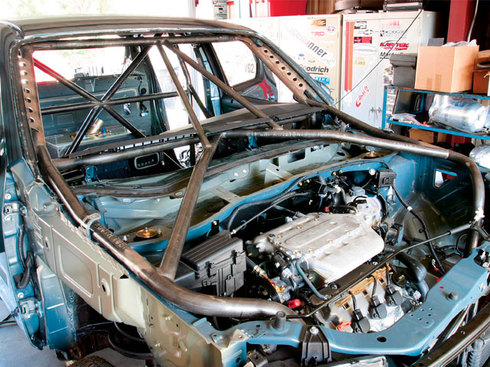
And of course, there's some serious unabashed gearhead gnarlyness at work here.  Check out this elegant rollcage creeping forward over the front strut towers, and those gorgeous welds:

129_0605_04_zhonda_ridgeline_trophy

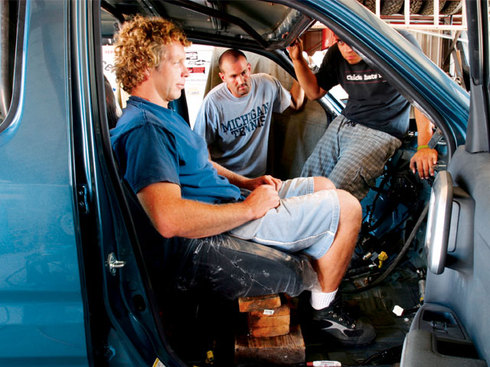
And this is what informed intuition - a critical part of design thinking - looks like in action:

129_0605_03_zhonda_ridgeline_trophy

Hey Dennis, how cool is this?  8-)


03 August 2007 | Permalink | Comments (1) | TrackBack (0)

| |

Open Source Hardware

I'm violating the "metacool employees shall not write blog posts past 10pm on a school night" rule by posting this, but I'm simply too excited not to.  As a recovering mechanical design engineer who has a thing for software in general -- and a big thing for open source software in particular -- Brad Feld's recent post about Bug Labs is just plain cool.  I can't wait to see what comes out of this.

Of course, there's nothing that says that only software creation can benefit from an open source approach.  Mozilla has shown that you can take an open source approach to marketing.  And Threadless says something (if not something deep) about open sourcing content.  These are exciting times to be in the business of creating stuff.  Yes indeed.

This notion is nothing new.  The ur open source piece of hardware is the Chevy small-block V8.  Hubba hubba.

31 July 2007 | Permalink | Comments (3) | TrackBack (0)

| |

Spreading the Conchords

Fotc2_1024x768

Have you seen Flight of the Conchords on HBO?  It's a new show about a New Zealand folk duo trying to make it in The Big Apple.  I love it.  It's like Curb Your Enthusiasm meets The Odd Couple meets Forrest Gump meets The Royal Tenenbaums.  Here's a video blurb from the show to show you what I mean:

It's certainly not for everyone, but if you like your humor on the quirky side, you'll probably like it.

But I'm not here to talk about television.  I'm here to talk about marketing.  Flight of the Conchords is a great example of thoroughly executing Step 3 of my three-part recipe for Creating Infectious Action.  Here are those steps again:

  1. Create something remarkable  (viz the video above)
  2. Weave a sticky message around it (Tenacious Dundee)
  3. Design the system to spread it

If you point your browser to the Show Your Love section of the Flight of Conchords website, you'll see a comprehensive set of spread tools kindly provided by HBO for your maven pleasure.  There's a full set of embedable video clips, a set of IM icons, video podcasts, background images for your fan website (see above as well), and even a set of color hex values so that your fan website is on-brand.  This is great marketing at work, because it releases control while it enables brand-appropriate behavior.  Instead of trying to fight the entire fight yourself, designing to spread means spending at least part of your energy on enabling others to do it for you.  It's about walking around, pouring gas on a bunch of little fires, rather than endeavoring to build one big bonfire yourself. 

And, the more you consciously design a system to spread the word, the more likely it is your cool thing will fly.

30 July 2007 | Permalink | Comments (2) | TrackBack (0)

| |

Why we read

I once heard the great Sara Little Turnbull tell my group of student design engineers at Stanford that the way to become a great designer someday was to be a great reader today.

As you can imagine, I liked what she was saying.

I also like this article titled "C.E.O. Libraries Reveal Keys to Success", though I wonder if it doesn't confuse correlation with causation.  I think rich folks have big libraries for reading because they're rich, not the other way around (your local library is a more eco-friendly way to enjoy the literary works of mankind).  But reading is certainly a fine way to understand the world, to develop critical thinking skills, and -- perhaps most important of all -- to grow one's ability to recognize patterns in information.  That's a key design thinking skill.  In that vein, I particularly like this quote in the article from Sidney Harman:

I used to tell my senior staff to get me poets as managers.  Poets are our original systems thinkers.  They look at our most complex environments and they reduce the complexity to something they begin to understand.

I'm going to need to read up a bit on that.

20 July 2007 | Permalink | Comments (0) | TrackBack (0)

| |

A thought on teams and leadership and stuff

Teams that win do so because they are winning teams first.  The emphasis should be on creating the winning team, not on the winning.

18 July 2007 | Permalink | Comments (2) | TrackBack (0)

| |

Director's Commentary: John Maeda

This latest Director's Commentary on metacool is truly meta: it's a designer being interviewed about what it means to design with simplicity in mind.  In this simply awesome interview, NPR's Ira Flatow talks to Professor John Maeda about The Laws of Simplicity.

I truly appreciate any opportunity I get to listen to Professor Maeda talk about his approach to the process of designing things.  My favorite law of simplicty is Law 5: Differences.  This law can be stated as follows:

Simplicity and complexity need each other

Actually, that's a big, fat lie on my part.  If I put on my professional hat, then my favorite law of simplicity is actually Law 7: Emotion, which is:

More emotions are better than less

If you decide to take a listen to Maeda's interview, you'll hear him talk about why desirability can make even a complex, cultish device such as the iPhone seem simple.  Wanting something makes it easier to use.  Think about that one next time you're dealing with the Internal Revenue Service.  I'm a big believer in starting and ending with desirability when it comes to designing for success in the marketplace, so you can see why I like Law 7.

By the way, he wrote a wonderful book about the subject, too.  I highly recommend it.

Law05_diff

17 July 2007 | Permalink | Comments (0) | TrackBack (2)

| |

Hello again, Déesse

600design

Phil Patton has a nice story in the New York Times about the increasing recognition by the automobile industry that green cars more red, if you want them to be desired by a broad market:

Once Frumpy, Green Cars Start Showing Some Flash

15 July 2007 | Permalink | Comments (0) | TrackBack (0)

| |

Wordless

I've been tracking my usage of Word versus Google Documents over the past month, and for the first time I've done more work "online" than "ondisk".  In many, many ways, working with text and spreadsheet documents online is a much better fit for the realities of my life.  For example:

  • I'm really wary of losing my data.  I think Google takes better care of my data than I ever could.
  • I'm wary of mechanical breakdowns.  My last PowerBook got bent like a banana (wasn't my fault).  It could happen again.  But I never want to lack access to my data again.
  • I use multiple computers.  I'm so over lugging my five-pound laptop to and from my work office and home and to classrooms at Stanford.  Much better to be able to access things from any computer.
  • I like to share.  When it comes to thinking and creating, I'm an extrovert.  I like to share, or to have the  option to share, documents with other people.  You can do that with Word, but the tracking and rev control features provided by Google are far superior, in my opinon.

Yes, I need an Internet connection to access this stuff.  But, at least where I live, WiFi is almost as ubiquitous as clean, running water.  And yes, Google has my data and it's public (so I don't put private stuff up there for now), but our government reads my emails and probably listens to my phone calls, so...

None of my reasons for liking software as a service are new.  In fact, they're exactly the talking points I used when I was responsible for marketing an accounting "software as service" offering -- QuickBooks Online Edition -- about six years ago, before this stuff was cool (by the way, QuickBooks Online has over 100,000 customers now... sweet!).  But Google's apps, as simple as they are, really hit a sweet spot for me.  As does the Typepad service I use to put up this blog, the Gmail I use to talk to people who email me from this blog... and many other apps.  It'll only get better when I start (I hope) using an iPhone in a year or two.

I'll be at the iMeme conference tomorrow, so I hope to hear more about where "software" is heading.  But I'm convinced this stuff is for real.  It has crossed the chasm, and Google is ready to seriously disrupt Microsoft's Office.  This is good for us users.

11 July 2007 | Permalink | Comments (1) | TrackBack (0)

| |

metacool Thought of the Day

"Whether in music or in fiction, the most basic thing is rhythm. Your style needs to have good, natural, steady rhythm, or people won’t keep reading your work. I learned the importance of rhythm from music — and mainly from jazz. Next comes melody — which, in literature, means the appropriate arrangement of the words to match the rhythm. If the way the words fit the rhythm is smooth and beautiful, you can’t ask for anything more. Next is harmony — the internal mental sounds that support the words. Then comes the part I like best: free improvisation. Through some special channel, the story comes welling out freely from inside. All I have to do is get into the flow. Finally comes what may be the most important thing: that high you experience upon completing a work — upon ending your “performance” and feeling you have succeeded in reaching a place that is new and meaningful. And if all goes well, you get to share that sense of elevation with your readers (your audience). That is a marvelous culmination that can be achieved in no other way.

Practically everything I know about writing, then, I learned from music."

- Haruki Murakami

09 July 2007 | Permalink | Comments (0) | TrackBack (0)

| |

Unabashed Gearhead Gnarlyness

06c1222_14

The incredible, audacious, 1971 Mercedes-Benz 300 SEL 6.8 racing car by AMG

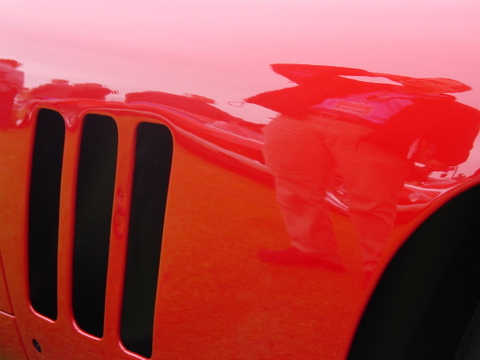
It's red.

07 July 2007 | Permalink | Comments (3) | TrackBack (0)

| |

More Garage Majal...

My Garage Majal post touched a nerve.  Had a great discussion in comments, and received some strongly worded emails.  Thanks for those -- I learned a lot from the feedback.

Brendan Eich of Mozilla wrote a post back in April called Open Source and "Openness", and it sheds some good light on the argument I was trying to make about "brilliant networks".  Here's a quote:

Successful open source projects combine meritocratic leadership, "doing" more than "talking", and breadth through well-scoped extension mechanisms. It's not enough to do great work by oneself: each committer who has the stamina and remains engaged must spend time listening to users and developers, grooming helpers and successors, and refactoring or even redesigning to support what becomes, module by module, a platform.

I think we're entering a period where a new style of leadership -- let's call it web leadership -- is emerging.  Brilliant networks aren't bereft of great leadership.  Far from it.  It's just that the leadership style required in a network is something quite different from what we're used to.  Something to ponder over the next few weeks.

05 July 2007 | Permalink | Comments (0) | TrackBack (0)

| |

Innovation Lessons from Garage Majal

112_0706_07zmclaren_technology_cent

Here's an interesting article about Ron Dennis, the leader of McLaren.  That's him on the right in the photo above, accompanied by the author of the article, semiotician Stephen Bayley.  It's a fascinating walk through the McLaren Technology Centre, which is where wickedly beautiful and effective machines like McLaren F1 racers and the Mercedes SLR are wrought.

One can't read about Ron Dennis without thinking about Steve Jobs.  Both have created high-performance organizations which are able to innovate on a routine basis.  Both run organizations which are hierarchical and honest about it.  As Dennis remarks to Bayley, "Dust can be eliminated," and I think that's as much an organizational metaphor as a statement about the level of hygiene found at McLaren.

How does one organize for innovation?  I'm beginning to think there's a bimodal answer at work:  either build an organization around an exceptionally "right" individual like Jobs or Dennis, and have every aspect of it amplify their personal decision making abilities, or build a powerful network of individuals, a la Mozilla, which determines what is "right" based on the power of thousands of individuals -- some talented, some not so -- making deep bugs shallow.  In other words, brilliant dictator, or brilliant network.  Between those reigns the mediocrity of committees and task forces and focus groups.

What do you think?

03 July 2007 | Permalink | Comments (6) | TrackBack (0)

| |

metacool Thought of the Day

74877309_10

"A week or so ago or 10 days ago he was in Eldora in a dirt car. How many guys have been on the Eldora dirt and been on the streets of Monte Carlo?  That just tells you the guy has the disease. He has the fever. He likes the action and that’s what’s fun about working with him. It’s not about the money. It’s about the action and that’s what’s fun. It’s easy to work hard for a guy like that.”

- Chip Ganassi on why Juan Pablo Montoya is a racer.  And why it matters.

27 June 2007 | Permalink | Comments (0) | TrackBack (1)

| |

Prophet of Innovation

41mr9znfcul_ss500_

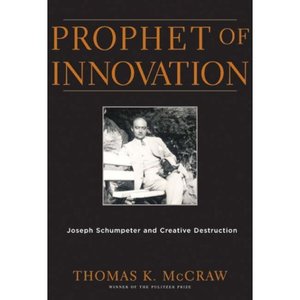
I haven't posted anything about innovation in the last week or so because I've been busy making my way through the wonderful pages of Prophet of Innovation: Joseph Schumpeter and Creative Destruction. 

Penned by Harvard Business School's Thomas K. McCraw, Prophet of Innovation is an entrancing look at Schumpeter's life and work.  I'm less than a third of the way though its 736 pages, and I've already learned a great deal about this subject innovation which is so dear to my heart.  It's Schumpeter who lent shape to many of the ideas, constructs -- even a worldview -- which inform life here in Silicon Valley, as well as in any economic system where advancement is valued more than stability. 

I've been hearing from a lot of folks that this "innovation thing" has peaked.  As a fad, perhaps.  But as a way of seeing the world, let alone a pragmatic way to improve the quality of life on this planet, innovation is much more than just the hottest management trend.  What Schumpeter saw 90-odd years ago is still in force today, and though context may change, I believe he uncovered some basic truths about the way that macro and micro economic policies can create a fertile field for innovative behavior to flourish.

I love this book.

25 June 2007 | Permalink | Comments (2) | TrackBack (0)

| |

Making meaning at Le Mans

461d16b8e67f1

The 24 Hours of Le Mans race is on!  If you're a motorsports fan, it doesn't get much better than the complex brew of strategy, technology, and teamwork necessary to win a day-long endurance race.  It's fascinating stuff -- Le Mans is to auto racing fan what Wagner's Ring Cycle is to opera buffs.

Le Mans is still relevant even if you loathe racing.  Last year Audi made history by winning the race with leading-edge diesel technology, a racing first.  This year Peugeot joins the diesel fray with their wicked-looking 908.  Diesel is not the ultimate answer to the environmental challenges facing us today, but it is a more efficient alternative to traditional gasoline technology.  What Audi and Peugeot are doing at Le Mans is all about creating a more attractive story around clean diesel motors so that they become more desirable to the general populace.  It's a good example of trying to make green more red.

16 June 2007 | Permalink | Comments (0) | TrackBack (0)

| |

Words to live by

48eda90509619476ce915804da54658e_sa

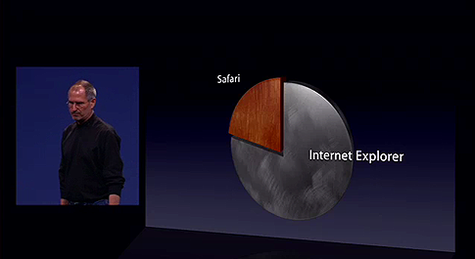
John Lilly, the COO of Mozilla and a guy I'm proud to count as a friend a collaborator, has written what I think is an incredibly insightful and important statement about how the world works today.  Writing in response to a recent speech given by Steve Jobs indicating that the future of the browser market could look like the pie chart shown above, John says (in part -- please read his entire post if you have a chance):

There are a couple of problems, of course. The first is that this isn’t really how the world is. The second is that, irrespective of Firefox, this isn’t how the world should be.

First, it isn’t really how the world is. The meteoric rise of Wikipedia, Creative Commons, Linux and Firefox, among many other examples, shows that today’s connected world is no longer constrained by the monopolies and duopolies and cartels of yesterday’s distribution — of the publishers, studios, and OS vendors. Hundreds of millions of users, in every language around the world are now making new choices. That Apple doesn’t feel this, even within the familiar reality-distortion-field confines of Moscone Center, illustrates much of the problem.

Second, it isn’t how the world should be. Even if we could somehow put that movement back in the bottle — that a world of just Starbucks & Peets, just Wal-mart & Target, just Ford & GM — that a world of tight control from a few companies is good, it’s the wrong thing to do. It destroys participation, it destroys engagement, it destroys self-determination. And, ultimately, it wrecks the quality of the end-user experience, too. Remember (or heard about) when you had to get your phone from AT&T? Good times.

So here’s my point, to be clear: another browser being available to more people is good. I’m glad that Safari will be another option for users. (Watch for the Linux port Real Soon Now.) We’ve never ever at Mozilla said that we care about Firefox market share at the expense of our more important goal: to keep the web open and a public resource. The web belongs to people, not companies.

This world view that Steve gave a glimpse into betrays their thinking: it’s out-of-date, corporate-controlled, duopoly-oriented, not-the-web thinking.

John is right.  This isn't 1957.  What's good for GM, or Apple, or Microsoft, isn't necessarily good for all the rest of us formerly known as the audience.  If you believe in starting with the needs and desires of real people as a way to create real value and meaning in the world, then things like engagement and choice and self-determination are not just "nice to haves", but are critical means to an end, where the end is an informed, savvy, and free (as in liberty, not price) society.  As John says, "The web belongs to people, not companies."  Markets do, too.  So do brands. 

Web thinking is freedom thinking.  And it is the driver of modern, progressive marketing.

14 June 2007 | Permalink | Comments (3) | TrackBack (0)

| |

Meine erste Million

Witlintarbag

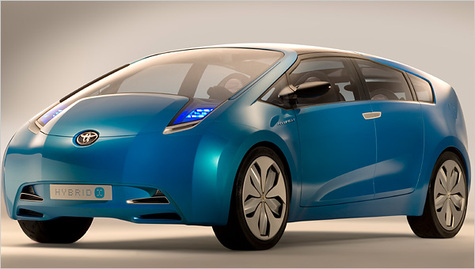
I recently wrote a brief essay on the subject of "Der wird Millionar" for the Folio magazine of the Swiss newspaper Neue Zurcher Zeitung.  I talked about the design of the Toyota Prius -- I've been thinking a lot about the Prius lately -- and, more broadly, on the topic of how green products need to become much more red.  In essence, on what I believe is the critical importance of understanding what makes for unabashed gearhead gnarlyness and then building that sensibility in to green market offerings.

The essay is available here.  I wrote in English, but I think it sounds cooler in German.

Be sure to check out all the other "Der wird Millionar" essays in the issue by this amazing group of thinkers and doers:

  • Luca Turin
  • Jan Chipchase
  • Regine Debatty
  • Saul Griffith
  • Reto Wettach
  • Warren Spector
  • and last, but absolutely positively not least, my favorite blogging buddy Russell Davies

12 June 2007 | Permalink | Comments (4) | TrackBack (0)

| |

Why Ivy Ross rules

Amdextrous Magazine recently ran a wonderful interview with Ivy Ross.  The interview was done by Alison King, and I find it simply stunning.  I've read it many times over, and I hope you find it as interesting as I have.  Here are a few fascinating excerpts.

On the importance of meaning:

Let's face it.  Everyone has everything.  We are not about price anymore.  Everything exists at every price level.  It's about the connection you find with the object.

On the power of unleashing your personal design thinking process:

I had to think about my own creative process.  What I did for myself was feed myself.  I took on a question and ate absolutely everything I could.  I allowed myself freedom to explore, without restrictions, and at a really organic pace.  I was like a kid.

On the drivers of innovative behavior:

I also believe that creativity and innovation are built around trust and freedom.  Companies don't get that.  They think it is a process.  It is really about creating trust between the people creating and the freedom to go to new places.

Go ahead, and download this PDF of the interview and give it a read.  You won't be disappointed.

06 June 2007 | Permalink | Comments (4) | TrackBack (1)

| |

More news from the world of CIA-KGB

Dennis Whittle, the Chairman and CEO of Global Giving, is blogging about the student projects which were launched a few days ago in my CIA-KGB class at the Stanford d.school.  The class project ended up being a good experience because Dennis and many others from Global Giving gave an enormous amount of their time to help support the students in their work to create infectious action around the idea of social entrepreneurship in general, and Global Giving in particular.  Here's an excerpt from his blog:

I was absolutely stunned by what each [group] could deliver in such as short period.

I was, too.  And since I think innovation only happens when real change is made in the world, I'm looking forward to seeing the impact of the six student projects over the next few months.  Here's the first of Dennis's posts on the class: 

You did THAT in FOUR weeks?

04 June 2007 | Permalink | Comments (2) | TrackBack (0)

| |

Rewarding brand-building behavior, feeding infectious action

Globalwrngprius_metacool

I've written before about the problems that speeding hybrid owners might pose for the Prius brand.

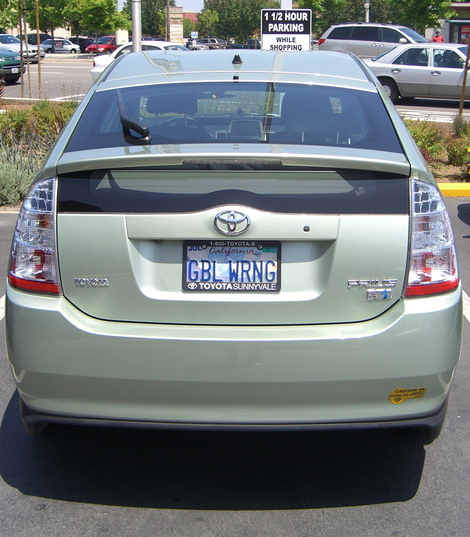
So, in the metacool spirit of seeking generative and productive solutions, how might Toyota incent Prius owners to behave in ways that enhance the brand?  I've been mulling over that question for a few months now, but over the weekend I spied the license plate pictured above in a local Whole Foods (no surprise there) parking lot, and it sparked a brainstorm of sorts:

  1. Per the photo above, reimburse any owner who slaps an appropriately-themed custom license plate on a Prius.
  2. For those short on imagination, provide a web-based green-jingle license plate character generator over at www.prius.com
  3. Parking these things at Whole Foods is preaching to the converted.  Better to try and infect new communities, so hand out shopping coupons for Wal-Mart, Safeway, etc... to owners who do the license plate thing.
  4. On the other hand, ego-gratification is a big driver of community-based marketing, so do a deal with Whole Foods whereby a highly visible parking spot near the front of the store is reserved for Prius owners who've done the license plate thing.  Which brings me to idea Number 5.
  5. Issue owners who've done the Prius license plate thing a nice holographic-looking window sticker which says "Prius Maven Onboard".  It's designed to sit inside the left corner of the vertical hatchback window, and is the cue to Whole Foods parking lot attendants not to tow your Prius from the designated Prius Maven parking spot.
  6. Make the green color scheme free.  Charge extra for all the other colors.  Charge much, much more for black paint, which lowers the albedo of the Earth.
  7. Better yet, paint the roof of every Prius white.  The better to bounce sun rays back and reduce the air conditioning load.  Plus, white roofs are in.  Critically, tell owners why the roof on their car is white (even if they paid $2,000 extra for black paint), so that they can educate their friends about the concept of albedo.
  8. Provide a $1,000 rebate to any Prius owner who agrees to have a speed-limiter placed on the car.  This device would limit the top speed to 75 mph, because drag increases with the square of velocity, and if you want to save the planet, it helps to not drive though it like hell.
  9. Sell the Prius as a service.  If I'm a Prius Maven, I'm not buying a car -- I'm investing in a public confirmation and signal of my worldview.  What if Toyota could make the entire Prius brand cradle-to-cradle by maintaining it and taking it back in a completely holistic way?
  10. Create a Garage Lifestyle Bounty.  If you trade in your H2 for a Prius, you get acclaim on a public website, and you get a license plate frame, like "My old ride was a Hummer"

This is just a brainstorm.  But increasingly I believe that word of mouth and infectious action is like a garden.  A garden will grow on its own, certainly.  But with inputs of energy and care, it grows that much better.  The Prius has already tipped -- when you think "hybrid" you think Prius.  But even companies like Toyota should think about ways to actively tend and feed the garden.

01 June 2007 | Permalink | Comments (9) | TrackBack (1)

| |

metacool Thought of the Day

"The way I produce a chicken is an extension of my worldview.  You can learn more about that by seeing what's on my bookshelf than having me fill out a whole bunch of forms."
-- Joel Salatin of Polyface Farms, as quoted in The Omnivore's Dilemma

31 May 2007 | Permalink | Comments (2) | TrackBack (0)

| |

Unabashed Gearhead Gnarlyness

Dedjrrs4

The Audi RS4, as piloted by one David E. Davis, Jr., along the beautiful string of roads which make up the California Mille.  In my book, Mr. Davis is the biggest voice to hit American literature since Twain, or Hemingway -- or perhaps even both -- and here he takes us on a wonderful video journey about cars, landscape, friendship, and memories of winding roads and the cars that need them.  As you hear him playing that sonorous V-8 up through the gears, it's hard to disagree with his belief that "... God does not charge us for hours spent driving before breakfast."

Myself, I quite fancy the RS4.  It's one amazing piece of engineering.  A bit thirsty and heavy, yes, but if thought of as a four-door 911, it makes more sense.

But forget Porsche.  Audi is the new BMW.  Close the cubicle door, turn up the volume on your laptop, watch DED, Jr. drive those roads again, and you'll see why I think that's the case.  Audi is on fire.

Winding Road video:  2007 California Mille, June 2007

30 May 2007 | Permalink | Comments (0) | TrackBack (1)

| |

Director's Commentary: Amy Smith

Here's a Director's Commentary from MacArthur genius grant winner Amy Smith.  This was one of my favorite talks from TED2006.  Enjoy!

28 May 2007 | Permalink | Comments (0) | TrackBack (0)

| |

Chaos... Variance... Volume

John's Maeda's Liu Lecture at Stanford was, as expected, excellent.

Three themes from his words and thoughts are buzzing around my head:

  1. Chaos:  when we think about organizations, we want to create order, right?  Maybe.  When is chaos a desirable state of being?  Good question.  Perhaps it's when chaos begets...
  2. Variance: weird ideas are the stuff of breakthrough innovations.  If you're not creating weird stuff, you're not producing those sixth-sigma disasters/opportunities which light the way to new paradigms.  To create variance, you need to do stuff in high...
  3. Volume: the way to create a few great things is to crank out a lot of bad crap.  As Bob Sutton says, "...the most creative people don’t have higher hit rates, they just do and make more stuff."

Buzz buzz.

23 May 2007 | Permalink | Comments (3) | TrackBack (0)

| |

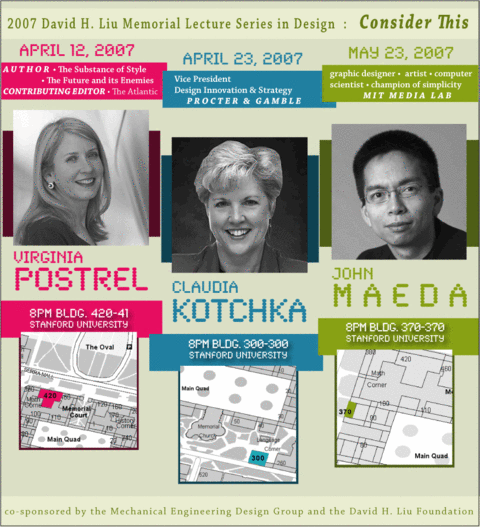
2007 David H. Liu Memorial Lecture Series in Design

A special reminder for all you Silicon Valley members of the metacool community:

John Maeda is speaking tomorrow night at Stanford.  I can't wait. 

Check out his SIMPLICITY and Laws of Simplicity blogs -- two of my favortie.

Hope to see you there!

Springliulectures1

22 May 2007 | Permalink | Comments (0) | TrackBack (0)

| |

Rumblings above

B17props

The past few days my get-up-and-go-to-work routine has been spiced up by the rumbling above of a B-17.  I see it each morning out of a skylight in my house.  Yes, a WWII-vintage Boeing B-17G Flying Fortress restored and flown by the Collings Foudnation.  Out of thousands built, there are only 14 left flying, and this one is buzzing Silicon Valley, giving pay rides.

I've been a big airplane fan for as long as I can remember (are you at all surprised?), but I've never heard a B-17 in flight.  Mustangs, yes, Spitfires, yes, but never a multi-engine bomber.  The sound it makes is really distinctive and unlike any modern airplane.  It's not so much the loud, piercing buzz or wail one gets from a turboprop or jet-powered plane; the B-17 is powered by four huge Wright Cycone radial piston motors which together put out a massive, low rumble, like a pack of NASCAR racers flying over your head.  Seeing the B-17 makes me think about a few things:

  • What an amazing piece of design engineering:  it may look simple next to a new Boeing Dreamliner, but the B-17 is an amazingly complex beast, especially given that it was designed only three decades after the Wright brothers took to the air.  Piston internal-combustion know-how arguably peaked during WWII, and the sheer mechanical complexity of the motors on one of these is just breathtaking.  I believe that I'm one of the first generations of mechanical engineers to work in a 100% computer-driven design environement, never putting pencil to paper, never creating a blueprint.  I, for one, can't imagine the individual imagination and organizational coordination it took to design a B-17 and all of its subsystems soley on paper.  Incredible.  Ingenious.
  • How cool it is to experience the Real Deal: the problem with flying airplanes (or racing cars), is that potential and kinetic energy are the enemies of longevity.  Sooner or later, what goes up must come down, and the 14 B-17's flying today will eventually decline down to zero, if only because their airframes will run out of life.  Still, it's really cool to see the actual thing doing its thing.  You know, like hearing the Beatles play their own music.  Imagine what it would be like to hear a recording of Bach playing Bach, or Mozart doing Mozart.  Now that would special, and that's what seeing this B-17 arc overhead does to me.
  • Remembering and respecting the politics of the machine:  like it or not, this was a tool of war.  Lots of men were killed flying it, and thousands and thousands died as a result of the bombs it dropped.  Can a design get out from under the shadow of the politics and context under which it was designed?  I'm not so sure.  The VW Beetle Nazi People's Car somehow became the Love Bug.  I think that's the exception.  We may forget, but I think design decisions are forever -- you just need to know how to look.

Anyway, it was cool.  Maybe someday I'll take a ride.  Special thanks to the good folks at Telstar Logistics for their full write up of the Collings B-17 here and here.

(photo credit above Telstar Logistics)

21 May 2007 | Permalink | Comments (2) | TrackBack (0)

| |

metacool Thought of the Day

"A beautiful side effect of making things is you start to look around and wonder, 'how did they do that?'; you learn to see, analyze, and appreciate different approaches, well-made things, and clever solutions."
- Lili Cheng

17 May 2007 | Permalink | Comments (2) | TrackBack (0)

| |

Whence cometh gnarlyness?

What makes something gnarly?  And when can one be sure that one is experiencing true unabashed gearhead gnarlyness, and not some flimsy substitute?

Weighty questions.

I'm not sure of the answer(s).  I know gnarlyness when I see it, but I'm only just starting to tease out the underlying design principles.  Perhaps I'll embark on a public journey, a la John Maeda and his Laws of Simplicity, of surfacing the true drivers of gnarlyness via a public conversation.  Let's see.  Where this goes depends largely on you.

For now, though, I think gnarlyness happens when four design principles are held in mind:

1.  Embrace the visceral, dude:

2.  Have a strong point of view:

Dsc03282

3.  Celebrate workmanship:

Cimg3503

4.  Be red.  Really, really red:

Dsc03243


15 May 2007 | Permalink | Comments (0) | TrackBack (0)

| |

Flying ARSES and other adventures in design thinking

Flyingasshole_2

oooooph.  I just took Bob Sutton's new Flying ARSE self-assessment test, and I barely threaded the needle between unbelievable perfection and being a borderline arse.  It's a fun little test, and a good reminder that The Brand Called You is but a fragile flower, easily damaged in liminal spaces such as an airliner.

I love the fact that Dr. Robert Sutton, esteemed Stanford tenured professor, is enthusiastically putting up quick and dirty web apps like this, the original ARSE test, and -- my favorite -- ArseMail.  He does them without a lot of drama, ships something quick-like, and then starts iterating them to perfection based on feedback from real users.  And he taps a system of connected mavens to spread the word.  Sounds like creating infectious action to me.  Doing cool stuff and shipping it. 

Design thinking and doing, in other words.


14 May 2007 | Permalink | Comments (1) | TrackBack (1)

| |

A fundamental design principle

Amnesty

Tell me, I forget. Show me, I remember. Involve me, I understand.

11 May 2007 | Permalink | Comments (0) | TrackBack (0)

| |

« Previous | Next »

Categories

  • designing
  • innovating
  • leading
  • marketing
  • meta metacool

search


About

Subscribe to this blog's feed

    follow me on Twitter

    Favorite Posts

    • A million reasons why...
    • Mo Cheeks and a fundamental question of leadership
    • Innovation Lessons from Garage Majal
    • From Obama to Pink to Oprah
    • Shinya Kimura and the primacy of doing
    • A tribute to friends and friendship
    • Strategy that makes your hands bleed
    • Quality in a switch
    • Travis Pastrana and the future of the world economy

    on the nightstand

    • : The Great Bridge

      The Great Bridge

    • : Porsche - Origin of the Species

      Porsche - Origin of the Species

    Principles for Innovating

    • 1: Experience the world instead of talking about experiencing the world
    • 2: See and hear with the mind of a child
    • 3: Always ask: "How do we want people to feel after they experience this?"
    • 4: Prototype as if you are right. Listen as if you are wrong.
    • 5: Anything can be prototyped. You can prototype with anything.
    • 6: Live life at the intersection
    • 7: Develop a taste for the many flavors of innovation
    • 8: Most new ideas aren't
    • 9: Killing good ideas is a good idea
    • 10: Baby steps often lead to big leaps
    • 11: Everyone needs time to innovate
    • 12: Instead of managing, try cultivating
    • 13: Do everything right, and you'll still fail
    • 14: Failure sucks, but instructs
    • 15: Celebrate errors of commission. Stamp out errors of omission.
    • 16: Grok the gestalt of teams
    • 17. It's not the years, it's the mileage
    • 18: Learn to orbit the hairball
    • 19: Have a point of view
    • 20: Be remarkable

    CC

    • Creative Commons License