Fantastic news involving E.O Wilson's TEDPrize Wish. Check out the Encyclopedia of Life, an exciting and hopefully impactful example of networked innovation.
His recent book The Creation is a powerful read.
Fantastic news involving E.O Wilson's TEDPrize Wish. Check out the Encyclopedia of Life, an exciting and hopefully impactful example of networked innovation.
His recent book The Creation is a powerful read.
09 May 2007 | Permalink | Comments (1) | TrackBack (1)
|
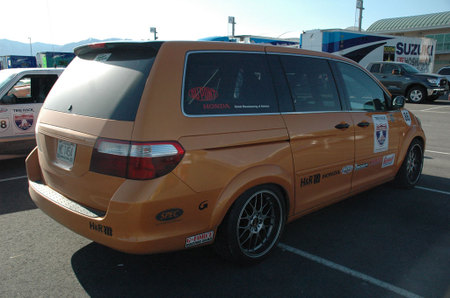
How does a 400 horsepower, fire-breathing Honda Odyssey strike you?
Not exactly the greenest of conveyances, but I bet some hyper-fast minivans would go a long way toward changing the "vans are for soccer moms" story which makes people go and buy silly, tippy SUV's for road use. A powerful van would at least be greener than an equally powerful SUV. After all, a mini van really isn't a small van; it's a tall car. And space is the ultimate luxury.
08 May 2007 | Permalink | Comments (2) | TrackBack (0)
|
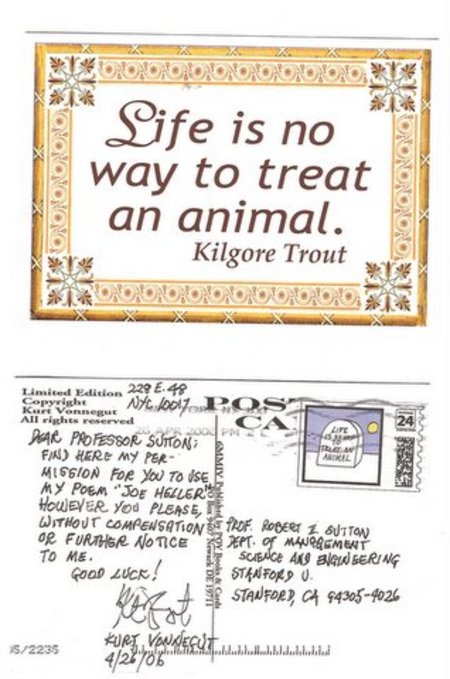
"After living in Silicon Valley so long, where there is so much greed,
and just about everyone seems focused on squeezing every cent of
everyone around them -- employees, customers, suppliers -- Zingerman's
is a refreshing reminder that financial greed isn't always the first
priority for every owner and manager. It reminds me of Kurt Vonnegut's
poem Joe Heller.... Paul Saginaw and Ari Wienzweig seem to believe, like Joe Heller (the author of Catch 22)
did, that they have enough, and that using their talents to create
something beautiful and to give back along the way is a better thing
than maximizing their personal wealth at every turn."
- Bob Sutton
04 May 2007 | Permalink | Comments (0) | TrackBack (0)
|
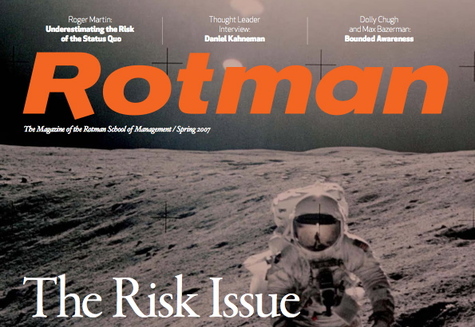
I have a new article about design thinking and risk in the Spring 2007 issue of Rotman Magazine (PDF download). It's on page 57 of what is a quite impressive collection of articles -- lots to chew on in there. Low risk, I assure you.
This one, as with Getting to Where You Want to Go, is a result of my continuing professional collaboration with Ryan Jacoby, one of my colleagues at IDEO.
As always, please let me know what you think with an email or a comment below.
update 28may07: I'm pleased to announce that this article can now be found over at BusinessWeek magazine
02 May 2007 | Permalink | Comments (0) | TrackBack (2)
|
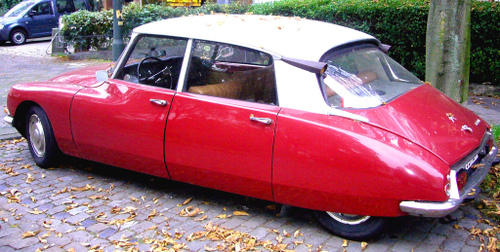
A white roof on a car has been a good idea for a long time. It keeps things cool.
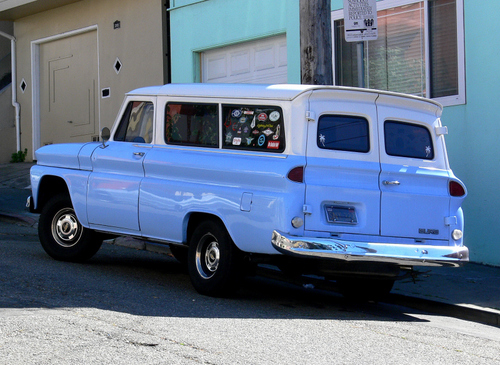
It was a good idea on a Chevy Suburban back in the 60's. Good for proportions.
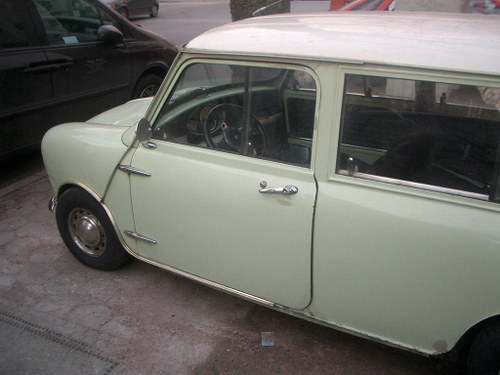
When they designed the original Mini, they thought white was great. And it was.
An uncle had a Landcruiser. It was very tippy in the corners (with a white roof).

It looks not half bad on the new FJ Cruiser. Helps it look less like a Hummer.

White works very well on the new new Mini... at least on the roof.
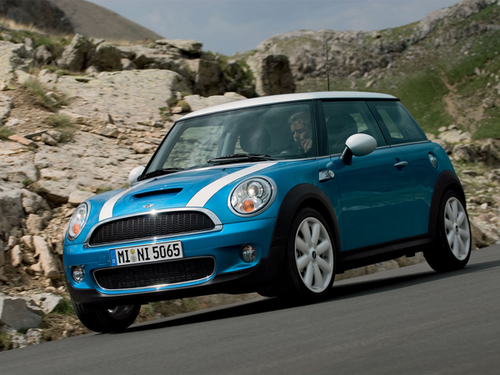
White is the new black roof... and it's even on top of the new Ford Flex.
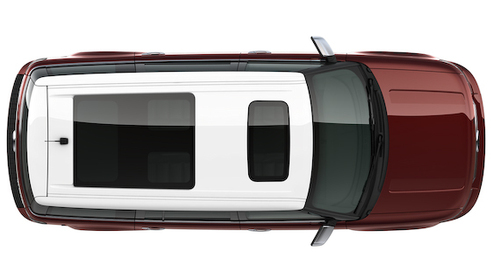
Thank you for your time. This is just the way my brain works.
Citroen photo: Jessica Bee
Suburban photo: SF Steve
Mini photo: mparthesius
Landcruiser photo: CasaLuMa

30 April 2007 | Permalink | Comments (1) | TrackBack (0)
|
After just two weeks of work, CIA-KGB students launched their solutions to help Mozilla attract and retain users of Firefox. Actually, it wasn't really two weeks -- it was eight working days and four weekend days. As you'll see by clicking through on the URL's, below, each team of four students accomplished an incredible amount of work. When was the last time you went from zero knowledge in a subject area to putting something real and working in to the world in just two weeks? While working the equivalent of three or four other full-time jobs? I'm amazed.
For example, the team behind My eBay Fox created an entire toolbar which enables any Firefox user to manage all of their eBay activities directly from the Firefox browser. Plus, it gives users some additional functionality not available on the eBay website. Wow. That's the power of the human-centered design process driven by a multidisciplinary team capable of dealing with human, technical, and business factors.
Here they are -- check 'em all out!
It's important to note that this is only a launch and not a final deliverable. We'll be tracking the progress and performance of each project over the next 5-6 weeks. It will be very interesting to see how each of them evolve.
28 April 2007 | Permalink | Comments (1) | TrackBack (0)
|
As part of the CIA-KGB class I'm teaching at Stanford this quarter, we're holding a "mini-conference" next week on May 3, and you're invited. We have some really amazing speakers, and we'll be focused on how to created infectious action via social enterprise.
Here are event details.
It's free, but bring your brain.
24 April 2007 | Permalink | Comments (0) | TrackBack (0)
|
VW's DSG gearbox is a marvel. It combines twin clutches to provide the direct, mechanical power flow of a traditional manual gearbox, but with shifting as smooth and seamless as that found in any automatic, fluid-coupled transmission. If you're in to driving, it also lends itself to paddle shifting that makes you feel like Fernando Alonso as you flick down through the gears, and you can shift those gears in the middle of a corner without upsetting the balance of the car. It's a fantastic piece of engineering. In 2-3 years, every serious performance car will come with a DSG-style gearbox as an option, or even as standard equipment.
But, as you can tell from my sentence above, it's a hard thing to explain. Also, very few people care how it works, but they want to know how it feels in use. It's the experience that matters. That's why the commercial above works so well; it shows rather than tells.
Thanks to Stacey for pointing me to the video.
19 April 2007 | Permalink | Comments (3) | TrackBack (1)
|
... for a few months, it's because I'm watching all of these videos.
Hours and hours of amazing insights, stories and ideas, all over at the amazing new TED website.
It's a good time to be alive.
18 April 2007 | Permalink | Comments (0) | TrackBack (0)
|
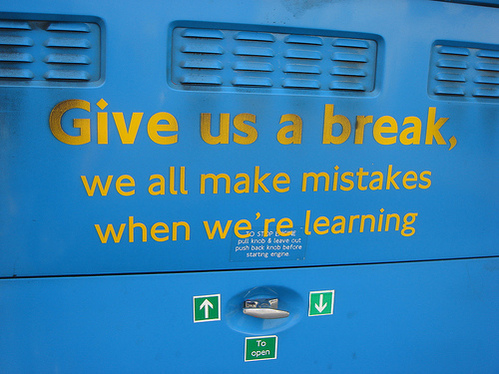
Wouldn't it be great to work in a place where it was okay to wear a sign like this on your back? At least when working toward evolutionary or revolutionary innovation outcomes? I know I would like it.
This photo is from Russell Davies's blog, and here's how he describes it:
This is the sign on the back of those blue London 'driver under instruction' buses that London Transport use to teach bus drivers how to, er, drive buses. It's incredibly disarming. It would be good if someone could attach this message to the internet and then maybe everyone would be nicer. We're all still learning.
Thanks Russell. We are all still learning -- especially if we're growing.
17 April 2007 | Permalink | Comments (2) | TrackBack (0)
|
| You Are 30% Left Brained, 70% Right Brained |
![]() Left brained people are good at communication and persuading others. If you're left brained, you are likely good at math and logic. Your left brain prefers dogs, reading, and quiet. The right side of your brain is all about creativity and flexibility. Daring and intuitive, right brained people see the world in their unique way. If you're right brained, you likely have a talent for creative writing and art. Your right brain prefers day dreaming, philosophy, and sports. |
15 April 2007 | Permalink | Comments (0) | TrackBack (0)
|
What happens when a singular talent like Joshua Bell plays Chaconne on his $3.5 million Stradivarius for rush-hour commuters in Washington D.C.?
Nothing. Or very little -- $32 in exchange for 43 minutes of music, which is only bad if you're Joshua Bell. And aside from the lack of monetary compensation, very little attention from adults (click thru here for a few must-see videos of Bell playing in context). Who listened? According to the article, only the children, with a few exceptions:
There was no ethnic or demographic pattern to distinguish the people who stayed to watch Bell, or the ones who gave money, from that vast majority who hurried on past, unheeding. Whites, blacks and Asians, young and old, men and women, were represented in all three groups. But the behavior of one demographic remained absolutely consistent. Every single time a child walked past, he or she tried to stop and watch. And every single time, a parent scooted the kid away.
Why the kids? Partly because they know beauty in their hearts and not in their analytic brains. Partly because they're not rushing somewhere like all the adults (even if they're in tow -- young children don't rush anywhere they don't want to go). The kids were listening because that's what kids do. They listen and observe with an intensity that only the most talented and highly-trained professional ethnographers can muster. In the face of such beauty and mastery, how could they not spend these precious moments of life soaking in the music?
This sense of "beginner's mind" or "mind of the child" is a pillar of design thinking. It's the ability to see things afresh. To see deeply and to sense the truth and the beauty. It's not the same thing as ignorance -- far from it. Rather it's a cultivated ability, an ability which, ideally, is matched with deep technical expertise and wisdom. A structural engineer with the ability see with the mind of a child gives us the works of Robert Maillart. Learning this skill, and keeping it alive and sharp and curious, requires lifelong dedication.
In that sense, my hat goes off to John Picarello, one of the few adults to stop and listen. Here's what he said to a reporter afterward:
This was a superb violinist. I've never heard anyone of that caliber. He was technically proficient, with very good phrasing. He had a good fiddle, too, with a big, lush sound. I walked a distance away, to hear him. I didn't want to be intrusive on his space... It was that kind of experience. It was a treat, just a brilliant, incredible way to start the day.
Picarello was once a devoted musician, which is the reason behind his ability to analyze Bell's technique. But what Picarello has is beginner's mind. He heard Bell for what Bell is even without knowing that it was Bell. Perhaps a distinguishing mark of a design thinker is the cultivated ability to "know good" when one sees it. Is he a practicing designer? No, and he gave up the violin a long time ago. But somewhere along the line he picked up this skill, and it's a strong argument for giving children the kind of broad, creative education advocated by people like Sir Ken Robinson. This last quote from Picarello gave me chills:
"If you love something but choose not to do it professionally, it's not a waste. Because, you know, you still have it. You have it forever."
Thanks to Matt from Signal vs. Noise for highlighting this article
12 April 2007 | Permalink | Comments (0) | TrackBack (1)
|
Strictly speaking, 2007 TED Prize winner James Nachtwey isn't a designer, and his acceptance speech video above isn't a pure Director's Commentary. But because it provides such a vivid and thoughtful perspective on his mode of leadership by storytelling, it's especially relevant to any discussion around design thinking. Storytelling is one of the key pillars of design thinking, because it offers a way to communicate emotional content in a way that pure analytic thought and discourse cannot.
Compare the impact of any of his images to any statistics you've heard about the costs of starvation, genocide, and war. How might his approach change your own ways of communicating with others?
09 April 2007 | Permalink | Comments (1) | TrackBack (0)
|
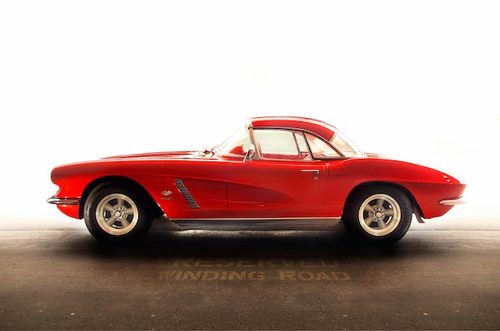
The good folks over at Winding Road have posted an incredible set of their 25 favorite images from the last year. Even better, they've provided a wallpaper-size version of each photo so that you can enjoy them from the comfort and privacy of your very own LCD.
Doesn't the photo above of DED Jr's '62 fuelie Corvette just knock your hat in the creek?
photo credit: James P. Morse
07 April 2007 | Permalink | Comments (0) | TrackBack (0)
|
Last week I found myself answering some routine questions around the usual "why Silicon Valley and not [insert locale here]?"
And I gave all the usual answers: great universities, great people who come and stick around, high housing prices that make one desperate to build equity, cluster effects, and a positive (or vicious, depending on how you look at it) cycle feeding all of the above.
But I neglected to mention San Francisco. Shame on me. Yes, I think San Francisco, with all of its entrenched looniness and bohemian iconoclasm, is like a little innovation gallbladder injecting creative bile down into the capitalist digestive tract that is Silicon Valley. Call it trickle down innovation, or a spark plug effect, but I truly believe that all the free thinking (and doing -- lots of doing) up there makes a difference down here in the 'burbs.
In case you doubt me, please turn your gaze to Exhibit A:
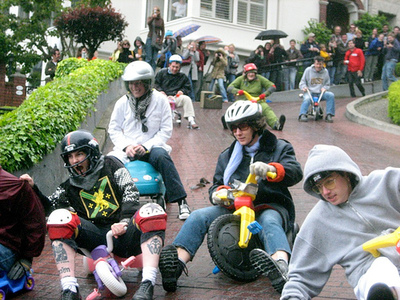
7TH ANNUAL'BYOBW'
BIG WHEEL RACE
FREE OUTDOOR EVENT
EASTER SUNDAY, APRIL 8th 2007
4 PM
TOP OF LOMBARD ST, SF
BIG PEOPLE ON KID'S TOYS
NO RUBBER WHEELS
HAND-MADE PRIZES
FUN!

03 April 2007 | Permalink | Comments (0) | TrackBack (0)
|
Why settle for beautiful when you could be interesting instead?
That's what jolie-laide will do for you.
April 2 means that metacool is now three years old! Thank you for all your attention, ideas, conversation, help, and interest. Let's see where we are on April 2, 2010!
Gnarly!
photo credit: the.voyager
02 April 2007 | Permalink | Comments (2) | TrackBack (0)
|
Ever wonder what tumblehome is? Ever wonder why you've never wondered what tumblehome is?
The New York Times is running a nice interactive graphic which shows and defines the terms which form the basis of an auto designer's aesthetic vocabulary. Strictly speaking, since there's no designer speaking here, this isn't exactly a Director's Commentary; it's more like a commentary on commentaries.
Zero tumblehome? A Land Rover. Massive tumblehome? A Pagani Zonda (whose factory is a great place to visit, by the way).
And the car in the NYT's diagram? A Saturn Aura, proof of the resurgence of their brand. Good stuff.
31 March 2007 | Permalink | Comments (0) | TrackBack (0)
|
Seth nails it: Zero is the new black
Learning how to develop and market offerings for this world view is, in my humble opinion, the most important business challenge facing any organization today.
26 March 2007 | Permalink | Comments (0) | TrackBack (0)
|
Here's a nice medley of Ferrari Formula 1 Cars through the decades, thanks to the marketing communications folks at Shell. Lots of nice touches, from including a front-engine Ferrari race car (that's the first one), to the use of period-correct large-window full-face helmets for the racer from the 70's, to the exquisite V12 & V8 soundtracks, well done. Bravo.
It does feel like a bit of an homage to the Honda Impossible Dreams commercial, which benefits from tighter editing, a humorous plot line, and a wonderful soundtrack. Not trying to be overly critical here, just calling it like I see it. While the Honda commercial evokes a strong emotional reaction, the Shell ad leaves one feeling a bit flat in comparison. Nothing wrong with it, but if brands are all about how they make you feel, then a commercial which is all about building meaning should fire on all emotional cylinders, as it were. A reminder of how great reflective design is so hard to do.
Okay, excuse me while I go listen to those V12's on overrun once again... Forza Ferrari!
Many thanks to Doug from out in metacoolland for pointing this video out to me.
26march update: here's a link to a Quicktime version of the Ferrari-Shell ad, much higher quality
25 March 2007 | Permalink | Comments (2) | TrackBack (1)
|
My IDEO colleague Ryan Jacoby and I recently published a piece in the Design Management Review titled Innovation, Growth, and Getting to Where You Want to Go.
Please give it a read and let me know what you think, or leave a comment below.
22 March 2007 | Permalink | Comments (4) | TrackBack (1)
|
Wow! Look at all this innovative stuff my friends are up to. This is all so fun, I've gotta share it with you:
How cool is it to live in a time where everyone can have a website to show what they're up to? Life is good.

20 March 2007 | Permalink | Comments (1) | TrackBack (0)
|
We live in a wonderful age where digital controls add another layer of life and complexity of behavior to analog devices such as the Renault Formula 1 motor above being played like a choir using a computer to control the rpms (the fun starts with 32 seconds left in the video).
Why must things sound boring or terrible? Why not design them to sound the way they would sound if you stopped and thought about the right sound for the occasion? You know that ominous landing gear whine and clunk you hear right after take off in a jet liner? Why not make that sound confidence-inspiring? Everything can be designed, and to deliver a total experience, probably should be.
17 March 2007 | Permalink | Comments (3) | TrackBack (0)
|
Above is a tasty brew I stumbled upon in the course of some world travels. Fermented brew plus Kona coffee. Who knew? It tastes pretty good, actually... like good coffee. Iced coffee, that is.
You can either invent something new to the world (hard to do), or you can borrow liberally to build a better mousetrap (easier to do). Taking an ingredient out of its original context is a good way to innovate, and it can result in some potent outcomes:
That's a very short list -- thousands of innovative products have come about from taking two known but separate ingredients and kapow! slam! zoom! putting them together in a way that creates value. Slamming, smashing things together comes from making cross-industry connections. And in an interesting way, it's a good strategy for reducing risk. While unknown in the context of your competitive environment, something like yield management science or Cash or a big car motor is something already tested and proven and evolved by others. So you're less likely to end up with arrows in your back.
Who wants more risk than necessary, anyhow? Mix it up.
15 March 2007 | Permalink | Comments (2) | TrackBack (0)
|
"There was a time not so long ago when egomaniacs made media to their own personal standards, and when you make something for yourself, it will always be far better and more honest than something you make the please the marketplace. With computers, individuals can be egomaniacs and make the media they think is good."
- Tibor Kalman, as quoted in Wired magazine, December 1996
14 March 2007 | Permalink | Comments (0) | TrackBack (0)
|
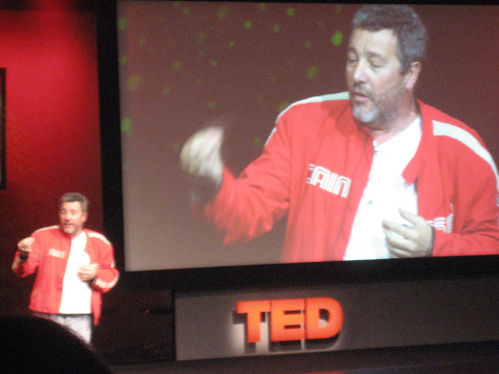
Quite a lot, as it turns out.
Until the TEDTalk video comes out, Tom Guarriello's great blog post about Philippe Starck's incredible speech at TED last week will have to do. It's a good brain rattler.
photo credit: PMO
13 March 2007 | Permalink | Comments (0) | TrackBack (0)
|
I’m double blog-stinting this week. Along with my fellow guest bloggers David Hornik and Bruno Giussani, I’ll be over at TEDBlog for the week writing posts on a daily basis.
Actually, I’m always double stinting in that I’ve been a guest blogger for TED over the past year. One of my recent posts talks about whooping it up with Toyota in NASCAR, and another one is a march through my daily life in search of my Starck Factor.
In case you are wondering, no, I didn’t receive any hate mail for daring to talk about NASCAR in the same sentence as TED. Honestly, I think NASCAR is a great example of what happens when technology meets entertainment meets design in a premeditated fashion. It may not be your cup of tea – or it might be your can of Bud – but it is obviously working, so why not learn from it? One of my goals for 2007 is to make it to a NASCAR race.
But do please check out the TEDBlog this week.
06 March 2007 | Permalink | Comments (0) | TrackBack (0)
|
Wow, what a lot of fun that namestorm was! The "KGB" names are still rolling in, and I have to say there was some very creative thinking going on (see Reilly's comments on the previous post below). The winner is Kindling Gregarious Behavior, because it sounds good, actually describes the content and aim of the course (not a bad thing at all when you think about it) and -- best of all for me -- it echoes the observation that Wikia CEO Gil Penchina made on a panel I hosted at last year's AlwaysOn conference. Gil made the point that, instead of spending all your time, energy, money and luck building a big bonfire on your own and then hoping that a bunch of other people will choose to come and sit around it, why not identify all the myriad little campfires burning around you and pour a little gas on each one? That's the way infectious action and gregarious behavior get fed. It's not about some big top-down mission, though centralized thinking matters. It's about embracing the power of the community. It's about kindling.
Anyway, I'm really excited to be teaching CIA-KGB along with a truly fabulous -- FABULOUS! -- teaching team. We learned a lot teaching CIA last year (and got lots of great coverage in BusinessWeek and other august journals), so this year we've made some tweaks to the class to try and make it an even better experience. This year's class will again involve a creating infectious action project for the good folks at Mozilla, and will then focus on a project for Global Giving. I'm very excited to be working with Global Giving, and it already feels good to be brainstorming project ideas with my Mozilla friends.
This will not be your usual classroom experience. Everything is real, everything is open-ended, and the sky is the limit. It'll be scary. It'll be fun. It'll be something, hopefully, which knocks your hat in the creek. As if all that weren't enough, it looks like Global Giving will be supporting some summer internship positions for CIA-KGB students who A), kick butt in the class, and B) want to keep working on Global Giving-related issues. How cool is that?
Are you a Stanford student with Master's standing? Please consider applying for the course. You can find an application here. It's due March 9, and we'll be selecting 24 people to part of the CIA-KGB classroom community. The journey is the reason we do all of this, and the fruit of the voyage will be more experience with the design thinking process as well as further developing methodologies for creating infectious action and kindling gregarious behavior.
28 February 2007 | Permalink | Comments (1) | TrackBack (0)
|
Hi. Lots of great name ideas streaming in for the "KGB" part of CIA-KGB. Here's a sample:
I like 'em all. What I've learned is that the name needs to be of parallel structure to CIA, which stands for "Creating Infectious Action". If you have any more ideas, let me know. We'll decide the name soon.
27 February 2007 | Permalink | Comments (1) | TrackBack (0)
|
The San Francisco Chronicle published a nice interview with my colleague Bob Sutton about his new book The No Asshole Rule. I have a little blurb in the article about why it's so important to filter out jerks when you're trying to encourage innovative behavior.
I love Bob's book and I think the coverage it's receiving is great -- I hope that it pushes the world a little closer to a state of affairs where the pursuit of happiness in the workplace is not only encouraged, but is the norm. My only worry stems from the power of Google; will my descendants forever associate a web search on my name with the term "asshole"? I hope not. English is just so damn boring when it comes to swear words for the nether regions. If that association is going to be a sticky one, I'd much rather it be with something like the Spanish gilipollas or -- even more mellifluous to these ears -- the Italian cafone.
On a side note not even tangentially tied to cafones, I must apologize for two trends on metacool as of late. All of us on the staff of metacool are dedicated to writing thoughts about the art and science of bringing cool stuff to life. But as of late we (I) haven't been posting that much, and what I have posted has usually been a pointer to something else rather than some (semi) original thinking. Why? Well, I'm not one to spend a lot of energy fabricating excuses, but I've been hella busy innovating. Deep in structuring some prototypes and figuring out where to go with them. Also, I'm busy getting the next version of Creating Infectious Action cranked up for the Spring Quarter at the Hasso Plattner Institute of Design. I'm looking forward to teaching it with a rather awesome group of individuals. More on that to come. One change is that it'll probably be called "CIA-KGB" for short, instead of just "CIA". So drop me a line and help me out with name brainstorming by letting me of any good verbs that start with a "K".
But creativity is endless. so expect a surge of posts (oh boy, has that word has been ruined forever, or what?) in the next few weeks as all this goo gels in my head.
24 February 2007 | Permalink | Comments (1) | TrackBack (0)
|
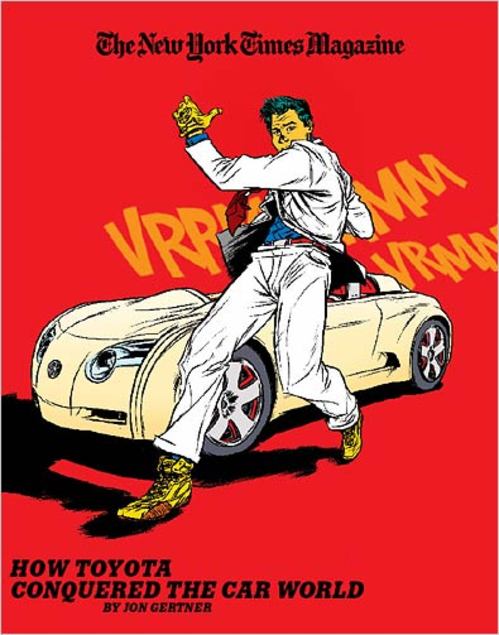
A must-read about Toyota: From 0 to 60 to World Domination
How does Toyota win? By coming an evidence-based culture with an eye to the long view. By investing in incremental innovations to build long-term brand equity, and investing the payback in revolutionary innovations like the Prius. By paying attention to technical details and to the humans who design and build the cars and those who service and drive them.
It seems simple, right? Realization and implementation are so tough.
18 February 2007 | Permalink | Comments (5) | TrackBack (0)
|
I've always wanted one. Growing up in Boulder as a lad in the Ford + Carter years, I saw them everywhere. An ubiquitous presence on the aesthetic landscape. I just assumed that a third of America drove a Saab 96 or 95. Along with bobbing Citroen DS21's, snorty BMW 2002tii's, prim and proper Volvo Amazons, and some wickedly Mothra-like ur-Subaru's, the Saab 96 was the car of choice for all the forward thinking 1970's pseudo intellectual and non-pseudo intellectual hippies who inhabited (and still inhabit) my hometown. Each day on my trudge to and from elementary school I'd stop and goggle an off-white 95 wagon, marveling at its bulldog proportions and vestigial tailfins. "Why?," I wondered. "Why not?" I now realize, was the answer.
It's a design classic. Penned by Sixten Sason, it built the Saab brand by winning rallies the world over, its little two-stroke heart beating away pop-pop-poppoppopopop-pop in freewheeling gravel drifts through dark forests. Of course the brand lost its way, as most great brands do when they become exercises in linear, rational corporate thinking. Too bad Subaru is the new Saab, but thank goodness Subaru is the new Saab, too.
Long live the 96!
16 February 2007 | Permalink | Comments (3) | TrackBack (0)
|
When I was a teenager, jazz great Count Basie passed away, and I remember being shocked at how hard my music teacher took the news. For him, Count Basie was The Man, the one who had inspired him to pursue a life in music, to become a teacher to kids like me.
Today, I'm so sad -- and shocked -- to hear that one of my heroes, saxophonist Michael Brecker passed away last month. With his passing, the world lost a great innovator and a rare artistic genius.
For me, as a saxophone-crazy teenager, hearing Brecker's eponymous debut album blew my mind utterly and completely. It was like getting a direct injection of musical innovation. "Original Rays" showed his ability to control the remarkable EWI MIDI instrument. His rendition of "My One and Only Love" introduced me to the iconic tune for the first time, got me interested in Coltrane, and stuck with me ever since -- it was the song my wife and I used as our first dance at our wedding reception. And there's nothing quite his old albums where he's playing in a style called heavy metal bebop, like on the track "Skunk Funk". If you're not into jazz, you know his sound, because he played just about everybody's album. Michael Brecker is the person playing the saxophone on Dire Straight's tune "Your Latest Trick". It's safe to say that I drove my parents, siblings, and neighbors crazy playing along to that album, figuring out how to play those amazing licks of his, how to get that amazingly fat yet supple sound. Hearing him play a concert live later that year was a dream come true.
I never heard him play live again, unfortunately. And though I'm upset over his death as if I actually had known him personally, I only knew him through his albums. But music gives you that direct connection to people.
Life is short. Live it up, do what you want and can to enjoy it.
13 February 2007 | Permalink | Comments (0) | TrackBack (0)
|
Here's a fantastic Director's Commentary from architect Joshua Prince-Ramus. It's a video of his talk from TED2006, and it he provides an eye-opening look at the design process which has created works such as the Seattle Public Library, among others. Three interesting threads are woven in to his commentary:
The storytelling is great. If you can, it's easily worth the twenty minutes you'll spend. This is how innovative behavior looks and feels and happens.
06 February 2007 | Permalink | Comments (1) | TrackBack (0)
|
This is why Gore helped create the Internet, and why Berners-Lee built the Web: Indexed
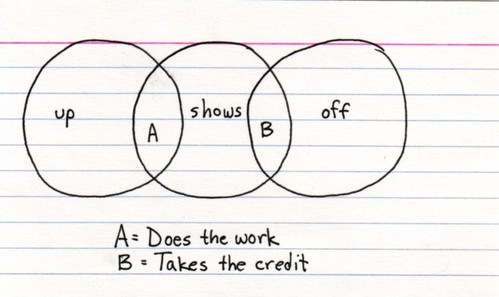
Inspiration for creating that next 2x2 or Venn diagram. Or not!
03 February 2007 | Permalink | Comments (2) | TrackBack (0)
|
02 February 2007 | Permalink | Comments (1) | TrackBack (0)
|
I love this post from Guy Kawasaki: Is a Business Plan Necessary?
For all but the most incremental of innovation efforts, a comprehensive business plan is shot in the dark. You're guaranteed to be 100% wrong. So why try to be 100% right and successful in planning a business venture, when what the humans who will make or break you really only care about something which is 70% "good" execution? Don't get me wrong -- a business plan is really valuable as an exercise in logical thinking. But to mistake it for an exercise in producing a tangible reality is to build castles in the air.
Don't waste your time. Build to think. Just do it.
26 January 2007 | Permalink | Comments (3) | TrackBack (0)
|
Whenever I think about designing something to have a better chance of being contagious, the issue of authenticity invariably comes up. All things being equal, we're more likely to tell people about the authentic things in our lives. When was the last time you joined a cause because it was hollow, shallow, and fake? Authenticity matters.
But, what is it? I know it when I see it, hear it, feel it -- but what is it? And can it be designed? Or does the act of designing it break it? In other words, can an authentic experience of Paris-ness be designed, or does a designed version of Paris end up feeling a lot like Paris in Las Vegas? Perhaps a way to answer the questions of "what is it?" and "can we design it?" is to borrow a page from the book (or blog?) of John Maeda and endeavor to come up with principles of authenticity. If we can come up with design principles for authenticity, then we'll have a better understanding of what makes for authentic experiences, as well as the means to design them in a more predictable manner.
The first design principle I'd like to discuss is the idea of a strong point of view. Authenticity, it would seem to me, demands a strong point of view. In other words, a clear sense of what matters. The ability to make choices. A deep understanding of what you are and are not. What does a strong point of view look like? A great example is Jitensha Studio, a Berkeley bicycle shop run by Hiroshi Iimura. Last year the New York Times ran an evocative profile of Jitnesha which contained this ode to a strong point of view from Mr. Iimura:
If a customer wants a component that is not to my taste, I refuse. No brightly colored seats. No neon. Nothing flashy, nothing impractical. I have to satisfy my own tastes first.
A strong, coherent vision of where things need to go is the bedrock of authenticity, I'd argue. Porsche was a more authentic brand when Porsche was run by a Porsche whose opinions about Porsche-ness could trump any marketing study. Apple is all about a clear point of view, and it's certainly the most authentic manufacturer of consumer products out there today. Anything Virgin is about an authentic experience of what it feels like to be irreverently original. And so on and so forth.
Thoughts? Am I full of it? What are some other possible principles? Should we catch this train?
25 January 2007 | Permalink | Comments (2) | TrackBack (2)
|
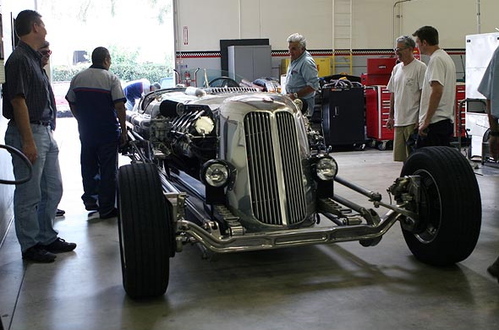
Here's a Director's Commentary which is all about ingenuity. My previous Director's Commentary pointers about the Honda Ridgeline and the Nintendo Wii have been built around the theme of being human-centered in one's design process; this one is all about engineering a unique solution for a single human and his singular pursuit of gearhead gnarlyness. That human goes by the name of Jay Leno. Simply put, he has a custom hot rod powered by a vintage tank motor.
A tank motor! If you're like me, you have no idea of the operating parameters of a tank motor. Well, here they are:
That, my friends, is a one huge motor. It's designed to accelerate heavy things quickly. But any hot rodder, particularly one like Jay Leno with some discretionary income, just can't leave well enough alone. So he took his tank car to the legendary Gale Banks and asked him to double the horsepower. DOUBLE THE HORSEPOWER. As in, 1,600 horsepower. Which is roughly equivalent to four Corvettes or six Camrys (yes, we live in the age of the overpowered Camry. I have a rant to write about this, but that's for another day).
This Director's Commentary, then, is about the ingenuity and workmanship that goes into pulling off something extremely tricky from a technical standpoint. It comes in four parts with lots of great illustrations and stories (look for the one involving Colin Powell), and is full of interesting passages, such as:
The AV 1790 V12 has a long rotating shaft across the front of the engine to link the carburetor throttles together. We'll fabricate new throttle pull-rods to utilize the original cross-shaft. In this photo the two right bank magneto covers (there are four magnetos) have been removed. Although we could have converted the engine to electronic ignition, Gale wanted to retain the magnetos to maintain the period look.
Yes, I realize that this particular edition of Director's Commentary probably doesn't have the wide design thinking appeal of some of the earlier episodes. But even if you don't enjoy the technical virtuosity at work here, I'd encourage you to peruse the four episodes. Perhaps they'll help you better understand why people like me find this stuff so interesting. If you happen to work with, or manage, or lead people who like gearheady content, it may help you gain insight in to ways to help those people be happy and innovative. And embedded here too, unfortunately, is a lot of the human wiring which makes some us buy Hummer H2's when what we really needed was a minivan. Or perhaps even just a Camry. So much of why we pursue technological wizardry, whether it be of silicon or aluminum or clever bits and bytes, is driven by emotional and our irrational inner dialogs. If we're going to get better at designing systemic solutions to address climate change and other broad issues facing our societies, we need to really understand what drives people to create 1,600 horsepower hot rods.
And overpowered Camrys.

18 January 2007 | Permalink | Comments (3) | TrackBack (0)
|
"For the longest time ideation was about throwing out as many ideas as you can. We've realized pretty quickly it's really not about a bunch of ideas, it's about really good strategy, alignment with business, diagnostics, and deep customer understanding...Then, the ideas are no longer just about the product, they're about new business models and how you go to market, and what's your supply chain like."
15 January 2007 | Permalink | Comments (1) | TrackBack (0)
|
I suppose a natural extension of the "public to-do list" concept we explored a while back on metacool would be something like a "public progress report". Assuming the to-do list was on the web and somewhat wiki-like, you'd be able to click-thru on any individual to-do list item to see its status. The progress report could take the form of a blog.
Once you were there, you could be part of making it happen. Offer some advice. Find out how to help. Cheer the effort on. Or just send some love.
A good example of a public progress report is Russell Davies's nonentity fat club blog, which plays yin to the yang of his eggsbaconchipsandbeans blog. It's been cool to track the progress of his entire getting in shape effort, and it makes me want to run (or walk) out and get a Nike+ setup. Especially with nifty data services available like Justdoing.it, which allows you to set up a RSS badge of your running data. For use on your public progress report, of course.
Zooming out to the big picture, I can think of many corporate innovation efforts which could benefit greatly from this kind of transparency. Not to keep the team members feeling like they're under a microscope, of course, but to tie them to a larger community which could help them along. It's tempting to think of progress measures solely as a way to evaluate performance; it's much more interesting, optimistic, and useful to find a way to use them to improve performance as it happens.
14 January 2007 | Permalink | Comments (1) | TrackBack (0)
|
"The right strategy makes any tactic work better. The right strategy puts less pressure on executing your tactics perfectly.
Here's the obligatory January skiing analogy: Carving your turns better is a tactic. Choosing the right ski area in the first place is a strategy. Everyone skis better in Utah, it turns out.
If you are tired of hammering your head against the wall, if it feels like you never are good enough, or that you're working way too hard, it doesn't mean you're a loser. It means you've got the wrong strategy."
10 January 2007 | Permalink | Comments (2) | TrackBack (0)
|
I'm not sure I get it, but what I do know is that it would be pretty cool to have a sailing ship about as long as the Empire State Building. Very nice.
My view on products and advertising is that any market offering sits somewhere on a continuum bounded by interplanetary satellites (which require no reflective design, AKA "marketing communications), and pet rocks, which are all about the message. Deodorant is a few notches above a pet rock. It's all about the story. And in this case, I really appreciate the lack of boasting about 10-hours-of-superlative dryness! here, and my-isn't-this-a-cool-shade-of-time-release-blue-gel there. You know what I mean. It's not about performance-driven features, it's about how it might make you feel, and from that point of view Old Spice now enters the elite company of experience-centric products such as the Palm V, the iPod Shuffle, the Porsche 911, and any Dyson vacuum cleaner.
And of course, that magnificent sailing ship.
Thanks to Coop for alerting me to Mr. Campbell's manifesto.
09 January 2007 | Permalink | Comments (0) | TrackBack (0)
|
09 January 2007 | Permalink | Comments (2) | TrackBack (0)
|
Here's a stunning collection of Director's Commentaries from the creators of the Nintendo Wii gaming system. The commentaries are transcripts of a discussion and are not in video form. Fortunately, they're broken into several chapters, so it's easy to find something you might be interested in hearing. There's an enormous amount of material here, so I haven't been able to digest it all. But here are some gems:
"This may sound paradoxical, but if we had followed the existing Roadmaps we would have aimed to make it “faster and flashier.” In other words, we would have tried to improve the speed at which it displays stunning graphics. But we could not help but ask ourselves, “How big an impact would that direction really have on our customers?” During development, we came to realise the sheer inefficiency of this path when we compared the hardships and costs of development against any new experiences that might be had by our customers." - Genyo Takeda
"I've said this countless times already, but when developing Wii, I thought constantly about what we could do to stop games being regarded with hostility in the family. So I came up with a suggestion, perhaps a rather outlandish one! (laughs) What I thought was that if a parent said that their child was only allowed to play games for one hour a day, how about making it so the console actually turns itself off after an hour? I realize the head of a games company shouldn't think things like that!" - Satoru Iwata
"If only one team is developing something, they'll only ever pay attention to the same old issues, sometimes discussing them all day amongst themselves to find a solution. But this time, thanks to the System Function team, I was able to go and talk with Kawamoto-san or have a look at Kuroume-san's designs. Both physically and mentally, I found this to be a less stressing, more laid-back way to do things.' - Tomoake Kuroume
I hope the Wii does well. It's rare to see a series of closely-spaced market introductions (XBox, Playstation 3, Wii), where one is so dramatically different in terms of the innovation bias of the originating firm. Where Sony and Microsoft seem to lead with technology, then business, and then think about the user experience, Nintendo is obviously leading with people and desirability, feeling that the other two factors will follow naturally if there's market lust for the Wii. Reading about the care and thought put into the interpersonal communication schemes which the Wii enables reminds me of that other great human-centric business-technology system, the iPod + iTunes + iMac. Perhaps the catchphrase of 2007 won't be "How can we be the iPod of our cateogry?", but "How can we be like the Wii?"
Thanks to Anthony Pigliacampo from Freddy & Ma and Gel-Bot for telling me about this treasure trove.
08 January 2007 | Permalink | Comments (0) | TrackBack (0)
|
A trip around Le Mans in a Jaguar D-Type, 1956.
Rather thrilling, what?
03 January 2007 | Permalink | Comments (2) | TrackBack (0)
|
I was fortunate to be interviewed by Chris Shipley as part of the Guidewire Group's Leadership Forum. The topic was "Finding customer zero - identifying the root of contagious behavior in emerging markets". I really enjoyed the session, because the conference itself was small enough where we could all fit in a room and see and hear each other, so very naturally our onstage interview quickly became an audience-wide discussion. Based on work that's been happening at IDEO and at the Stanford d.school, I suggested a simple (but not simplistic, hopefully) model for designing for contagion:
As you might expect from a crowd heavy with Web 2.0 thinkers, we quickly got into issues of co-creation and open innovation. I only wish we could have spent another hour or two on the topic.
I had an easier time than usual talking through Point Two above because I had an easy out: the next speaker in the lineup was Professor Chip Heath from Stanford's Graduate School of business. Chip and his brother Dan are about to launch a book called Made to Stick. It's all about Point Two, so all I had to say was "wait until tomorrow, and listen to Chip". Made to Stick is a perfect companion to two other books which are about designing systems to spread: Malcolm Gladwell's The Tipping Point and Seth Godin's Unleashing the Ideavirus. And like those two books, I think Made to Stick is going to be a Big Deal. You can read an excerpt from Dan and Chip's book here.
What makes Points 1-3 work is a human-centered design process. Genuine, authentic stories about offerings that help people get real jobs done in their daily lives are what work. You get there via design thinking, by putting people at the center of everything you do. To that end, Chip recently joined my company as an IDEO Fellow. He joins our existing Fellows Barry Katz and Bob Sutton. They all lend their specific areas of deep expertise to our design process, and I'm very excited to see what happens with Chip in the mix.
By the way, Dan and Chip will be on the NBC Today Show tomorrow, January 3. They're scheduled to go on during the 7:30 - 8 AM time slot. A great chance to hear about making stories sticky. They've got a good blog going, too.
Update: here's the Today Show video with Chip & Dan
02 January 2007 | Permalink | Comments (0) | TrackBack (0)
|
Much to the chagrin of my family, our long-awaited winter vacation was interrupted by a nasty cold or a mild flu which I came down with post Boxing Day. Oh well, that's life. The good news is that, with lots of time suddenly on my hands, I've been able to tackle the pile of books that's been growing on my nightstand, along with a few which came to me as Christmas presents. If you'll indulge me, here's an overview of what I've been reading:
Designing Interactions, by Bill Moggridge. I've actually been tackling this one for about a month now. For the sake of full disclosure, Bill is a colleague of mine at IDEO. But this is not a book about IDEO, by any means. I've learned so much reading it, and I keep going back and re-reading the interviews and watching the DVD. I can't get enough of Bill Verplank's point of view on interaction, and I've read John Maeda's chapter oh, maybe five times. The Rob Haitani chapter alone should be required reading for every product manager in the world. In fact, if I could pass a universal law, I'd make that chapter required reading for every product manager in the world each January 1 of each and every new year. This book now is the anchor of my innovation library, and I predict in five years it will show much evidence of active use, perhaps even some beausage.
Phaedon Design Classics, 001-999: a comprehensive, full-color survey of iconic designed objects in the tradition of Stephen Bayley's book In Good Shape. I wish I had this book earlier in my career -- flipping through its pages has fleshed out my sense of design history. For instance, one of my colleagues has a Dieter Rams-designed bookshelf in his office, and I've spent the past two years analyzing its structure in five-minute chunks during meetings there, but I never knew it was a Rams design. Now it makes much more sense to me. On the other hand, the three tomes of this collection seem to be full of content errors, at least based on the really basic errors I've found whenever the books talk about cars, such as:
- The pages about the Porsche 356A Speedster (Entry 461) are accompanied by a photo of the original 356 prototype, which is not a Speedster. Totally different cars from a design standpoint. One is mid-engine, the other hangs it off the back. To use the photos interchangeably not only wrong, it's downright against the law.
- Entry 496, which is about the Fiat 500, is illustrated with a blueprint of the Fiat 600. It's not wrong wrong, but it's like putting a picture of a Lusitano in an essay about Shetland ponies.
- Entry 817 on the Fiat Panda ( a car I dearly love ) states that "[Giorgetto Giugiaro] began creating cars witih sharp edges and straight lines... the Panda is a testament to this particular style, with its box-like shape and large, square-shaped headlights, finished with five chromed lines diagonally gracing the front of the grille." The entry is, as you'd expect, illustrated with a photo of a Panda with the five chrome lines on the grille. Which is all fine and well, except for the fact that the original Giurgiaro design which went into production featured a metal grille with nineteen vertical air slats, with no chrome to be found. To say otherwise is to obfuscate the history of design. And, the original design was much cooler than the later chrome restyle.
- BMW 2002, entry 697. And I quote: "The models built between 1968 and 1973 had larger bumpers specifically for the US market...". No, actually, quite the opposite is true; the "big bumper" 2002 models came to the US from 1974 through the 1976 model year. Not quite a criminal assertion, but close. These details are just details, but they matter in a history book.
To be sure, it's a fascinating and instructive set of books, but errors such as those above make me wonder if the utility of these types of works in the age of the Web is rapidly approaching zero. Aside from the fact that a three-volume compendium is likely to be difficult to compile, expensive to produce, buy, and sell, and take up a lot of shelf space, it just screams to be done on the web. As in a series of hyperlinked web pages. Perhaps as a wiki, maybe not, but something which could modified as need be when thousands of eyeballs dig up shallow bugs such as big bumpers on a 2002.
The Creation, by E.O. Wilson. The most important book I read in 2006. If Al Gore's An Inconvenient Truth didn't scare you, The Creation will. Wilson speaks from a position of great moral and scientific authority. While I'm confident that we can find a way to dramatically reduce greenhouse gas emissions over the next decade, I'm now more concerned than ever about the rate of species extinction on land and in the oceans. If you haven't read Wilson's book, you owe it to yourself to spend some time with his eloquent words and deep wisdom. And pass it along to a friend.
Cough cough, sniff sniff.
01 January 2007 | Permalink | Comments (3) | TrackBack (0)
|
My colleague Paul Bennett of IDEO has written an insightful and delightful essay for BusinessWeek: Most Memorable Ads of 2006
Here's an excerpt from Paul:
We're clearly at an inflection point. I'm not even a traditional ad-guy and I've been asked to write this, so what does that say? We're all firmly in this together—marketers, designers, clients, agencies, researchers, ethnographers, art directors and writers, all being sniped at, out-thought, and remixed by consumers younger than our own kids. Hard as it is to say, in most cases, they're as good, if not better, at this stuff than we are. Now, together, we must figure out where to go from here. But before we get in to a whole spiral of circle drumming, chest-beating and problem-solving, let's take a quick tour of some of the highlights of the last year.
But first a warm-up of sorts: Honda's Impossible Dream spot—which aired in December, 2005, and therefore doesn't make the official 2006 list—deserves a mention for Not Being Afraid of the Joy of Great Storytelling, for expansive locations, great nostalgic music, excellent casting, and a fantastically simple premise. In it, a guy emerges from his trailer, mounts a scooter, and then seamlessly moves from product to product, stirring emotions, sweeping us along in his wake, and bringing a tear to many an eye.
I've written before about Honda's Impossible Dream ad in the context of what I like to call tangible brand mantras (you can see the ad by following that hyperlink). It's an ad I can watch over and over (and I have - maybe 50 times; not as many viewings for me as the original Star Wars, but getting there). And it's one which is authentic and true even though it's so outrageous and funny. Honda is a company where the CEO knows whereof he speaks. It's a company as capable of pulling off revolutionary innovation outcomes as it is innovating on a routine basis. It's a group of people not afraid of thinking weird but right. And, above all, it's a company which solves for happiness because, when one gets down to the bottom of it all, that's what drives innovation.
22 December 2006 | Permalink | Comments (2) | TrackBack (0)
|
As told in this great NYT article about the "Four Star Soup Kitchen" of chef Michael Ennes, aesthetics matter a great deal. Certainly more than we give them credit. The care and attention to detail which goes into a meal, for example, can be a source of great pleasure and meaning for both cook and diner. Even in the context of a so-called soup kitchen.
Of course, you needn't trust me on this. Virginia Postrel has written a wonderful book on the subject, The Substance of Style, and you simple must check out her 2004 article titled Why Buy What You Don't Need? The Marginal Appeal of Aesthetics. I use stories and arguments from her article in a yearly lecture I give at Stanford on the topic of meaning and the design of meaning. I love her take on Maslow's hierarchy, and where she places aesthetics in the stack. And I think you already know I believe it's Virginia who is right.
19 December 2006 | Permalink | Comments (1) | TrackBack (0)
|