metacool

thoughts on the art & science of bringing cool stuff to life, by Diego Rodriguez

Fordor Beausage

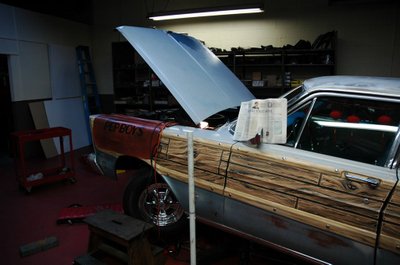
Coop, whose blog Positive Ape Index was first brought to my attention by the inimitable Mr. Jalopy, has written a wonderful post about the wonders of beausage and hot rods:  Jim "Jake" Jacobs' 1934 Ford Fordor

Makes me want to trade in my modern daily ride for one of these things.  Someday I will.
 

15 December 2006 | Permalink | Comments (0) | TrackBack (0)

| |

Unabashed Gearhead Gnarlyness

Flight3

The Carreidas 160

14 December 2006 | Permalink | Comments (3) | TrackBack (0)

| |

Director's Commentary: Basecamp Help

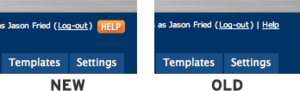
Helpbutton_1

The good people of 37signals published a wonderful Director's Commentary a couple of weeks ago in the form of a post called "Basecamp help".  What's a Director's Commentary?  It's the voice over track on a DVD where the director explains everything that was going on when he shot a scene.  They exist in the world of design thinking, too, as I wrote a while back:

Wouldn't it be great if, in a similar fashion, we could hear and see great designers talking about their craft?  When I was a practicing engineer designing tangible things, there were tens, even hundreds of details embedded in my designs which I knew about, maybe the rest of my team knew about, but which were essentially invisible to the world at large.  Which is fine; it isn't the job of end users to be thinking about the kinds of details and decisions that interest a professional design thinker.  But for students in training, and for other professionals, what better way to truly appreciate the enormity of the task of design than to take a walkthrough around a real design with another real, living designer?

In his post, I admire the way Jason walks us through all the details that go into even a minor rework of a software interface item.  In general, stuff from 37signals works really well, and it's not due to luck or the alignment of the planets.  They're talented designers who sweat the small stuff. 

13 December 2006 | Permalink | Comments (1) | TrackBack (0)

| |

metacool Thought of the Day

"Our chefs and managers cook and run restaurants as if the word of mouth spread by each and every guest today will determine how full -- or empty -- our restaurants will be tomorrow.  We work hard to hire people whose emotional skills -- even more than how they can cook or serve wine -- make them predisposed to deriving pleasure from the act of delivering pleasure.  Long after our guests have forgotten how much they did or didn't like the turbot or the lamb shank, they'll remember how we made them feel."
- Danny Meyer, WSJ, 3Oct3006

12 December 2006 | Permalink | TrackBack (0)

| |

Yes, we need some stinkin' badges

I recently bought a pair of Jack Purcell shoes from Converse.  A classic design, wouldn't you agree?:

Shoecloseup

They're good shoes.  But what I really dug was the clever detailing on the box they came in:

Boxcloseup

My first reaction was something along the lines of "how clever!".  What a nice way to echo the gestalt of the shoe in the shoe box.  And then I thought, "how did the marketing manager for this line of shoes win the argument in favor of adding little metals shoe grommets to each and every box?"  While grommets are cheap, they're not free -- a few cents here and there and it all adds up. 

On the other hand, who says a brand logo needs can't be a three-dimensional object, even on a lowly shoe box?  Why not treat a logo more like a badge, as many automakers do?  These Converse grommets are badges, and not so different than the nine (9!) brand badges which adorn my car (ten if you count the one on my key fob).  Why print a swoosh or a set of mouse ears when you can a have a tangible brand expression?

Bravo, Jack Purcell!

11 December 2006 | Permalink | Comments (1) | TrackBack (0)

| |

Now that's what I call infectious action (Part Deux)

Pg4

What happens when people love your brand and what it could be so much that they're willing to, err, mess with reality in order to make it so? 

Wrcorvette34

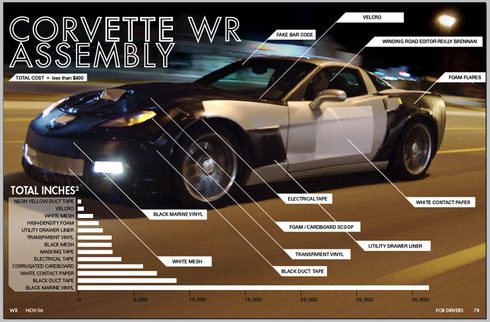
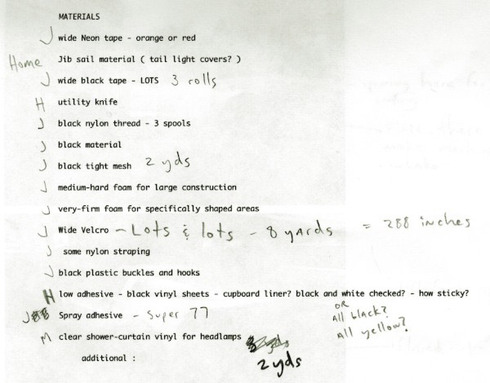
As detailed here (and in the diagram and Home Depot shopping list above) my pal Reilly Brennan of Winding Road went through a lot of trouble to create a "fake" version of the mysterious -- and as of today, not on the market -- Corvette Blue Devil.  If you're not a gnarly gearhead, a little background for you: people who love the Corvette are extremely interested in what's next.  What will Chevy do to make the next version that much better?  Or will they screw it up?  How might it allow them to go out and stomp on witless 911 and Viper owners?  Or to win Le Mans yet again?  It's a community which is not only ripe for the spreading idea viruses, it's one which welcomes them.  And as Reilly has shown, Corvette aficionados want stories and myths that feed the story of why they bought their own car so much that they'll believe anything.  Because they want to.  Describing this worldview, Reilly writes:

We have visions of high American optimism coupled with the fear of a regulated, sedan-like tomorrow.  We dream of a world full of nightmarish Corvettes, those that rumble and break pavement and write "Zora" on blacktop when they leave stoplights.

In brief, Reilly and team took a stock Z06 Vette and mocked up their ersatz Blue Devil with a few hundred bucks of foam and vinyl and tape.  They paraded it around Detroit, and some competing automotive journals even took the bait and published "spy" photos of their fake in action.  Which is a fun outcome, but more significantly, rank-and-file citizens like and you and me were shouting "build it" when they saw the fake Blue Devil rumble by.  Now, if you were Chevy, once you get beyond the act of outsiders pretending to be you, you've got to be happy with that outcome.  Why?  Because Winding Road's Blue Devil is simultaneously an example of and a catalyst of the kind of user-generated brand content which Chevy tried to get with its much-discussed user-generated launch campaign for its Tahoe brand.  Except, I'd argue, it represents an undeniably positive outcome from a brand point of view.

Philosophically, when it comes to creating infectious action, I see the fake Blue Devil as the same kind of expression as the user-generated Firefox cropcircle.  They share some common elements and operate on similar principles:

  1. No permission asked (or required): I'm not sure how Reilly got the Z06 to modify in the first place, but I'd bet the MSRP of a Blue Devil that he didn't detail out his aesthetic vision in detail to its owner.  Put another way, I doubt GM would have sanctioned it.  And the people at Firefox structure their marketing efforts in such a way that they don't have to be consulted on every user-generated marketing action -- a simple set of guidelines and community-based discussion forums is all it takes.
  2. It's authentic: If GM had tried this as a publicity stunt, I wouldn't be telling you about it.  Yes it's a fake car in a sense, but it's a very real and authentic expression of brand love because of the folks behind it.  Who blows 50-odd hours taping foam to a Corvette?  What kind of group of people stomp out computerized patterns in a cornfield?  Total weirdos who love you, that's who.  Weirdos = Authentic.
  3. It's audaciously unexpected: Mess with an expensive, brand-new Corvette to create infectious action?  Create a cropcircle of a software logo and then take an aerial photo (how did they do that, anyhow?).  I don't know about you, but I found both of these to be unexpected actions.  And because of that, they're easy to weave a yarn about, and they're memorable.  So, as evidenced by the high amount of web traffic I get linking back to the Firefox cropcircle post on this blog, they're memorable stories that people want to pass along, infectiously.
  4. There exists a Dark side to The Force:  As experienced by Chevy with its Tahoe campaign, letting people outside of your payroll create your marketing messages can be dangerous.  People may call you nasty names and say bad things about you.  The Firefox crop circle could just as easily have been a "Firefox Sux, Buy IE" slogan.  And embedded in the fake Blue Devil mockup is a bit of a naughty streak, like something the fraternity in Animal House might have done.  It's funny, but does leave one feeling a little dirty.  There's a Dark Side, and one has to be mindful of it.  In the end, the actions created by endeavors designed to be infectious can be deeply negative in the extreme, or else we wouldn't be a species still engaged in genocidal activity.  From a design point of view -- designing the offering, designing the story, and designing the system to spread the story -- the operating principles are the same.

Well, somehow I've managed to start with Corvettes and end with genocide.  I didn't expect to get there, but this is a long post, so I'll stop here.

I'd love to hear what you think.

04 December 2006 | Permalink | Comments (0) | TrackBack (0)

| |

Belly Tanker Beausage

Latch1

I love this photo detail from Bobby Greene's "Aircraft latches and you" post from his wonderful blog Automotive Addictions and General Tomfoolery.  It's a blog about his very gnarly belly tanker speed racer.  It's an ode to gearhead gnarlyness, authenticity, and just plain doing stuff.  I love it.

I also dig the photo because it's a great example of beausage, the beauty which comes with use.  All those scratches, dents, and subtle surface deformations couldn't be designed.  They come from being out in the world, and they're beautiful in a very organic way.

Congratulations to Bobby for getting the tanker up and running -- and running WFO, no less! -- again.

Cool.

29 November 2006 | Permalink | Comments (4) | TrackBack (0)

| |

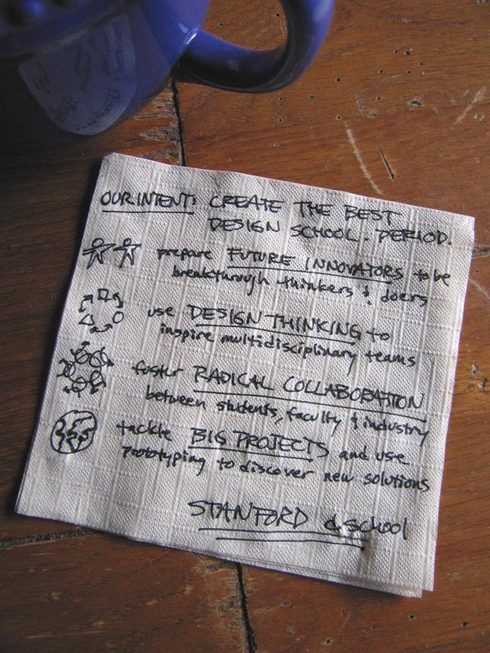
New! d.school news

Misc_manifesto

We've just launched a news blog for the Hasso Plattner Institute of Design at Stanford (also known as the d.school).

This will be a space for us to talk about news and happenings in and around the d.school and the world of design thinking.

28 November 2006 | Permalink | Comments (0) | TrackBack (0)

| |

Each Spring Matters

John Maeda:  Each Spring Matters

A beautiful piece of writing.

27 November 2006 | Permalink | Comments (0) | TrackBack (0)

| |

Watch disruption as it takes shape

Check out this update on The Venice Project, which promises to be to the traditional business models behind television as Skype is to your local phone company.

22 November 2006 | Permalink | Comments (0) | TrackBack (0)

| |

A press conference in Goldshire you shouldn't miss

Wowpressconference

That's me and my friend Ross hanging out in IronForge.  It's a great place to have a meeting and get some work done.  Perhaps even do something innovative.  In case you're wondering, that's me on the right -- I'm the taller one sporting the diving helmet (which I engineered and fabricated myself, natch) and the longish gun, which was a gift.  My trusted pet attack bear, Yogi, isn't in the photo because just a few seconds earlier he wandered off in search of some cheese to eat and fell into a pit of lava.

But I digress.

Come December 1, Ross and his company Socialtext will be holding a press conference.  What makes this one special is that it will be held in World of Warcraft in the charming village of Goldshire  at the blood-soaked Gurubashi Arena.  The whole event should be interesting, and if you're a journalist or a blogger or someone interested in wikis and social software, you outta be there.

If none of this makes any sense to you, I'd encourage you to try out World of Warcraft and attend.  I'll even volunteer to walk you over from the city of Stormwind to the press conference location (or have Ross summon you there).  I think all of these "games" such as World of Warcraft and Second Life are but the tip of the tip of the tip of the iceberg when it comes to understanding what our lives will be like in 10, 20, 30 years.  And the best way to begin to understand is to jump in and wallow around.  Learn by doing.

Find press conference details and signup instructions here on Joi Ito's Socialtext Workspace

17 November 2006 | Permalink | Comments (0) | TrackBack (0)

| |

metacool Thought of the Day

Dsc01080_1

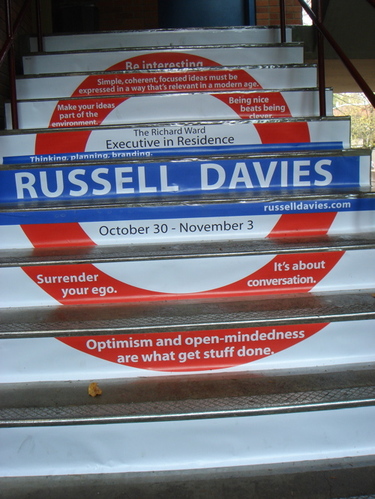
Words of design thinking wisdom from Russell Davies

13 November 2006 | Permalink | Comments (0) | TrackBack (0)

| |

Unabashed Gearhead Gnarlyness


Sun's Project Blackbox

It's a wonderful example of modular design thinking at work.

10 November 2006 | Permalink | TrackBack (0)

| |

New Economy Models and Old Bridges

292147814_c1bde5014a_b

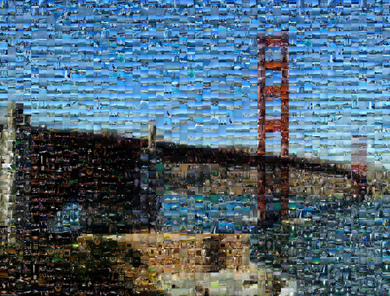
A wise person helped me see today that the Golden Gate Bridge is an excellent example of HAAS (Hardware As A Service) which has been living right under our noses for decades.  It's a pay per use business model, and is certainly a lot more affordable than building your own bridge. 

Sounds a lot like B2B plays in Web 2.0 and Office 2.0 to me.

It's all about perceptions, isn't it?  I believe there are very few, if any, new business models under the sun.  The challenge for us is to see clearly, to think creatively, and to apply what we already know to make things new things happen in interesting and effective ways.

flickr photo credit

09 November 2006 | Permalink | Comments (0) | TrackBack (0)

| |

What class would you want to be part of?

275156076_b1646589db_b

So, I'm starting the planning process for another Business + Design class at the Stanford d.school for Spring 2007.

My big question is: what kind of class would you want to be a part of? 

One choice would be to teach Creating Infectious Action again.  We learned a lot teaching it last year, both in terms of how to structure the class as well the content which was developed in the class by staff and students alike.  It certainly caught people's attention, as in here, and here, and here.  So that's one choice.

The other is to teach something new.  I have some ideas about content and form but I'd like to hear what you have to say.  What kind of a class would you want to take if you were a graduate student at Stanford interested in learning more about design thinking?  Drop me an email, post a comment below, or (best of all), write something on your own blog and send a trackback back over here.

Flickr photo credit

08 November 2006 | Permalink | Comments (1) | TrackBack (2)

| |

Roads to Innovation at Stanford

Logo

I'll be part of a panel discussion at the Roads to Innovation conference at Stanford this coming weekend.  All the panels are stocked with really interesting people.  Given my penchant for unabashed gearhead gnarlyness, I'm a little disappointed that Mario Almondo from Ferrari won't be joining my panel as was previously scheduled.  But he just got one helluva promotion at work, so I can see why he's not schlepping out to California for the conference.

Please shoot me an email if you're going to be attending and would like to say hi.

07 November 2006 | Permalink | TrackBack (0)

| |

2007 TEDPrize Winners

Be sure to watch it all the way through to the end...

31 October 2006 | Permalink | TrackBack (0)

| |

What I'd be doing if I was in Boston on November 15

Big_bubbles


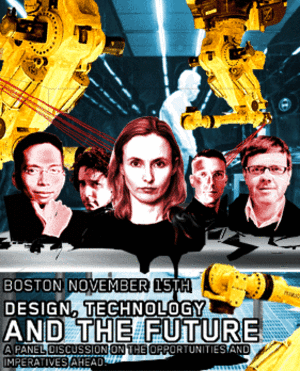
The next Design 2.0 discussion will be held in Boston on November 15.  The speakers include  "Dr. Simplicity" John Maeda, Natalie Jeremijenko, Bill Cockayne, Jason Pearson, and the always interesting Allan Chochinov of Core 77.

Plus, there's robots shooting lasers and stuff.  Boston is one of my favorite cities, a veritable foaming cauldron of intellectual ferment.  Wish I could go.

31 October 2006 | Permalink | TrackBack (0)

| |

A list of the contents of a salesman's bag

Tom Peters on what works.  Nice d.school mention.

Thanks, Tom!

28 October 2006 | Permalink | TrackBack (0)

| |

Proving vs. Measuring

Earlier this week I gave a talk a the Design Management Institute's yearly International Design Conference in beautiful Manchester Village, Vermont.  I spoke on the topic of innovation metrics, and explored some of our latest thinking from the business design thinkers here at IDEO. 

What was interesting to me was the split nature of the feedback I received from the crowd.  I would say that most of the people resonated with my stated point of view that the innovation process can be made more predictable by thinking in a structured way about where you want to go and then using metrics and measures to improve the efficiency and effectiveness of the design process going forward.  A smaller minority of the people present felt that I hadn't argued strongly enough along the lines of "Good Design = Good Business".  I hadn't expected that feedback.

In fact, I didn't try to argue that equation at all.  Not because I don't think that good design outcomes are a key driver of organic growth, but because it's not a provable point.  Success on the market is a complex thing, and it's a gross simplification to tie it back to what I would consider to be the somewhat myopic worldview of "Good Design", which is very much about a fetish for beautiful objects and less about creating good fit to broader webs of individual, social, and economic needs and benefits, which is the realm of design thinking.  Success has many parents, and good design is only one of them.  Instead, I believe that good design thinking can lead to a higher success rate when innovating, and that's the link to good business outcomes.  And that's where employing metrics to gauge and guide the innovation process comes into play -- they're a way to inform and improve the context in which our design thinking occurs.  It's about measuring and aiding the process of value creation via design thinking, not proving that design can create value.

27 October 2006 | Permalink | TrackBack (2)

| |

metacool Thought of the Day

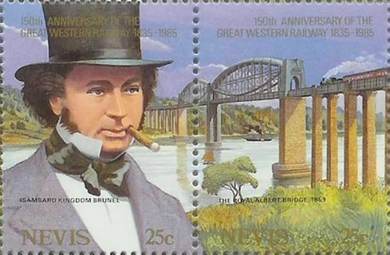
Nevis_25c_isambard_kingdom_brunel_the_ro

“The Scottish are a nation of engineers. But they are very creative engineers. They seem dour, but underneath they are quite romantic. It gets back to a sense of creating order out of chaos. Producing something very controlled is very Scottish.”
- Ian Callum

(in honor of all the great design thinkers who have come from Scotland, including my good friend David, who remains one of the most uniquely creative persons I've ever met)

25 October 2006 | Permalink | TrackBack (0)

| |

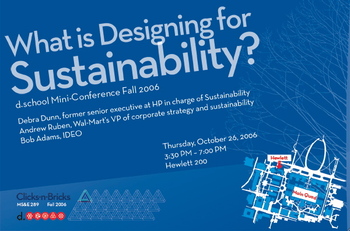
This Thursday: Sustainability Conference at Stanford

Dschoolsustainability

The d.school's Clicks-n-Bricks class (part of the Design + Business movement at the d.school) is holding a mini conference on sustainability this coming Thursday.   Here are the speakers:

  • Debra Dunn, former  HP Executive Vice-President who (among other things) led their sustainability efforts
  • Bob Adams, who leads IDEO's sustainability efforts
  • Andrew Ruben, Wal-Mart's VP of Corporate Strategy and Sustainability

Here are the details:

What is Designing for Sustainability?
d.school Mini-Conference Fall 2006
3:30 PM – 7:00 PM
Hewlett 200

And though my marketing professors would shoot me for saying this, it's really hard to beat the value of something which costs nothing.  How can something this good be free?  And it's anything near as good as the mini conference we held last Spring for CIA, it'll be really good.

24 October 2006 | Permalink | TrackBack (0)

| |

Unabashed Gearhead Gnarlyness

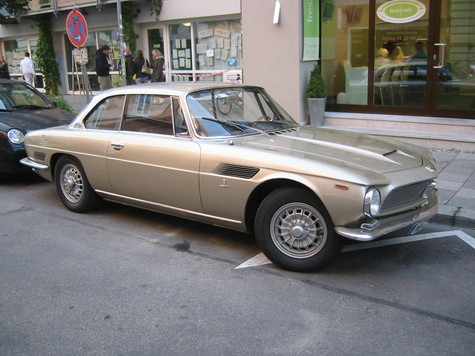
When people send me emails or text messages containing the word "ISO" (which I believe stands for "in search of", as in that wierd Leonard Nimoy show which used to air on TV), I get confused, because I'm a believer in the idea of Italo-American hybrids by the name of Iso.  No, no that kind of hybrid.  This kind of hybrid:

Iso_rivolta_front

The Iso Rivolta.  Corvette horsies meet Italian tailoring.  Accept no substitutes.

Props to my man Zeh for the guerilla street photography

20 October 2006 | Permalink | TrackBack (0)

| |

Some Neato Design Thinking Videos & Podcasts

Designing_interactions

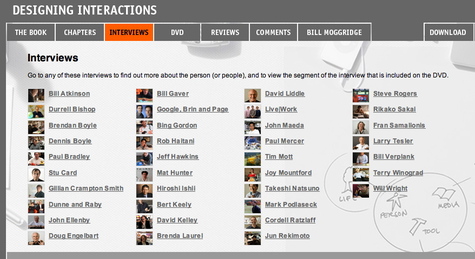
Here's some spectacularly neato design thinking stuff to take a look at.  Definitely worth spending more than a few hours on, with the added bonus that it's all in video and podcast form.  If you're anything like me, and your eyes hurt from reading so much, it's a pleasure to be able to sit back, relax, and imbibe words of wisdom from great design thinkers the world round.

  • My colleague Bill Moggridge of IDEO is coming out with a wonderful book called Designing Interactions.  I suggest you buy it!  It's on my Xmas list. But also take some time to watch Bill's video interviews with an amazing group of design thinkers (for free) on the companion website to the book.  There are a bunch of my pals from IDEO on there, and also a blogger friend in the form of John Maeda, and a Stanford d.school colleague in Terry Winograd, and many other interesting people.  Fantastic.
  • One the great things about teaching is that you get to hang out with people who remind you how much you can really get done in life when you stop worrying about doing it and just do it.  These people are called students.  Perhaps you know some.  I've been happy in the past year to get to know Matt Wyndowe, a student at the Stanford Graduate School of Business who was part of the Creating Infectious Action class I taught this past Spring.  Matt and his classmate Julio Vasconcellos are building an impressive collection of podcasts on the subject of innovation called, quite appropriately, iinnovate.  There you'll find podcasts with such luminaries as Mike Ramsay, David Kelley, and Andy Rachleff.  And remember, these guys are full time grad students, which has to be the equivalent of having at least three "real" jobs, even if they do go play golf on Wednesdays.

Enjoy!

19 October 2006 | Permalink | TrackBack (1)

| |

Thoughts on to-do lists

Do you have a "to do" list?  Odds are you do.  Spoken or unspoken, written or not, we all carry around some sense of the stuff we should be doing (or not).  Companies and organizations do, too.  But they're mostly secret.  Let the world know what you're thinking of working on, and you're screwed, right?  Competitors will copy your amazing strategic plan in a snap, customers won't buy your existing offering as they wait for the next thing to come out, and whenever you have a key project schedule slip, shareholders will sue you for issuing misleading future-looking statements.  Clearly, it would be a bad idea to share one's to-do list with the world.  Or maybe not, if you're a business-by-design kind of organization interested in being innovative in a customer-centric way. 

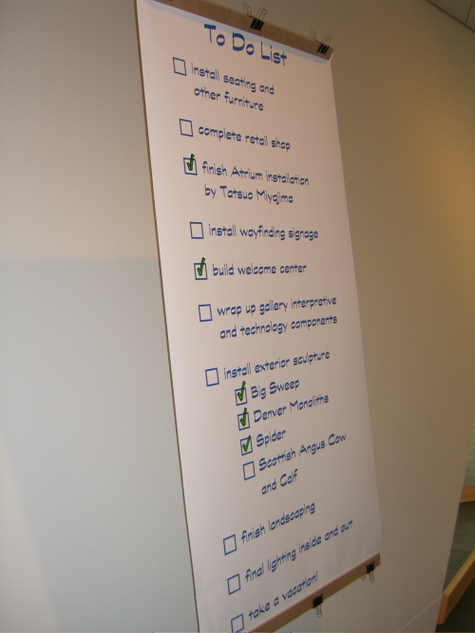
If brands are about what you do in the world, and not just about what you say you do in the world, and if relationships are built around some notion of trust, then why not do something concrete which shows that you're investing in your relationship with customers for the long term?  And for me, that could mean putting your organization's "to-do" list out in public for all the world to see.  Here's something I saw a few weeks ago while on a sneak preview of Daniel Libeskind's new Hamilton addition to the Denver Art Museum:
Todolistdam

This poster to-do list wasn't hidden away in some bureaucratic space administrator's back room.  No sir, the good people of the Denver Art Museum had the guts to print this thing in poster format and place it right smack-dab in the lobby.  Everyone could see it, everyone had to see it.  And I appreciate how open they are with the list:  we haven't put in seating, the store ain't done, and we know there are no signs.  We're working on it.  And as we improve the space, we'll check it off and let you know that we know that these are the things that make or break your museum experience.

Just think what could happen if more organizations put their to-do lists out in public.  I think we'd all feel a lot better about doing business with each other.  Say -- just for the sake of discussion -- that you run the FAA's website and you've found some embarrassing typos on your site.  But you can't fix them right away because your web admin is out hiking in Bora Bora (by the way, they've now been fixed).  What if you could add the "Fix Typos on Travelers page" on your public FAA To Do List blog, right after the entry "Make our site almost as good as that best website ever from Tenacious D"?  Knowing that someone intends to do something, that they are aware of their shortcomings and are trying to improve things, can go a long way toward making you believe.

Even better would be to open up that to-do list to anyone.  So when I find the typos on the FAA website, rather than writing a snarky post on my blog, I help 'em out by entering an item on their to-do list wiki.  Now I'm part of the solution, and probably part of the brand.  It's about leveraging the power of the many to create the best pile of real evidence possible about what works and what doesn't.  At some point along the line this starts to feel a lot like open source.  Might Mozilla really be one be one big public to-do list in disguise?

Back to the Denver Museum of Art.  I wish they had a publicly addressable to-do list.  I would add an entry right now.  Something like "fix those crazy interior angled walls that everyone kept tripping over."
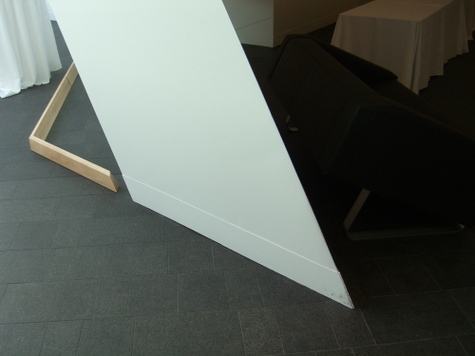
Ouchdamwall

Ouch!
17 October 2006 | Permalink | TrackBack (2)

| |

It's design time

Ndw_map_logo_1

Today marks the start of the first-ever National Design Week

And remember, 2006 is the Year of Total Design.  There's still plenty of time left get some important work done this year. 

Just do it!

15 October 2006 | Permalink | TrackBack (0)

| |

Beyond the box

Td_pick_of_destiny_poster_1

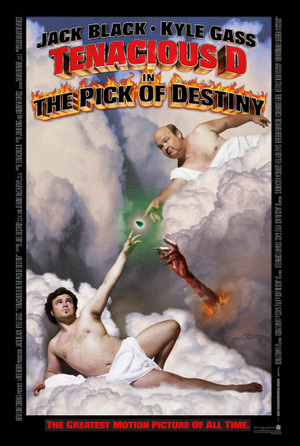
Say what you want, think what you want, feel what you want about the rock band Tenacious D.

But when it comes to the design of B2C websites, I don't know that I've seen anything lately quite as fresh and innovative as The D's promotional website for their new movie.  It just could be the greatest website ever created.

Instead of the usual cluster of clickable static pages, we get a story, some humor, a lot of fun, and above all, an experience.  An almost cinematic experience.  It's the Tenacious D brand writ large, dude.  It's like inward singing but for websites.

( update 11 October 2006:  in the grand tradition of The D, parts of this post were written tongue-in-cheek.  Humorous.  As in, it's probably not the best website ever.  Because of this, I'm not going to be able to respond to every email and blog link I receive assailing my marketing and aesthetic tastes.  But you have to admit, it is pretty cool. )

10 October 2006 | Permalink | TrackBack (2)

| |

Now that's what I call infectious action

Mg_5560sized

A Firefox crop circle.  Created by a band of loyal (and unpaid) Firefox customers.

How might your brand stoke this kind of infectious action?

link via neural park

06 October 2006 | Permalink | TrackBack (1)

| |

Learning to Innovate

BusinessWeek recently published a great piece about the growing trend of using design thinking as a means to teach people how to innovate.  I'm particularly proud that the Mozilla project from the Creating Infectious Action class I co-taught with Bob Sutton is the lead story in the article:

Tech geeks love Mozilla's Firefox browser, which is impervious to most viruses, but mainstream America has yet to embrace it. How does Mozilla move beyond invention (cool browser, neat functions) to an innovation that translates into market success (a Net tool so hot it upends Microsoft's Corp.'s Explorer)? It's a perfect problem for a classroom case study. So last spring, Mozilla's business development team turned to Stanford University. But instead of going to the business school, they headed for the double-wide trailer that housed Stanford's Hasso Plattner Institute of Design, dubbed the "D-school" on campus. The course was team-taught by Stanford profs and industry professionals. Each student worked in a team that included a B-schooler, a computer science major, and a product designer. And each team used design thinking to shape a business plan for Mozilla.

It made a big difference. A B-school class would have started with a focus on market size and used financial analysis to understand it. This D-school class began with consumers and used ethnography, the latest management tool, to learn about them. Business school students would have developed a single new product to sell. The D-schoolers aimed at creating a prototype with possible features that might appeal to consumers. B-school students would have stopped when they completed the first good product idea. The D-schoolers went back again and again to come up with a panoply of possible winners.

This is a great overview of both the class we taught and the philosophy behind it.  There's a big difference between knowing how to analyze a business situation versus knowing how to create and execute on a business innovation problem.  For more on what we did in the class, here's a post I wrote earlier this year, and best of all is this post by Bob Sutton, which rightfully celebrates the students from the class. 

One thing I'd like to make clear is that I'm not anti-MBA.  Far from it.  I value my management education a great deal, and believe that an MBA provides individuals with very useful set of analytical tools, as well as the ability to thin-slice most business situations.  However, I do think that the typical MBA program is mostly focused on becoming a master of business-as-usual, which is a critical body of knowledge when it comes to running a profitable organization.  One way (and the best way, I believe) to learn how to engage in innovative behavior is to become a master of business-by-design, and that's what we're doing in our Business + Design classes at the Stanford d.school.  Organizations need to know how to do both.  And those organizations need doers and innovators who can bridge the worlds of business-as-usual and business-by-design.

04 October 2006 | Permalink | TrackBack (3)

| |

The importance of being frequestly fractal

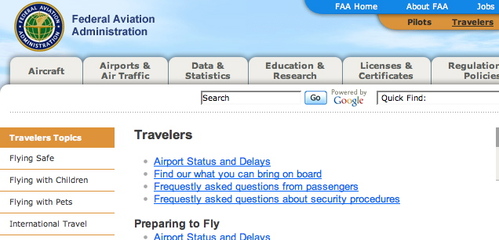
Yesterday I went to the FAA website to see the latest carry-on guidelines.  Here's what I saw:

Faascreengrab_1


What does "Frequestly" mean?  And how about the use of "our" instead of "out"? 

Here's the obvious observation of the day: typos like these aren't really helping the FAA brand.  I actually like the word "frequestly", and would find it to be brand enhancing if I heard it from Cranium or Virgin or Mini, but when the FAA speaks, we need it to sound like James Earl Jones.  We want the FAA to show us at every opportunity that they have their act together.  Brands are fractal entities, and the meaning of the whole is to found in the execution of even the lowliest detail.  Especially if your brand is all about rigor, safety, and juggling lots of big, heavy balls without dropping even one in a million.

03 October 2006 | Permalink | TrackBack (4)

| |

Attention: Mandatory Reading

Roger Martin has written a wickedly good -- and important -- essay about business + design in the latest issue of Fast Company.  It's a continuation of some themes he's been exploring recently, such as the notions of validity and reliability, and of business-as-usual and business-by-design.  In my mind, business cultures of reliability and validity are perfect companions to Christensen's notions of sustaining and disruptive business models.  As Martin states:

And so, as a rough rule of thumb, when your challenge is to create value or seize an emerging opportunity, the solution is to perform like a design team: Work iteratively, build a prototype, elicit feedback, refine it, and repeat. Give yourself a chance to uncover problems and fix them in real time, as the process unfolds. On the other hand, running a supply chain, building a forecasting model, compiling the financials--these functions are best left to people who work in fixed roles with permanent tasks, people more adept at describing "my responsibilities" than "our responsibilities."

Knowing what type of work you're working on is much more than half the battle when it comes to managing for growth.  It gives you a chance ot pick the right tool for the job.  After all, you wouldn't try to fly from Los Angeles to Paris in a single-engine floatplane, nor would you try to drop in to an Alaskan fishing village in a 747.  Match the business tools you have at hand to the business outcome you desire.

26 September 2006 | Permalink | TrackBack (0)

| |

metacool Thought of the Day

"Nobody goes through life without encountering obstacles, disappointments, and problems. Nobody can keep from making mistakes or taking a wrong turn. Nobody can escape illness or avoid the specter of failure. Let me point out that coping with success is easy. How you deal with adversity, with failure, and with setbacks will reveal your true character. How nimble you are about getting back on your feet after some large or small disaster or defeat will help you to determine just how far those feet of yours will take you in the world."
- Vartan Gregorian

21 September 2006 | Permalink | TrackBack (0)

| |

Talking about simplicity, Aston Martin, wa, Muji, TiVo, life, teaching, etc...

I recently had the pleasure of chatting about simplicity, design, business, technology and life with Jason Fried and Matt Linderman of 37Signals, and Professor John Maeda of the MIT Media Lab.

Here's the transcript of our chat.

19 September 2006 | Permalink | TrackBack (1)

| |

Unabashed Gearhead Gnarlyness

Alfa8c3

The Alfa Romeo 8C Competizione

18 September 2006 | Permalink | TrackBack (0)

| |

More about simple menus...

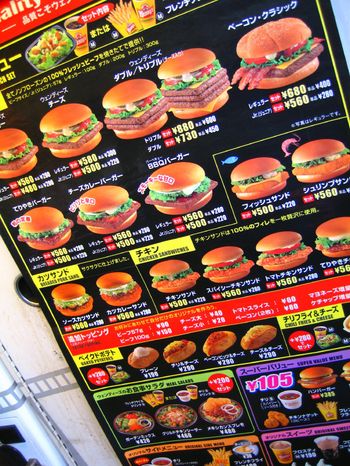
I've received a few emails challenging my assertion that the In-N-Out menu is simple.  Yes, I agree that the top bank of pre-designed meals on the In-N-Out drive thru menu makes the it a less than perfect example of simplicity at work.  On the other hand, I find conversations about absolutes to be philosophical minefields... I'd rather make a relative comparison and proceed with thinking about how to do more things that are more good and less bad. 

When it comes to menus, more bad (and less simplicity) would certainly look something like this:

113242624_ea0b0004c7_o

photo credit: foomtsuruhashi

17 September 2006 | Permalink | TrackBack (0)

| |

A simple menu says so much

Cimg3904

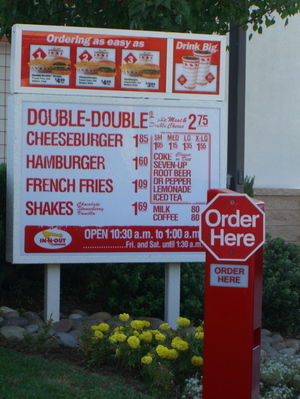
A great benefit of reading a book on simplicity is the secret thrill one receives by finding examples of simplicity at work in the course of daily living.  Including the drive-thru at In-N-Out Burger.

Here's a simple drive-thru menu snapped from the window of my car.  Lots of Maeda's Laws at work here.   What makes it simple?  Some random thoughts:

  • An elemental bill of materials.  Want fried stuff?  French fries.  No onion rings.  No curly, corkscrew, or chipped potatoes.  No fried zucchini or wheatgrass.  Simple.
  • Popular nouns, rather than branded nouns.  A cheeseburger is a cheeseburger is a cheeseburger, not a Whopper or a Bacon Western Cheese.
  • Easy to read.  For the most part, a big, painted font.
  • Simple through time.  A consequence (or a driver?) of the previous item.  Since the stuff is painted on, it's likely to be the same selection at the same price the next time I go.  Knowing that I can expect the thing I like to be there at the price I expect makes it a simpler transaction experience.  This is Law 4 at work.

14 September 2006 | Permalink | TrackBack (0)

| |

Reading about Simplicity

I hadn't read a book in a single sitting since a long night in March, 1995, when I read Ondaatje's The English Patient after taking The Chunnel from Paris to London.  Just as a movie is more satisfying when consumed as a flow experience, a good book begs to be consumed in whole.  Last week I had the rare pleasure of spending an evening having just this type of superlative book experience in the form of John Maeda's The Laws of Simplicity.  I devoured it.  I'm already using its lessons in my daily work.  And I look forward to reading it again soon -- I think it's the most important book I've read since Don Norman's Emotional Design.

In this tidy book of just 100 pages, John Maeda walks us through 10 Laws of Simplicity.  This being 2006, I don't need to list them because you're better off reading them on his Laws of Simplicty blog (be sure to click on the laws listed down the right column of the page).  I'm particularly enamored of Law 10: The One, which is stated as such:

Simplicity is about subtracting the obvious, and adding the meaningful

Adding the meaningful.  Think about that.  When we strip out the obvious, we edge closer to root nuggets where real value resides.  Meaning is what we seek, what leads to happiness.  The obvious is banal because it is obvious; there's no challenge or satisfaction in its consumption.  And I believe this state of simplicity is what gives us "universal" offerings and brands such as the iPod, the Citroen 2CV, the Golden Gate Bridge, Muji -- each embody Roger Ebert's sage observation that "The more specific a film is, the more universal, because the more it understands individual characters, the more it applies to everyone."  Unique designs appeal to so many of us exactly because they don't try to appeal to all of us.  We want the elegant simplicity of rich meaning.

13 September 2006 | Permalink | TrackBack (0)

| |

Thursday Tesla To Do

Att50920_1

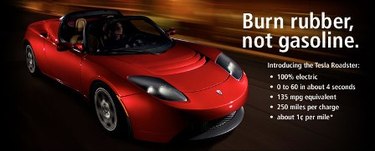
This coming Thursday, September 14, IDEO will be hosting the good people of Tesla Motors as part of the ongoing IDEO Know How lecture series.  The lecture is open to the public. This should be a good chance to drink from the cup of (electric) gearhead gnarlyness. 

The lecture will take place at 715 Alma St in Palo Alto at 5pm PST.  Enter via the alley off of Forest Avenue between Alma and High streets   There won't be a public videotape available afterward.

Here are some selected quotes from Tesla's website:

Tesla Motors designs and sells high-performance, highly efficient electric sports cars — with no compromises. Tesla Motors cars combine style, acceleration, and handling with advanced technologies that make them among the quickest and the most energy-efficient cars on the road.

“Our goal in designing the Tesla Roadster was to build a car with zero emissions that people would love to drive,” said Tesla Motors co-founder and CEO Martin Eberhard.

The real difference lies in the intent of the designers. For the most part, electric cars have been designed by people who believed we should not drive, and, if we must, then we should drive a bare-bones electric car. In sharp contrast, the Tesla Roadster is a driver‘s car: optimized for performance and handling, beautiful in every detail. Tesla Motors celebrates driving.

It‘s a no-compromise driver‘s car that can accelerate faster than a Porsche 911 and hit a top speed of nearly twice what the law permits. With a range of 250 miles on a single charge, you can use it all day long and not worry you‘ll run out of juice.

Response to the Tesla Roadster has been even greater than we anticipated, and we’ve “sold out” of our special edition Signature One Hundred Roadsters. We’re now taking reservations for our next 100 Tesla Roadsters to be built.

I, for one, am looking forward to the day when I get to lay a big, fat patch of electric torque-tortured tire rubber. 

Update 14sept06:  Tesla has a nifty blog worth checking out

12 September 2006 | Permalink | TrackBack (0)

| |

David H. Liu Memorial Lecture Series in Design: The New Mainstream

Postcardliuweb2

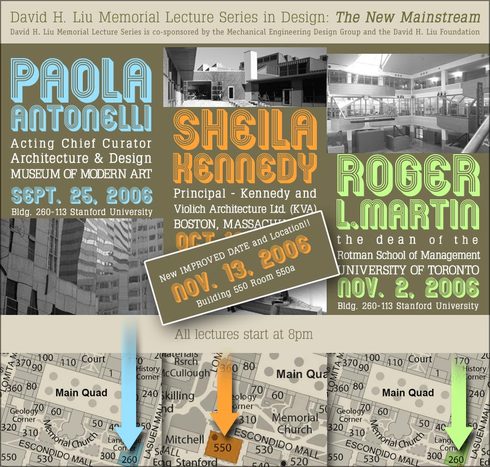
The Stanford Product Design program continues the David H. Liu Memorial Lecture Series in Design with this stunning lineup of speakers:

  • Paola Antonelli, MOMA: Sept 25
  • Roger Martin, Rotman School of Management: November 2
  • Sheila Kennedy, KVA: November 13

Be sure to check the series website for time and location info.

06 September 2006 | Permalink | TrackBack (0)

| |

Inspiration in egg whites

I normally shy away from pointing to stuff on other blogs on a routine basis, as I figure you'll find the good stuff anyway, and I have a bias toward creating original (or as original as anything can be in this connected world) material.

But I've had some big milestones with my special project lately.  This week we shipped two new material intake devices.  And we had a successful alpha launch of our upright ambulation initiative.  As with any innovation activities, these required lots of late night effort and were the source of some high drama and tears.  Par for the course when it comes to innovation!

So I'm mostly pointing.   There's so much cool stuff out there!

Breakfast

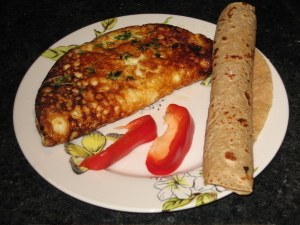
Today Seth uses egg whites and wheat and peppers to write an ode to the gods of authenticity, quality, and doing stuff to the hilt.  It's a reminder to me that delivering great human experiences (even a humble breakfast) is much more a matter of judgment than of rules.

01 September 2006 | Permalink | TrackBack (0)

| |

Scuderia Ferrari and the OR

Ferraridocs

Bruno Giussani, my fellow TED blogger and BusinessWeekOnline contributor, wrote a cool post about how innovation can come from "... an unexpected juxtaposition of seemingly unrelated ideas or concepts...", in this case the Scuderia Ferrari helping a hospital in England with process dynamics:
Pit-stop for doctors

31 August 2006 | Permalink | TrackBack (0)

| |

More Contagious Behavior Marketing

Alice LaPlante of InformationWeek wrote this nifty article which goes deeper on some of the ideas which came up in our Contagious Behavior panel discussion at the AlwaysOn conference: Tracking Down "Infectious Agents"

30 August 2006 | Permalink | TrackBack (0)

| |

metacool Thought of the Day

Wagonapart

"People are not born craftsmen; they just have the courage to screw things up.  Embrace your inner amateur and try everything. There will always be an expert to take your money and fix the mistakes."
- Mr. Jalopy


And, as we're fond of saying around the offices of metacool, "Why not do something NOW?"  If half of life is about just showing up, then the other half (and more than half when you're in the business of getting something good done) is about getting past the excuses, grabbing a wrench, and hacking away.  Fail early, fail often.  Build a prototype.  Think global, drink local.  Catch something on fire.  Why not screw something up today instead of strategizing for the next month?  You might learn something.  No -- you WILL learn something.  What's the worst that could happen?

(note that I use the word "wrench" as a metaphor for whatever it is that you need to do the thing you do)

I love that:  "Embrace your inner amateur and try everything."  Sounds like design thinking to me.

28 August 2006 | Permalink | TrackBack (1)

| |

Unabashed Gearhead Gnarlyness

Ricardo Zonta pulls some doughnuts at the Monterey Historic Races in his 2006 Toyota F1 car.

And, be sure to watch this in-car video of Zonta breaking the Laguna Seca lap record between racing sessions of the Historic races.  The first lap is just a warmup.  The second is the record breaker. 

So fast it's scary.

26 August 2006 | Permalink | TrackBack (0)

| |

RIP Maynard Ferguson

Slu_maynardferguson

The world lost a great innovator earlier this week in Maynard Ferguson.  In my past when playing the saxophone was at the center of my existence, nothing got me more excited than the chance to play a Maynard Ferguson tune with all my friends in our jazz-rock band.  We had lots of fun using his music to blow our audiences away (and in the process removing a good deal of my hearing.  That's life).

Ferguson was a great role model as an innovator, always open to new ideas, new technologies, new ways of seeing himself and being in the world.  And he wasn't afraid to be way out there with some hair-raising, totally crazy, high-altitude trumpet lick.

25 August 2006 | Permalink | TrackBack (0)

| |

Pouring Gas, Recognizing Real Users, and Extreme Delegation

Alwayson_panel

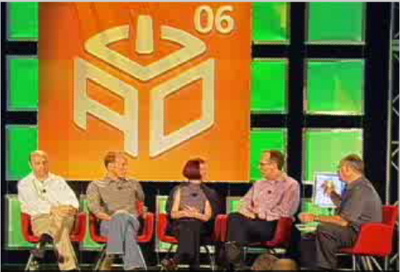
If you're interested in hearing a cool discussion about creating contagious behavior, pouring gas on fires, releasing control and the future of marketing, check out this video of the panel discussion I moderated earlier this year with Bob Sutton at the 2006 AlwaysOn conference. Joining us on the panel were:

  • Mitchell Baker, CEO of Mozilla
  • Perry Klebahn, d.school professor, entrepeneur, and inventor of the modern snow shoe
  • Gil Penchina, CEO of Wikia

What an awesome group!  The video image is kind of small, the open Internet comment box can be a bit distracting, but the sound quality is good, and that's what matters.  This insights and thoughts brought up by Mitchell, Perry, and Gil knocked my hat into the creek.  I love marketing innovation. 

For a nice written summary of the panel discussion, see this post on Bob's blog.

23 August 2006 | Permalink | TrackBack (0)

| |

Yin Yang Innovation blogs (and lawyers)

Dudgeon_automobile

I've added two cool blogs to my COOL STUFF section.  They're a yin yang combo for innovators.  They're both of a legal bent, but from totally different points of view.  Yes, I know, legal stuff.  Bear with me here:

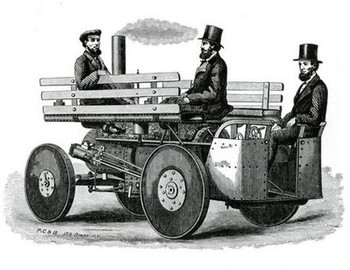
Patent Pending Blog:  about patents. Obviously.  This blog is a great reminder of how there's really very little new under the sun.  It's good, clean fun, too -- who wouldn't want to read about Harry Houdini's Diving Suit?  And look at those gents in the illustration above.  They're cruising around in a rolling iron yurt, discussing the state of their stock portfolios.  Think of it as a collection of Unabashed Gearhead Gnarlyness, Antique Edition.

Business Bankruptcy Blog:  no, I don't enjoy looking at traffic accidents.  But this is important stuff for innovators know about, because business viability and sustainability are key to getting stuff done in the world. 

I think if you make the Bankruptcy blog, VentureBlog, Feld Thoughts, and The Economist a part of your regular reading schedule, you'll be way ahead of the new venture business curve.

22 August 2006 | Permalink | TrackBack (0)

| |

Clicks-n-Bricks @ the d.school

The cool business-and-design offering at the Stanford d.school this fall will be a class called Clicks-n-Bricks: Creating Mass Market Experiences.  While I won't be part of the core teaching team for this one, I do plan to drop in for a class session or two (or three!).  This class is a logical evolution of where we went with Creating Infectious Action last quarter, where we found that the most compelling student projects all involved the design of experiences.  So why not teach an entire class focused on that topic?

We're thinking big about the future of business and design at the d.school.

Check out Bob Sutton's blog for more details about Clicks-n-Bricks and how to apply to be a part of the action (it' s open to Stanford graduate students only).

18 August 2006 | Permalink | Comments (0) | TrackBack (0)

| |

More thoughts on happiness and innovation

I believe that a strong emphasis on personal happiness is the hallmark of an innovative culture.

Tal Ben-Shahar teaches a class at Harvard on positive psychology, and out of this class has created a nice list of principles for enabling happiness. 

Here are his flow-inducing tips:

1. Give yourself permission to be human

2. Happiness lies at the intersection between pleasure and meaning

3. Keep in mind that happiness is mostly dependent on our state of mind, not on our status or the state of our bank account

4. Simplify!

5. Remember the mind-body connection.

6. Express gratitude, whenever possible.

While his list is couched in the language of personal happiness, I think it's a wonderful one to keep in mind when you're navigating your way through the workplace.  After all, organizations are made up of individuals, so why not apply the same principles for happiness to life at work?  It's not as if work is really a different mode of existence from everyday life.  Or at least, it shouldn't be.  How can we make individuals, teams, groups, and entire organizations happy in their work?  That's when innovation starts.

17 August 2006 | Permalink | Comments (1) | TrackBack (0)

| |

GM uses Flickr, do you?

211817069_046da84925

It used to be that having a blog was a remarkable thing for a Fortune 500 company.  I know because I had to "hurdle" to get one started when I was part of the team at Intuit, and it was a big deal when General Motors came out with their Fastlane blog.  As marketing organizations have become more comfortable with easing their span of control over outbound messaging and content, blogs are now more or less part of the marketing mix.  RSS feeds are de rigueur.  Corporate blogging is about trusting the judgment and intuition of individual contributors instead of relying upon a rule-based central authority.  It's about releasing control and rules, but embracing judgment and character.  In general I think that's a better way to market, because it comes across as more real and authentic because it is more real and authentic, and a more open, trusting stance is a wonderful way to engage the outside world in creating contagious action around your offerings -- which is the fundamental (if often forgotten) goal of marketers in the first place.

So that's the state of world for relatively unscripted marketing words coming out of organizations, but what about the visual expression of their brands?  Photos and the like.  Now we're talking about thousands of words.  But, as most bloggers can tell you, companies are loath to share their visual content.  If you want access to a photo from a website, you'd better be ready to contact their press department and kiss the ring.

But not General Motors.  Their marketing team is pushing lots of great photos to a public Flickr gallery.  And pulling in photos from the gearhead community.  This is good marketing.  Yes, it would be better if everything were published under a Creative Commons license to really free up usage, but this is a great start. 

Why not share some of your corporate visual content with the outside world?  The reality is that people are going to take your online content anyway.  Why not do it in a way which engages your fan base, encourages participation, and rewards good judgment and creativity?  What's the worst that could happen?

16 August 2006 | Permalink | Comments (7) | TrackBack (1)

| |

« Previous | Next »

Categories

  • designing
  • innovating
  • leading
  • marketing
  • meta metacool

search


About

Subscribe to this blog's feed

    follow me on Twitter

    Favorite Posts

    • A million reasons why...
    • Mo Cheeks and a fundamental question of leadership
    • Innovation Lessons from Garage Majal
    • From Obama to Pink to Oprah
    • Shinya Kimura and the primacy of doing
    • A tribute to friends and friendship
    • Strategy that makes your hands bleed
    • Quality in a switch
    • Travis Pastrana and the future of the world economy

    on the nightstand

    • : The Great Bridge

      The Great Bridge

    • : Porsche - Origin of the Species

      Porsche - Origin of the Species

    Principles for Innovating

    • 1: Experience the world instead of talking about experiencing the world
    • 2: See and hear with the mind of a child
    • 3: Always ask: "How do we want people to feel after they experience this?"
    • 4: Prototype as if you are right. Listen as if you are wrong.
    • 5: Anything can be prototyped. You can prototype with anything.
    • 6: Live life at the intersection
    • 7: Develop a taste for the many flavors of innovation
    • 8: Most new ideas aren't
    • 9: Killing good ideas is a good idea
    • 10: Baby steps often lead to big leaps
    • 11: Everyone needs time to innovate
    • 12: Instead of managing, try cultivating
    • 13: Do everything right, and you'll still fail
    • 14: Failure sucks, but instructs
    • 15: Celebrate errors of commission. Stamp out errors of omission.
    • 16: Grok the gestalt of teams
    • 17. It's not the years, it's the mileage
    • 18: Learn to orbit the hairball
    • 19: Have a point of view
    • 20: Be remarkable

    CC

    • Creative Commons License