metacool

thoughts on the art & science of bringing cool stuff to life, by Diego Rodriguez

What's Authentic?

Hist2_wht

Whenever I think about designing something to have a better chance of being contagious, the issue of authenticity invariably comes up.  All things being equal, we're more likely to tell people about the authentic things in our lives.  When was the last time you joined a cause because it was hollow, shallow, and fake?  Authenticity matters.

But, what is it?  I know it when I see it, hear it, feel it -- but what is it?   And can it be designed?  Or does the act of designing it break it?  In other words, can an authentic experience of Paris-ness be designed, or does a designed version of Paris end up feeling a lot like Paris in Las Vegas?  Perhaps a way to answer the questions of "what is it?" and "can we design it?" is to borrow a page from the book (or blog?) of John Maeda and endeavor to come up with principles of authenticity.  If we can come up with design principles for authenticity, then we'll have a better understanding of what makes for authentic experiences, as well as the means to design them in a more predictable manner.

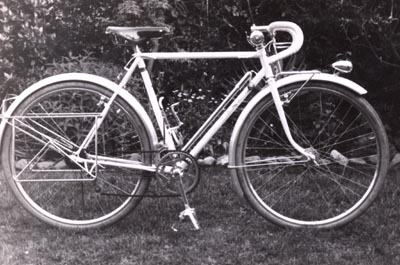
The first design principle I'd like to discuss is the idea of a strong point of view.  Authenticity, it would seem to me, demands a strong point of view.  In other words, a clear sense of what matters.  The ability to make choices.  A deep understanding of what you are and are not.  What does a strong point of view look like?  A great example is Jitensha Studio, a Berkeley bicycle shop run by Hiroshi Iimura.  Last year the New York Times ran an evocative profile of Jitnesha which contained this ode to a strong point of view from Mr. Iimura:

If a customer wants a component that is not to my taste, I refuse.  No brightly colored seats. No neon. Nothing flashy, nothing impractical.  I have to satisfy my own tastes first.

A strong, coherent vision of where things need to go is the bedrock of authenticity, I'd argue.  Porsche was a more authentic brand when Porsche was run by a Porsche whose opinions about Porsche-ness could trump any marketing study.  Apple is all about a clear point of view, and it's certainly the most authentic manufacturer of consumer products out there today.  Anything Virgin is about an authentic experience of what it feels like to be irreverently original.  And so on and so forth.

Thoughts?  Am I full of it?  What are some other possible principles?  Should we catch this train?
25 January 2007 | Permalink | Comments (2) | TrackBack (2)

| |

Director's Commentary of the Week: Gale Banks Turbocharges Jay Leno's Tank Car

Lenotank

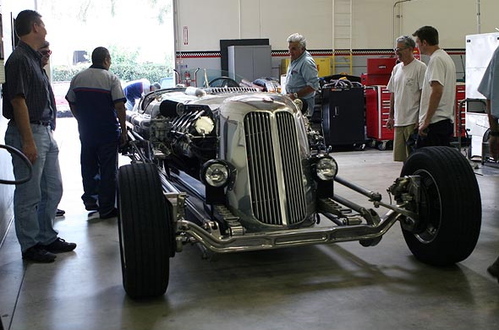
Here's a Director's Commentary which is all about ingenuity.  My previous Director's Commentary pointers about the Honda Ridgeline and the Nintendo Wii have been built around the theme of being human-centered in one's design process; this one is all about engineering a unique solution for a single human and his singular pursuit of gearhead gnarlyness.  That human goes by the name of Jay Leno.  Simply put, he has a custom hot rod powered by a vintage tank motor. 

A tank motor!  If you're like me, you have no idea of the operating parameters of a tank motor.  Well, here they are:

  • weight: 2000 pounds
  • swept volume: 1,790 cubic inches
  • number of cylinders: 12
  • power: 810 hp
  • torque: 1,560 lb-ft

That, my friends, is a one huge motor.  It's designed to accelerate heavy things quickly.  But any hot rodder, particularly one like Jay Leno with some discretionary income, just can't leave well enough alone.  So he took his tank car to the legendary Gale Banks and asked him to double the horsepower.  DOUBLE THE HORSEPOWER.  As in, 1,600 horsepower.  Which is roughly equivalent to four Corvettes or six Camrys  (yes, we live in the age of the overpowered Camry.  I have a rant to write about this, but that's for another day).

This Director's Commentary, then, is about the ingenuity and workmanship that goes into pulling off something extremely tricky from a technical standpoint.  It comes in four parts with lots of great illustrations and stories (look for the one involving Colin Powell), and is full of interesting passages, such as:

The AV 1790 V12 has a long rotating shaft across the front of the engine to link the carburetor throttles together. We'll fabricate new throttle pull-rods to utilize the original cross-shaft. In this photo the two right bank magneto covers (there are four magnetos) have been removed. Although we could have converted the engine to electronic ignition, Gale wanted to retain the magnetos to maintain the period look.

Yes, I realize that this particular edition of Director's Commentary probably doesn't have the wide design thinking appeal of some of the earlier episodes.  But even if you don't enjoy the technical virtuosity at work here, I'd encourage you to peruse the four episodes.  Perhaps they'll help you better understand why people like me find this stuff so interesting.  If you happen to work with, or manage, or lead people who like gearheady content, it may help you gain insight in to ways to help those people be happy and innovative.  And embedded here too, unfortunately, is a lot of the human wiring which makes some us buy Hummer H2's when what we really needed was a minivan.  Or perhaps even just a Camry.  So much of why we pursue technological wizardry, whether it be of silicon or aluminum or clever bits and bytes, is driven by emotional and our irrational inner dialogs.  If we're going to get better at designing systemic solutions to address climate change and other broad issues facing our societies, we need to really understand what drives people to create 1,600 horsepower hot rods. 

And overpowered Camrys.

18 January 2007 | Permalink | Comments (3) | TrackBack (0)

| |

Director's Commentary of the Week: Nintendo Wii

Here's a stunning collection of Director's Commentaries from the creators of the Nintendo Wii gaming system.  The commentaries are transcripts of a discussion and are not in video form.  Fortunately, they're broken into several chapters, so it's easy to find something you might be interested in hearing.  There's an enormous amount of material here, so I haven't been able to digest it all.  But here are some gems:

"This may sound paradoxical, but if we had followed the existing Roadmaps we would have aimed to make it “faster and flashier.” In other words, we would have tried to improve the speed at which it displays stunning graphics. But we could not help but ask ourselves, “How big an impact would that direction really have on our customers?” During development, we came to realise the sheer inefficiency of this path when we compared the hardships and costs of development against any new experiences that might be had by our customers." - Genyo Takeda

"I've said this countless times already, but when developing Wii, I thought constantly about what we could do to stop games being regarded with hostility in the family. So I came up with a suggestion, perhaps a rather outlandish one! (laughs) What I thought was that if a parent said that their child was only allowed to play games for one hour a day, how about making it so the console actually turns itself off after an hour? I realize the head of a games company shouldn't think things like that!" - Satoru Iwata

"If only one team is developing something, they'll only ever pay attention to the same old issues, sometimes discussing them all day amongst themselves to find a solution. But this time, thanks to the System Function team, I was able to go and talk with Kawamoto-san or have a look at Kuroume-san's designs. Both physically and mentally, I found this to be a less stressing, more laid-back way to do things.' - Tomoake Kuroume

I hope the Wii does well.  It's rare to see a series of closely-spaced market introductions (XBox, Playstation 3, Wii), where one is so dramatically different in terms of the innovation bias of the originating firm.  Where Sony and Microsoft seem to lead with technology, then business, and then think about the user experience, Nintendo is obviously leading with people and desirability, feeling that the other two factors will follow naturally if there's market lust for the Wii.  Reading about the care and thought put into the interpersonal communication schemes which the Wii enables reminds me of that other great human-centric business-technology system, the iPod + iTunes + iMac.  Perhaps the catchphrase of 2007 won't be "How can we be the iPod of our cateogry?", but "How can we be like the Wii?"

Thanks to Anthony Pigliacampo from Freddy & Ma and Gel-Bot for telling me about this treasure trove.

08 January 2007 | Permalink | Comments (0) | TrackBack (0)

| |

Unabashed Gearhead Gnarlyness

A trip around Le Mans in a Jaguar D-Type, 1956.

Rather thrilling, what?

03 January 2007 | Permalink | Comments (2) | TrackBack (0)

| |

Some Sick Reading

Much to the chagrin of my family, our long-awaited winter vacation was interrupted by a nasty cold or a mild flu which I came down with post Boxing Day.  Oh well, that's life.  The good news is that, with lots of time suddenly on my hands, I've been able to tackle the pile of books that's been growing on my nightstand, along with a few which came to me as Christmas presents.  If you'll indulge me, here's an overview of what I've been reading:

Designing Interactions, by Bill Moggridge.  I've actually been tackling this one for about a month now.  For the sake of full disclosure, Bill is a colleague of mine at IDEO.  But this is not a book about IDEO, by any means.  I've learned so much reading it, and I keep going back and re-reading the interviews and watching the DVD.  I can't get enough of Bill Verplank's point of view on interaction, and I've read John Maeda's chapter oh, maybe five times.  The Rob Haitani chapter alone should be required reading for every product manager in the world.  In fact, if I could pass a universal law, I'd make that chapter required reading for every product manager in the world each January 1 of each and every new year.  This book now is the anchor of my innovation library, and I predict in five years it will show much evidence of active use, perhaps even some beausage.

Phaedon Design Classics, 001-999: a comprehensive, full-color survey of iconic designed objects in the tradition of Stephen Bayley's book In Good Shape.  I wish I had this book earlier in my career -- flipping through its pages has fleshed out my sense of design history.  For instance, one of my colleagues has a Dieter Rams-designed bookshelf in his office, and I've spent the past two years analyzing its structure in five-minute chunks during meetings there, but I never knew it was a Rams design.  Now it makes much more sense to me.  On the other hand, the three tomes of this collection seem to be full of content errors, at least based on the really basic errors I've found whenever the books talk about cars, such as:

  • The pages about the Porsche 356A Speedster (Entry 461) are accompanied by a photo of the original 356 prototype, which is not a Speedster.  Totally different cars from a design standpoint.  One is mid-engine, the other hangs it off the back. To use the photos interchangeably not only wrong, it's downright against the law.
  • Entry 496, which is about the Fiat 500, is illustrated with a blueprint of the Fiat 600.  It's not wrong wrong, but it's like putting a picture of a Lusitano in an essay about Shetland ponies.
  • Entry 817 on the Fiat Panda ( a car I dearly love ) states that "[Giorgetto Giugiaro] began creating cars witih sharp edges and straight lines... the Panda is a testament to this particular style, with its box-like shape and large, square-shaped headlights, finished with five chromed lines diagonally gracing the front of the grille."  The entry is, as you'd expect, illustrated with a photo of a Panda with the five chrome lines on the grille.  Which is all fine and well, except for the fact that the original Giurgiaro design which went into production featured a metal grille with nineteen vertical air slats, with no chrome to be found.  To say otherwise is to obfuscate the history of design.  And, the original design was much cooler than the later chrome restyle.
  • BMW 2002, entry 697.  And I quote:  "The  models built between 1968 and 1973 had larger bumpers specifically for the US market...".  No, actually, quite the opposite is true; the "big bumper" 2002 models came to the US from 1974 through the 1976 model year.  Not quite a criminal assertion, but close.  These details are just details, but they matter in a history book.

To be sure, it's a fascinating and instructive set of books, but errors such as those above make me wonder if the utility of these types of works in the age of the Web is rapidly approaching zero.  Aside from the fact that a three-volume compendium is likely to be difficult to compile, expensive to produce, buy, and sell, and take up a lot of shelf space, it just screams to be done on the web.  As in a series of hyperlinked web pages.  Perhaps as a wiki, maybe not, but something which could modified as need be when thousands of eyeballs dig up shallow bugs such as big bumpers on a 2002.

The Creation, by E.O. Wilson.  The most important book I read in 2006.  If Al Gore's An Inconvenient Truth didn't scare you, The Creation will.  Wilson speaks from a position of great moral and scientific authority.  While I'm confident that we can find a way to dramatically reduce greenhouse gas emissions over the next decade, I'm now more concerned than ever about the rate of species extinction on land and in the oceans.  If you haven't read Wilson's book, you owe it to yourself to spend some time with his eloquent words and deep wisdom.  And pass it along to a friend.

Cough cough, sniff sniff.

01 January 2007 | Permalink | Comments (3) | TrackBack (0)

| |

Aesthetics matter... a great deal

As told in this great NYT article about the "Four Star Soup Kitchen" of chef Michael Ennes, aesthetics matter a great deal.  Certainly more than we give them credit.  The care and attention to detail which goes into a meal, for example, can be a source of great pleasure and meaning for both cook and diner.  Even in the context of a so-called soup kitchen.

Of course, you needn't trust me on this.  Virginia Postrel has written a wonderful book on the subject, The Substance of Style, and you simple must check out her 2004 article titled Why Buy What You Don't Need?  The Marginal Appeal of Aesthetics.  I use stories and arguments from her article in a yearly lecture I give at Stanford on the topic of meaning and the design of meaning.  I love her take on Maslow's hierarchy, and where she places aesthetics in the stack.  And I think you already know I believe it's Virginia who is right.

19 December 2006 | Permalink | Comments (1) | TrackBack (0)

| |

Fordor Beausage

Coop, whose blog Positive Ape Index was first brought to my attention by the inimitable Mr. Jalopy, has written a wonderful post about the wonders of beausage and hot rods:  Jim "Jake" Jacobs' 1934 Ford Fordor

Makes me want to trade in my modern daily ride for one of these things.  Someday I will.
 

15 December 2006 | Permalink | Comments (0) | TrackBack (0)

| |

Unabashed Gearhead Gnarlyness

Flight3

The Carreidas 160

14 December 2006 | Permalink | Comments (3) | TrackBack (0)

| |

Director's Commentary: Basecamp Help

Helpbutton_1

The good people of 37signals published a wonderful Director's Commentary a couple of weeks ago in the form of a post called "Basecamp help".  What's a Director's Commentary?  It's the voice over track on a DVD where the director explains everything that was going on when he shot a scene.  They exist in the world of design thinking, too, as I wrote a while back:

Wouldn't it be great if, in a similar fashion, we could hear and see great designers talking about their craft?  When I was a practicing engineer designing tangible things, there were tens, even hundreds of details embedded in my designs which I knew about, maybe the rest of my team knew about, but which were essentially invisible to the world at large.  Which is fine; it isn't the job of end users to be thinking about the kinds of details and decisions that interest a professional design thinker.  But for students in training, and for other professionals, what better way to truly appreciate the enormity of the task of design than to take a walkthrough around a real design with another real, living designer?

In his post, I admire the way Jason walks us through all the details that go into even a minor rework of a software interface item.  In general, stuff from 37signals works really well, and it's not due to luck or the alignment of the planets.  They're talented designers who sweat the small stuff. 

13 December 2006 | Permalink | Comments (1) | TrackBack (0)

| |

Belly Tanker Beausage

Latch1

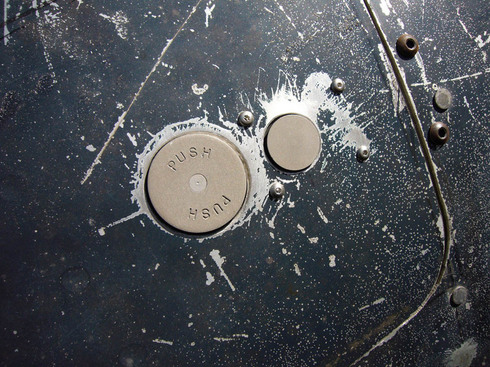
I love this photo detail from Bobby Greene's "Aircraft latches and you" post from his wonderful blog Automotive Addictions and General Tomfoolery.  It's a blog about his very gnarly belly tanker speed racer.  It's an ode to gearhead gnarlyness, authenticity, and just plain doing stuff.  I love it.

I also dig the photo because it's a great example of beausage, the beauty which comes with use.  All those scratches, dents, and subtle surface deformations couldn't be designed.  They come from being out in the world, and they're beautiful in a very organic way.

Congratulations to Bobby for getting the tanker up and running -- and running WFO, no less! -- again.

Cool.

29 November 2006 | Permalink | Comments (4) | TrackBack (0)

| |

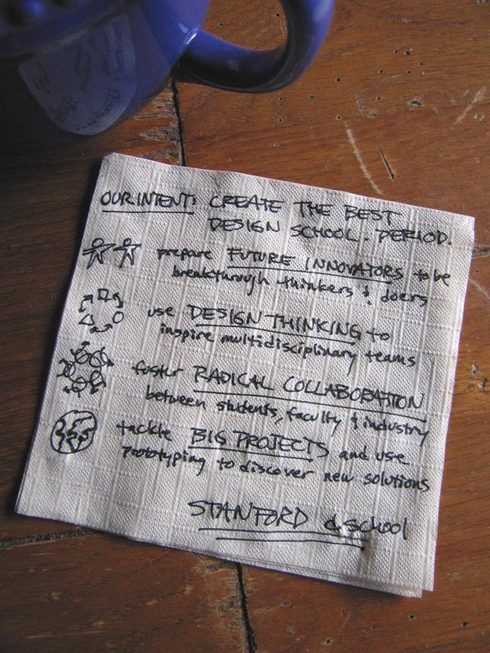
New! d.school news

Misc_manifesto

We've just launched a news blog for the Hasso Plattner Institute of Design at Stanford (also known as the d.school).

This will be a space for us to talk about news and happenings in and around the d.school and the world of design thinking.

28 November 2006 | Permalink | Comments (0) | TrackBack (0)

| |

metacool Thought of the Day

Dsc01080_1

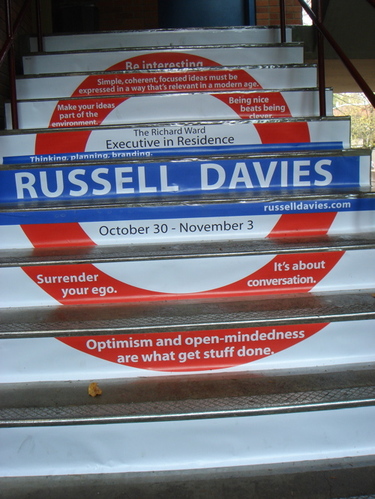
Words of design thinking wisdom from Russell Davies

13 November 2006 | Permalink | Comments (0) | TrackBack (0)

| |

Unabashed Gearhead Gnarlyness


Sun's Project Blackbox

It's a wonderful example of modular design thinking at work.

10 November 2006 | Permalink | TrackBack (0)

| |

2007 TEDPrize Winners

Be sure to watch it all the way through to the end...

31 October 2006 | Permalink | TrackBack (0)

| |

What I'd be doing if I was in Boston on November 15

Big_bubbles


The next Design 2.0 discussion will be held in Boston on November 15.  The speakers include  "Dr. Simplicity" John Maeda, Natalie Jeremijenko, Bill Cockayne, Jason Pearson, and the always interesting Allan Chochinov of Core 77.

Plus, there's robots shooting lasers and stuff.  Boston is one of my favorite cities, a veritable foaming cauldron of intellectual ferment.  Wish I could go.

31 October 2006 | Permalink | TrackBack (0)

| |

A list of the contents of a salesman's bag

Tom Peters on what works.  Nice d.school mention.

Thanks, Tom!

28 October 2006 | Permalink | TrackBack (0)

| |

metacool Thought of the Day

Nevis_25c_isambard_kingdom_brunel_the_ro

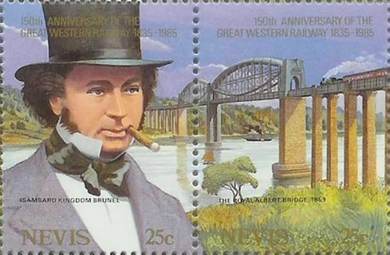
“The Scottish are a nation of engineers. But they are very creative engineers. They seem dour, but underneath they are quite romantic. It gets back to a sense of creating order out of chaos. Producing something very controlled is very Scottish.”
- Ian Callum

(in honor of all the great design thinkers who have come from Scotland, including my good friend David, who remains one of the most uniquely creative persons I've ever met)

25 October 2006 | Permalink | TrackBack (0)

| |

Unabashed Gearhead Gnarlyness

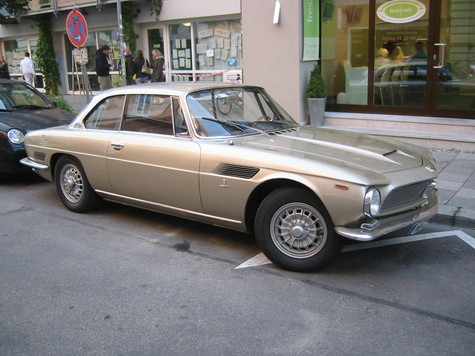
When people send me emails or text messages containing the word "ISO" (which I believe stands for "in search of", as in that wierd Leonard Nimoy show which used to air on TV), I get confused, because I'm a believer in the idea of Italo-American hybrids by the name of Iso.  No, no that kind of hybrid.  This kind of hybrid:

Iso_rivolta_front

The Iso Rivolta.  Corvette horsies meet Italian tailoring.  Accept no substitutes.

Props to my man Zeh for the guerilla street photography

20 October 2006 | Permalink | TrackBack (0)

| |

Some Neato Design Thinking Videos & Podcasts

Designing_interactions

Here's some spectacularly neato design thinking stuff to take a look at.  Definitely worth spending more than a few hours on, with the added bonus that it's all in video and podcast form.  If you're anything like me, and your eyes hurt from reading so much, it's a pleasure to be able to sit back, relax, and imbibe words of wisdom from great design thinkers the world round.

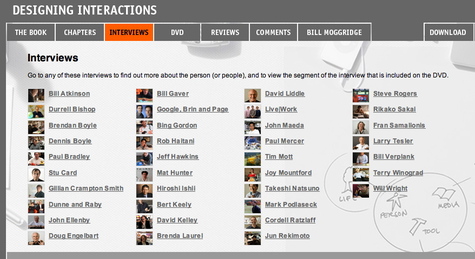
  • My colleague Bill Moggridge of IDEO is coming out with a wonderful book called Designing Interactions.  I suggest you buy it!  It's on my Xmas list. But also take some time to watch Bill's video interviews with an amazing group of design thinkers (for free) on the companion website to the book.  There are a bunch of my pals from IDEO on there, and also a blogger friend in the form of John Maeda, and a Stanford d.school colleague in Terry Winograd, and many other interesting people.  Fantastic.
  • One the great things about teaching is that you get to hang out with people who remind you how much you can really get done in life when you stop worrying about doing it and just do it.  These people are called students.  Perhaps you know some.  I've been happy in the past year to get to know Matt Wyndowe, a student at the Stanford Graduate School of Business who was part of the Creating Infectious Action class I taught this past Spring.  Matt and his classmate Julio Vasconcellos are building an impressive collection of podcasts on the subject of innovation called, quite appropriately, iinnovate.  There you'll find podcasts with such luminaries as Mike Ramsay, David Kelley, and Andy Rachleff.  And remember, these guys are full time grad students, which has to be the equivalent of having at least three "real" jobs, even if they do go play golf on Wednesdays.

Enjoy!

19 October 2006 | Permalink | TrackBack (1)

| |

It's design time

Ndw_map_logo_1

Today marks the start of the first-ever National Design Week

And remember, 2006 is the Year of Total Design.  There's still plenty of time left get some important work done this year. 

Just do it!

15 October 2006 | Permalink | TrackBack (0)

| |

Talking about simplicity, Aston Martin, wa, Muji, TiVo, life, teaching, etc...

I recently had the pleasure of chatting about simplicity, design, business, technology and life with Jason Fried and Matt Linderman of 37Signals, and Professor John Maeda of the MIT Media Lab.

Here's the transcript of our chat.

19 September 2006 | Permalink | TrackBack (1)

| |

Unabashed Gearhead Gnarlyness

Alfa8c3

The Alfa Romeo 8C Competizione

18 September 2006 | Permalink | TrackBack (0)

| |

More about simple menus...

I've received a few emails challenging my assertion that the In-N-Out menu is simple.  Yes, I agree that the top bank of pre-designed meals on the In-N-Out drive thru menu makes the it a less than perfect example of simplicity at work.  On the other hand, I find conversations about absolutes to be philosophical minefields... I'd rather make a relative comparison and proceed with thinking about how to do more things that are more good and less bad. 

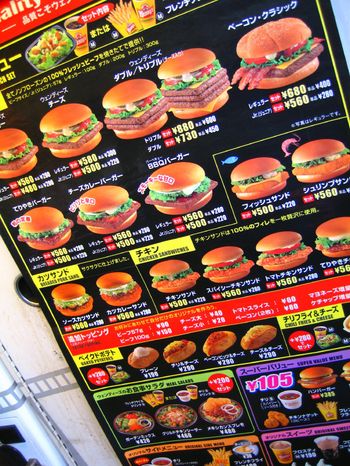
When it comes to menus, more bad (and less simplicity) would certainly look something like this:

113242624_ea0b0004c7_o

photo credit: foomtsuruhashi

17 September 2006 | Permalink | TrackBack (0)

| |

A simple menu says so much

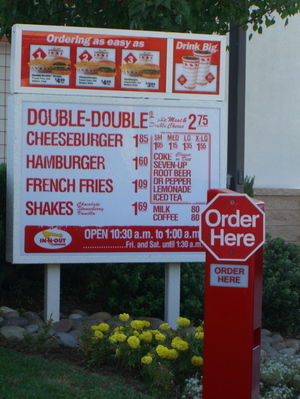
Cimg3904

A great benefit of reading a book on simplicity is the secret thrill one receives by finding examples of simplicity at work in the course of daily living.  Including the drive-thru at In-N-Out Burger.

Here's a simple drive-thru menu snapped from the window of my car.  Lots of Maeda's Laws at work here.   What makes it simple?  Some random thoughts:

  • An elemental bill of materials.  Want fried stuff?  French fries.  No onion rings.  No curly, corkscrew, or chipped potatoes.  No fried zucchini or wheatgrass.  Simple.
  • Popular nouns, rather than branded nouns.  A cheeseburger is a cheeseburger is a cheeseburger, not a Whopper or a Bacon Western Cheese.
  • Easy to read.  For the most part, a big, painted font.
  • Simple through time.  A consequence (or a driver?) of the previous item.  Since the stuff is painted on, it's likely to be the same selection at the same price the next time I go.  Knowing that I can expect the thing I like to be there at the price I expect makes it a simpler transaction experience.  This is Law 4 at work.

14 September 2006 | Permalink | TrackBack (0)

| |

Reading about Simplicity

I hadn't read a book in a single sitting since a long night in March, 1995, when I read Ondaatje's The English Patient after taking The Chunnel from Paris to London.  Just as a movie is more satisfying when consumed as a flow experience, a good book begs to be consumed in whole.  Last week I had the rare pleasure of spending an evening having just this type of superlative book experience in the form of John Maeda's The Laws of Simplicity.  I devoured it.  I'm already using its lessons in my daily work.  And I look forward to reading it again soon -- I think it's the most important book I've read since Don Norman's Emotional Design.

In this tidy book of just 100 pages, John Maeda walks us through 10 Laws of Simplicity.  This being 2006, I don't need to list them because you're better off reading them on his Laws of Simplicty blog (be sure to click on the laws listed down the right column of the page).  I'm particularly enamored of Law 10: The One, which is stated as such:

Simplicity is about subtracting the obvious, and adding the meaningful

Adding the meaningful.  Think about that.  When we strip out the obvious, we edge closer to root nuggets where real value resides.  Meaning is what we seek, what leads to happiness.  The obvious is banal because it is obvious; there's no challenge or satisfaction in its consumption.  And I believe this state of simplicity is what gives us "universal" offerings and brands such as the iPod, the Citroen 2CV, the Golden Gate Bridge, Muji -- each embody Roger Ebert's sage observation that "The more specific a film is, the more universal, because the more it understands individual characters, the more it applies to everyone."  Unique designs appeal to so many of us exactly because they don't try to appeal to all of us.  We want the elegant simplicity of rich meaning.

13 September 2006 | Permalink | TrackBack (0)

| |

David H. Liu Memorial Lecture Series in Design: The New Mainstream

Postcardliuweb2

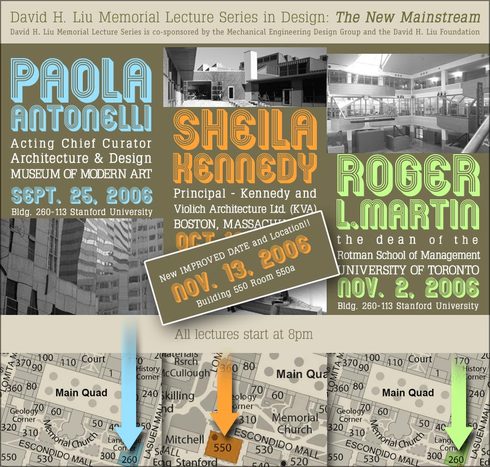
The Stanford Product Design program continues the David H. Liu Memorial Lecture Series in Design with this stunning lineup of speakers:

  • Paola Antonelli, MOMA: Sept 25
  • Roger Martin, Rotman School of Management: November 2
  • Sheila Kennedy, KVA: November 13

Be sure to check the series website for time and location info.

06 September 2006 | Permalink | TrackBack (0)

| |

Learning from Burt Munro, Part I

Indian_rocker_cover1

Mr. Jalopy of Hooptyrides showed me this beautiful design detail he shot of Burt Munro's famous Indian motorcycle record breaker.  The same motorcycle featured in Roger Donaldson's wonderful movie The World's Fastest Indian.  I quite liked that flick, especially the opening sequence, which is a  perfect balance of deep technical unabashed gearhead gnarlyness and man-on-the-street, just-tell-me-a-simple-story plot exposition.

Just look at it.  Those two "seahorse" details in the metal plate are there to provide mechanical clearance for the furiously revolving rocker arms on the little terror of a motor found beneath.  You can just see the intake trumpet in the background, poking its snout out like a shy little elephant.  Burt Munro was an incredible innovator.  This is stunning design work.  I can't help but agree with Mr. Jalopy when he says that "...I am not even particularly interested in motorcycles, but I spent half an hour looking at this amazing machine and kept finding trick shit like this. I don't know that I have seen a greater accomplisment by a single person."

The more I look at it, the more I feel there's a wealth of insight to be found in this photo about the process, philosophy, and value of design thinking.  I'm going to keep writing about Burt Munro's rocker divots for a while, just to see what's there.  I'd like to hear what you see, too.

09 August 2006 | Permalink | Comments (3) | TrackBack (0)

| |

Unabashed Gearhead Gnarlyness

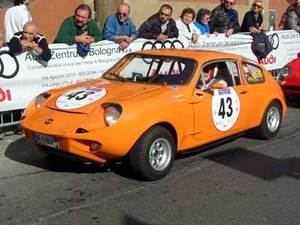
0043_vet

The Marcos GT Mini

As driven by Paolo Arbizzani of Scuderia Bologna at the Gran Premio Bologna-San Luca.  I've got to figure out a way to be hanging around (or driving?) in Bologna -- a rabid center of gearhead gnaryless if there ever was one -- come June 2007.

08 August 2006 | Permalink | Comments (1) | TrackBack (0)

| |

TEDBlogging

Cover101_1

I'm still whipping up the occasional post over at TEDBlog.

Some recent entries:

Lego my Audi

An Electric Car is Born

While you're there, check out the TEDTalks Joshua Prince-Ramus video.  Great storytelling, great design thinking.

19 July 2006 | Permalink | Comments (0) | TrackBack (0)

| |

Unabashed Gearhead Gnarlyness

4car6

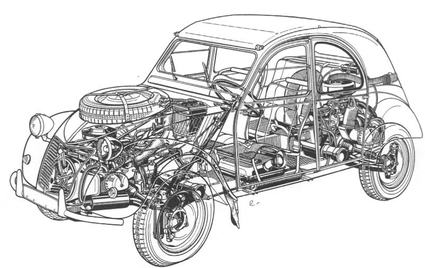
The Citroen 2CV Sahara

Need four-wheel-drive off-road capabilities?  Stick a second engine and transmission in the rear.  Panoramic sunroof?  A roll-back canvas roof will do. 

Audacious.  French.  A way of thinking beyond the obvious that's gone missing from Citroen in the decades that passed since a gnarly old Sahara last roamed the rocky roads of southern Spain, but whose iconoclastic sensibilitly can still be found in the work of the crazies at Honda.

13 July 2006 | Permalink | TrackBack (0)

| |

A Pitiful Design Observation

1364356689

Have you been watching the World Cup?

During today's Italy-Germany match I have to admit I was a bit distracted by a recurring thought popping in to my head:  Why did the Italians seem to be sweating so much more than the Germans? 

Of course, after a while, I realized that the ubiquitous underarm sweat blotches I was seeing where actually part of the graphic design of the Italian jersey.  Now, I'm a proponent of thinking through what a design will look like in use, and after it is used, but I find the point of view which led to this design somewhat odd.  Purposeful proactive pit stainage as a premediated graphic design element?  Weird.  Not beausage.

04 July 2006 | Permalink | TrackBack (1)

| |

Jeffersonian Simplicity

For me, the highlight of the 2006 Brainstorm Conference was the opportunity to hear Associate Justice Sandra Day O'Connor speak about the intricacies of the Constitution of the United States. 

In response to an audience question about the staying power of the Constitution (it's the oldest in existence), she paused, picked up her purse, and took out a copy of the Constitution in pamphlet form -- maybe 5 x 2.5 inches.  Just imagine: the document which shaped this country, and continues to guide it and many others around the world hundreds of years later, fits on just a few small sheets of paper.  Marvellously extensible and modular, it is also written in plain language.  Isn't that something?  For all its enormous generative power, the Constitution is likely more concise and more intelligible than many software license use agreements.

Thank you, Justice O'Connor, for giving us a dramatic lesson in the power of simplicity.  Simple design, but not ever simplistic.

Of course, perhaps that simplicity shouldn't be surprising.  Why?  Well, because said constitution was penned by a design thinker.

30 June 2006 | Permalink | Comments (0) | TrackBack (0)

| |

Sir Ken Robinson on TEDTalks

Tedtalks_170x170_2 Ideas Worth Spreading. 

That's a topic near and dear to my heart.  And one for which I'm more than happy to play a willing accomplice.

In this particular case, it's both a pleasure and a duty.


At the TED2006 conference earlier this year I had a peak life experience in the form of a talk by Sir Ken Robinson.  He stirred my soul and reminded me why I was here on the planet. 

Kenrobinson_5_1

I encourage you to take 20 minutes to listen to Sir Robinson.  If you're engaged in any kind of creative endeavors in your life (and we all are), you must see this.  And if you're responsible for the care, feeding, and education of another human being, you must see this.  See his video (and many more) on TEDTalks.

(plus, it's all sponsored by one of my favorite producers of cool products, BMW)

27 June 2006 | Permalink | TrackBack (0)

| |

Unabashed Gearhead Gnarlyness

Laffite

Ah, the scream of a Ferrari motor at full boogie

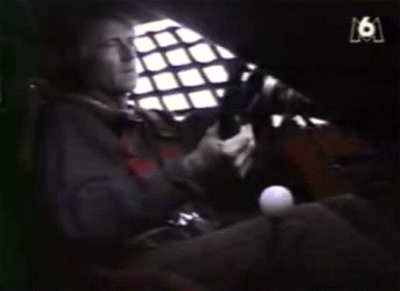
In this case a twin-turbo V8 from a F40LM expertly pedaled by none other than French F1 hotshoe Jacques Lafitte.  How about that recalcitrant shifter trying to move gears around in a cold box?  At about the 60 second mark you can hear Lafitte really get into the turbos, and I just can't get enough of the exhaust spitting, burping and rip snorting as he heels and toes down the gearbox around the 90 second mark.

Sacrebleu!  Forza Italia!  It's like, visceral, dude.

thanks to the crazies at Winding Road blog for the link

20 June 2006 | Permalink | TrackBack (0)

| |

Sculpting with Lego

Like building with plastic bricks?  Then check this out:  Lego my Audi

16 June 2006 | Permalink | TrackBack (0)

| |

Fiat 500: Open Source Marketing

Fiat500

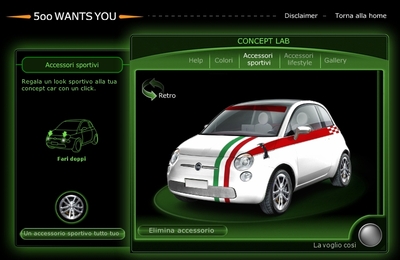
Just over two years ago I wrote a post about the Fiat Trepiùno concept car and mused a bit about cultural influences on design.  Design thinkers are particularly adept at reaching a point of empathy for users, but I do think that one's own sense of culture and surroundings does -- and in most cases should -- end up embedded in the offerings one design.

In other words, designers of small cars should live in cities.  Hummer designers should hang out in shopping malls.  And suburban pickup designers should hang out at Home Depot.

The good news is that Fiat is shipping the Trepiùno as the new Fiat 500.  It is to the great Dante Giacosa's Fiat Nuova 500 what the  New Beetle is to Professor Porsche's original Beetle -- a retro reskin of a modern front-wheel drive platform; an exercise in style more than in the extreme engineering packaging and rational beauty that characterized the originals.  But hey, I'll take it -- the iconic 500 look (inspired by the Isetta, a descendant of refrigerators, by the way), is just such a winner.

On to the marketing bit: lifting a page from Ducati and Virgin, but on a much grander scale, Fiat has set up www.fiat500.com, where you can go "design" your new Fiat 500 as I did above.  Of course, you're not really designing it -- you're just optioning it out with lifestyle and go-fast-boy-racer accessories, a la Mini.  But it's fun, it's good for getting some buzz out, and if Fiat is clever, they'll be data mining the results to guide their manufacturing production mix.  Clever.

04 June 2006 | Permalink | TrackBack (0)

| |

Unabashed Gearhead Gnarlyness


Bashing a Lotus Elise around Bathurst?  Why yes -- I do think I'll take one!

Authentic, elemental design for drivers, by drivers.  Simplicity of specification. 

In many ways, Lotus is the new Porsche.

22 May 2006 | Permalink | TrackBack (2)

| |

On Authenticity

Dsc01034_1

I've been thinking a lot about authenticity lately.  It comes up in just about every conversation I'm in around the subject of designing things to spread, or creating infectious action.

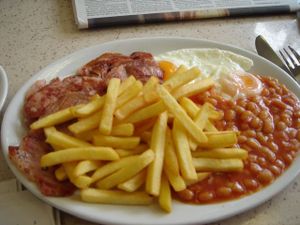
As is the case with quality (the visceral, emotive kind, not the six-sigma variant), I believe authenticity is best understood via immersive experiences.  I'm not so interested in articulating what authenticity is or isn't, but I do appreciate it as an experience, and I think knowing what that experience feels like is the key creating things that are authentic as well as being authentic in one's own trek across this planet.

So what does it look like?  Here's a stab:  eggbaconchipsandbeans , by Russell Davies

19 May 2006 | Permalink | TrackBack (0)

| |

metacool Thought of the Day

"The only real enemy of design is indifference."
- Matt Kahn

17 May 2006 | Permalink | TrackBack (0)

| |

Customized markets of one

Require

freddy&ma is a great example of how the web can be used to bring manufacturers and customers back together again, so that mass marketed offerings for many can become tailored -- even bespoke -- objects for one. 

While I'm not one to jump on the "in the future we'll all print out products at home" bandwagon, I do believe that we'll see the freddy&ma approach of "let me choose and then build it for me" take hold in other industries.  In a way, what Mini has done with the process of tailoring a car is a first, web-enabled step toward this world.  I hope to see the day when I can use the web to order custom bodywork for a Ferrari coupe from an authentic carrozzeria panel beater working with a hammer and tree stump, sipping lambrusco while he pounds out the web-enabled fenders of my dreams...  of course, the car will probably be made of carbon fiber and constructed in a clean room, but the other reality is just so romantic.

12 May 2006 | Permalink | Comments (0) | TrackBack (1)

| |

Unabashed Gearhead Gnarlyness

8v_1

The Fiat 8V

02 May 2006 | Permalink | TrackBack (1)

| |

Unabashed Gearhead Gnarlyness

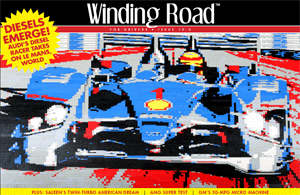
David E. Davis, Jr. is back in the saddle again:  Winding Road

Download the free issue, read his column, watch his video.  It's not about the cars -- when it comes to telling compelling stories about rich experiences, DED, Jr. is the master.

11 April 2006 | Permalink | Comments (0) | TrackBack (0)

| |

TimeZone

Gyro13med

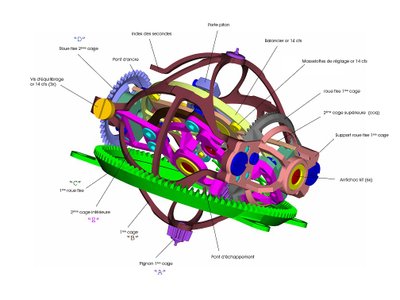
Ready for something truly spectacular?:  TimeZone on the Jaeger-LeCoultre Gyrotourbillon

It's like Bespoke for mechanical engineering and design.  It's also a revealing look at the mindset it takes to really do things to the hilt.  This is another great example of what I call Director's Commentary for design thinkers, and we need more of it.

Many thanks to Scott for showing me this.

10 April 2006 | Permalink | TrackBack (0)

| |

Unabashed Gearhead Gnarlyness

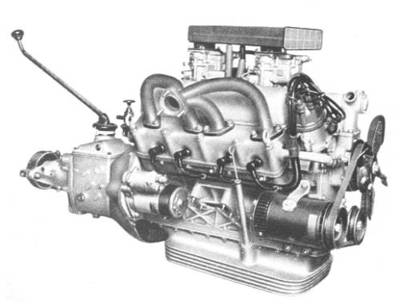
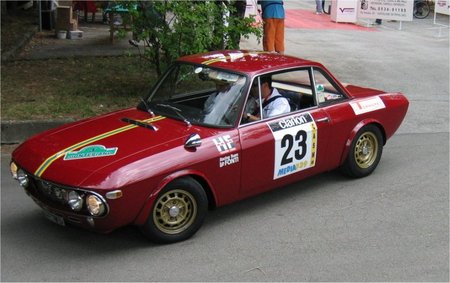
Lanciafulvia15

The Lancia Fulvia

photo courtesy of www.pidocchio.ne

15 March 2006 | Permalink | TrackBack (1)

| |

What I would be doing if I were in Pasadena March 23

Radical Craft

14 March 2006 | Permalink | TrackBack (0)

| |

Constraints

Two weeks ago I posted a quote from architect Joshua Prince-Ramus concerning the role of constraints in the process of design, and their relation to the  end goal of creating innovative, highly appropriate solutions. 

In response, my friend Scott emailed me this cool bit about Charles Eames talking about constraints in the design process (I turned off the comments feature on this blog due to the volume of inappropriate, abusive, and just plain dumb content being left behind.  The upside is that I'm getting some thoughtful emails.  Change is good).  Here's the Eames bit from Scott:

I liked Charles Eames's piece "Design Q&A" so much I found a text
version somewhere and kept it. This part is perhaps the best:

Q. Does the creation of design admit constraint?

A. Design depends largely on constraints.

Q. What constraints?

A. The sum of all constraints. Here is one of the few effective keys to the design problem-the ability of the designer to recognize as many of the constraints as possible-his willingness and enthusiasm for working within these constraints-the constraints of price, of size, of strength, balance, of surface, of time, etc.; each problem has its own peculiar list.

Q. Does design obey laws?

A. Aren't constraints enough?

13 March 2006 | Permalink | TrackBack (0)

| |

Zen, The Don, and the PRO

Package_2

Talk about viral -- if you have an Internet connection and you haven't yet seen the Microsoft I-pod PRO 2005 XP spoof video, then you're probably living on Mars (do they have broadband there?).

Garr Reynolds, whose blog Presentation Zen is one of my favorites, put together this brilliant post linking Donald Norman's idea of visceral design with the I-pod PRO 2005 to give us a great lesson in visual design.

08 March 2006 | Permalink | TrackBack (0)

| |

Quality

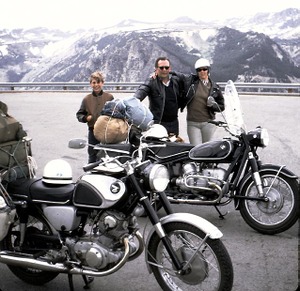
I just ran across a website containing photos of a 1968 trip which became the subject of Robert Pirsig's book Zen and the Art of Motorcycle Maintenance:

Aar

What a memory jogger.  I first read the book as part of a class I took at Stanford with the great teacher and design thinker Jim Adams.  It was a mechanical engineering class called, quite simply, "Quality".  No six sigma here, no sir.  Instead, we looked at old tractors, Japanese flutes, wrenches... and generally spent a lot of time getting a visceral feel for quality.  The two textbooks for the course really shaped my few of the world as a design thinker, and continue to do so.  The first was the formidable work The Nature and Art of Workmanship, by David Pye, the other Pirsig's book.

If you haven't read Zen, I highly recommend it.  It's a deep, chewy book, full of meditations on what makes good stuff, and what it means to live with good stuff and what it takes to keep good stuff being good stuff.  Here's a representative passage:

Each machine has its own, unique personality which probably could be defined as the intuitive sum total of everything you know and feel about it. This personality constantly changes, usually for the worse, but sometimes surprisingly for the better, and it is this personality that is the real object of motorcycle maintenance. The new ones start out as good-looking strangers and, depending on how they are treated, degenerate rapidly into bad-acting grouches or even cripples, or else turn into healthy, good-natured, long-lasting friends.

Quality is one of those intangibles which is really difficult -- maybe even pointless -- to articulate verbally, but which is essential to be able to feel and recognize and act upon.

07 March 2006 | Permalink | TrackBack (0)

| |

metacool Thought of the Day

14873425_61748750a3_b

'We're seeing constraints as opportunities. It's not like we're getting around the constraints. We're saying, "The project's just the constraints." If we can solve the constraints, that's where the form will come, that's where the beauty will come, that's where the logic will come. And more likely than not, you can get it built, you can get it financed, you can get it on budget.'
- Joshua Prince-Ramus

photo via flickr

26 February 2006 | Permalink | TrackBack (0)

| |

The Director's Commentary

32258474_0745e951b0_o

I really enjoy listening to the director's commentary track on a movie DVD.  How else could I confirm my suspicion that the closing credits of The Life Aquatic with Steve Zissou are an homage to the way the credits were presented in Buckaroo Banzai?  What excites me about the director's commentary is the idea of future filmakers learning their craft not just at film school or via personal experimentation, but with the digital equivalent of an oral storytelling tradition.

Wouldn't it be great if, in a similar fashion, we could hear and see great designers talking about their craft?  When I was a practicing engineer designing tangible things, there were tens, even hundreds of details embedded in my designs which I knew about, maybe the rest of my team knew about, but which were essentially invisible to the world at large.  Which is fine; it isn't the job of end users to be thinking about the kinds of details and decisions that interest a professional design thinker.  But for students in training, and for other professionals, what better way to truly appreciate the enormity of the task of design than to take a walkthrough around a real design with another real, living designer?

Before we move on, let me explain my irrational -- perhaps even unhealthy -- interest in the Honda Ridgeline.  Unique among pickups in that it was designed using a human-centric design process, the Ridgeline is an incredible piece of design and engineering.  Sure, the aesthetics are a bit jolie-laide, but they're the result of Honda designers thinking and acting much like designers from the Citroen of old, always pushing limits technical and aesthetic -- to the limit.   For 90% of pickup buyers, this design just works better.  It's really, really cool, and that coolness is the sum total of thousands of clever, human-centric design decisions, most of them invisible.

How do I know?  Thanks to a director's commentary.  Here are some "director's commentary" videos with Gary Flint, the leader of the Ridgeline design team, walking us around the final offering.  Even if you don't find cars exciting, take a listen to the first, upper left video -- you'll be amazed by the attention to detail and deep thinking that went into the design of the cargo area.  Amazing.

photo via Flickr

22 February 2006 | Permalink | Comments (3) | TrackBack (2)

| |

« Previous | Next »

Categories

  • designing
  • innovating
  • leading
  • marketing
  • meta metacool

search


About

Subscribe to this blog's feed

    follow me on Twitter

    Favorite Posts

    • A million reasons why...
    • Mo Cheeks and a fundamental question of leadership
    • Innovation Lessons from Garage Majal
    • From Obama to Pink to Oprah
    • Shinya Kimura and the primacy of doing
    • A tribute to friends and friendship
    • Strategy that makes your hands bleed
    • Quality in a switch
    • Travis Pastrana and the future of the world economy

    on the nightstand

    • : The Great Bridge

      The Great Bridge

    • : Porsche - Origin of the Species

      Porsche - Origin of the Species

    Principles for Innovating

    • 1: Experience the world instead of talking about experiencing the world
    • 2: See and hear with the mind of a child
    • 3: Always ask: "How do we want people to feel after they experience this?"
    • 4: Prototype as if you are right. Listen as if you are wrong.
    • 5: Anything can be prototyped. You can prototype with anything.
    • 6: Live life at the intersection
    • 7: Develop a taste for the many flavors of innovation
    • 8: Most new ideas aren't
    • 9: Killing good ideas is a good idea
    • 10: Baby steps often lead to big leaps
    • 11: Everyone needs time to innovate
    • 12: Instead of managing, try cultivating
    • 13: Do everything right, and you'll still fail
    • 14: Failure sucks, but instructs
    • 15: Celebrate errors of commission. Stamp out errors of omission.
    • 16: Grok the gestalt of teams
    • 17. It's not the years, it's the mileage
    • 18: Learn to orbit the hairball
    • 19: Have a point of view
    • 20: Be remarkable

    CC

    • Creative Commons License