metacool
thoughts on the art & science of bringing cool stuff to life, by Diego Rodriguez
Unabashed Gearhead Gnarlyness
07 October 2004 | Permalink | Comments (0) | TrackBack (0)
|
To the Hilt: Foodie
Seth Godin has a nice post about foodie, a perfect example of doing things to the hilt. Joe DeSalazar’s foodie is to a fancy dinner what Steve Moal’s Zausner Torpedo is to a standard luxury car: same fundamental offering, but implemented with a point of view obsessed with total quality and epicurean delight.
Granted, you’re not going to get to the mass market by doing stuff to the hilt, but there is an audience out there. And they’re hungry.
Why not do it to the hilt?
06 October 2004 | Permalink | Comments (0) | TrackBack (0)
|
Will Sports Cars Die?: Venturi Fetish
What will the sports car of the future be like? There's no reason why the sports car of the future couldn't be electric. After all, Ferdinand Porsche's first automotive design used electric, and not gas, motors. In fact, electric motors have an inherent advantage over internal combustion engines in that they provide maximum torque at zero RPM, which makes for absolutely smashing acceleration. The Venturi Fetish is all-electric and will do 0-60 in 4.3 seconds.
But how do we cradle-to-cradle the battery packs? And how do I get some extra juice when I'm stuck on I-80 in Nevada?
04 October 2004 | Permalink | Comments (0) | TrackBack (0)
|
metacool Thought of the Day
The Henry WorkCycles Conference Bike
01 October 2004 | Permalink | Comments (0) | TrackBack (0)
|
Will Sports Cars Die?... continued
I recently spent three wonderful weeks driving 4,500 miles around the western United States. My faithful steed was a front wheel drive Honda Accord with a 2.2 liter, 4 cylinder engine making 130 horsepower (not a dissimilar configuration to the original car of the future, the Citroen DS), and I averaged 34 mpg for the entire trip. Mind you, my right foot is an exotic alloy of lead, tungsten, and depleted uranium, so those mpg’s were acquired at average cruising speeds well above 80 mph.
Funny thing was, I saw only a few other sedans on the road. Everyone else was driving RV’s, SUV’s, or monster pickup trucks with stonkin’ 10-cylinder diesel motors. These wavering hulks scared the bejeezus out of me on the highway, and the hum of their knobby tires on the highway kept me awake at night in my tent. I saw one mow down some deer without stopping. Three tons of steel to transport a few hundred pounds of human DNA? How stupid and silly: this trip convinced me in a fundamental way that our current automotive trajectory isn’t sustainable. We need to radically change our conception of what a car/truck/RV should be and do.
So, the interesting question isn’t “will there be sports cars?”, but rather “what will cars be, and what will a sports car be in that context?”. Along those lines, here’s a thought from an AutoWeek profile of Leonardo Fioravanti, father of tasty sports machines such as the Ferrari P6 (!!) and Ferrari Daytona (!!!!):
"My expectations for the future are that a large part of the cars cannot be polluting. In my mind, we will have to put beside this kind of vehicle a number of sporty and exciting ones."
Fioravanti designed many of the most exquisite expressions of internal combustion. He’s Mr. Red, Loud and Fast. But now he’s saying we need silent cars, cars that take care of us, cars that let us sleep well at night, literally and figuratively. Think about it – I certainly will.
28 September 2004 | Permalink | Comments (0) | TrackBack (0)
|
metacool Thought of the Day
"The central console is deeply irksome, too, with all of its small buttons and secondary control thingies. You never know if they're not working because they're Italian and you can't understand them or because they're Italian and they're broken. They make the best argument yet for i Drive."
-- Jamie Kitman, on the Maserati Coupe
24 September 2004 | Permalink | Comments (0) | TrackBack (0)
|
More on Ugly Ferraris
"...Ferraris have to be beautiful. If I look at the overall car market, I don' t like too many designs at the moment. The romance of design is being lost. The language is too aggressive, too confrontational. The '50s and '60s on the other hand was an era of artistry and beauty and I want to bring some of that feeling back.
If cars are beautiful, people want them, now. I've never bought a product hoping I'd like the look of it in six months."
-- Frank Stephenson, Design Director for Ferrari & Maserati
[I think this means we'll begin seeing beautiful Ferrari automobiles again soon]
21 September 2004 | Permalink | Comments (0) | TrackBack (0)
|
Will Sports Cars Die?
"In just a very few years in the mid '50s the most beautiful sports cars ever made appeared: the Lancia B24, the MGA, the Lotus Elite. Why? Any design reflects the psychological reality of those responsible. Designers in the '50s could entertain the prospect of driving fast and free. Their response was to doodle and then shepherd into manufacture sports cars. Our psychological reality is rather grimmer. This is why designers today doodle utilitarian vehicles. This is why the sports car will soon be dead." - Stephen Bayley
While I agree with Bayley’s assessment of the influence of culture on design – the culture of a designers is inescapably embedded in the designed object – I differ as to the outcome. Yes, our society is more militant and afraid than it was during the romantic era of automotive design, but I don’t believe the sports car will die out completely as a result. Instead, it will become a low-volume, niche product for a small and dedicated group of gearheads whose primary interest is in the visceral and behavioral elements of the automobile – they want know what it feels like to be connected to steering, the gearshift, and the throttle. All those people who bought sports cars merely for their reflective, I-want-to-get-laid value (i.e. Corvette owners) are now buying Hummers and will buy whatever is au courant.
Critics have been moaning about the impending death of the sports car for quite some time. Professor Ferdinand Porsche expressed this counter argument over 25 years ago:
“Even in the unlikely event of the car disappearing one day from the road, we will still have the sports car. If we take the horse as an example: as a working animal it is practically non-existent, but in the field of leisure and sport there are many more horses today than ever before.”
It’s common today to hear about “horse people”, individuals who structure their lives so that they can slake their passions for the animals. Perhaps the same will happen with sports cars.
17 September 2004 | Permalink | Comments (0) | TrackBack (1)
|
metacool Thought of the Day
"When it's a battle between form and function, function comes first, then you squeeze that form right up next to it so that it looks good, too."
-- Matt Zabas, 13 Choppers (creators of Ducati-powered custom motorcycles)
15 September 2004 | Permalink | Comments (0) | TrackBack (0)
|
Wynton Marsalis on What's Important
“You can reach a situation where things of intelligence and refinement and culture can be considered elite, and things that are crass and ignorant can be considered to be real and of the people; when you begin to have the mass of the populace believing that they should strive for something that’s not worth striving for, then tremendous amounts of energy goes into the worthless and the maintenance of that which is worthless.
That’s a battle we all fight, even within ourselves. You have to actively pursue knowledge. It’s out here for you. But you gotta go out and get it. You gotta want it. And you’ve gotta keep wanting it.”
-- Wynton Marsalis
08 September 2004 | Permalink | Comments (1) | TrackBack (0)
|
iBag
Schlepped down to the local Apple store the other day and picked up a minty new iPod. Needless to say, I’m a very happy new iPod owner. But this post isn’t another ode to Ive’s tiny white brick – I’ve already written that one. Instead, let’s talk about the bag it came in.
The bag. Dangling from my hand, it made me feel so good walking down the street after issuing grievous wounds to my Visa. The relatively dense iPod package felt secure within the plastic bag material, whose silver finish positively glinted in the late summer sun, and the two carrying cords were positively intriguing: do I sling it from my hand or shoulder like a sack, or do I go for the metrosexual thing and wear it as a mini backpack.? I went the sack route.
So it’s a beautiful, wonderful thing of a bag. Again, Norman’s tripartite model of cognition helps analyze what’s going on here at a more intellectual level:
Visceral (feel): silver, smooth, shiny, whole and integral – all pure Apple aesthetics.
Behavioral (function): a bag’s bag, with a wide, closable mouth, strong material, stout metal eyelets to increase load capacity, resilient plastic material, convenient carrying cord which allows multiple bearing modes.
Reflective (meaning): I rarely feel good about carrying a branded shopping bag, but I felt proud to have this thing – “Hey, he just bought something at the Apple store – cool!”
Not surprising that Apple would do a bag so well. From the standpoint of building and enhancing the brand, this bag is worth ten times any incremental cost over a more mundane solution. It’s about a seamless brand experience.
03 September 2004 | Permalink | Comments (0) | TrackBack (0)
|
Unabashed Gearhead Gnarlyness
The Confederate Motorcycles F124 Hellcat
01 September 2004 | Permalink | Comments (0) | TrackBack (0)
|
metacool Thought of the Day: Laide, No Jolie
Design critic Stephen Bayley, on the current crop of just plain hard ugly (not even jolie-laide) cars coming out of Maranello:
"Even Ferrari has its problems... if you want to know what God thinks about the Enzo, just look at the people he gives them to."
24 August 2004 | Permalink | Comments (0) | TrackBack (0)
|
metacool Thought of the Day
“Life is once. Forever.”
– Henri Cartier-Bresson
05 August 2004 | Permalink | Comments (0) | TrackBack (0)
|
Unabashed Gearhead Gnarlyness
04 August 2004 | Permalink | Comments (2) | TrackBack (0)
|
Where (and when) to Iterate
I thought it would be worthwhile to talk a bit more about the Donald Norman thought I provided on Friday. Taken out of context, this quote would seem to imply that an iterative design methodology is a sure prescription for mediocrity. That would be an incorrect, and unfortunate, takeaway.
In order to understand Norman’s quote, we need a quick outline of his model of human cognition. First, we take in our external environment using two channels, one Visceral, which is the realm of things like looks, feel and smell; the other Behavioral, which is what allows us to create movement and take action. Operating on top of those channels is our Reflective processor, which Norman describes as the “… level that conscious and the highest levels of feeling, emotions, and cognition reside.” Most of what we call “branding” happens at the Reflective level.
Take the iPod. Viscerally, you love the shape, the heft, its intense whiteness, the chromed back, the feel of the controls – even the look of the advertising and packaging delights you. Behaviorally, the Click Wheel functions so intuitively that you can get to any of your 20,000 tunes in three clicks or less. Finally, at the Reflective level, you can’t imagine life without all that music on your hip, and the iPod fits your self image in a deep way. Norman’s Visceral-Behavioral-Reflective model of cognition explains nicely why Apple’s products just plain rock and we love the brand: great products fire at all levels of cognition.
What Norman is saying is that to create a product that works from a Behavioral standpoint, you must engage in iterative process of testing and revision. But if you apply that same iterative process to the Visceral and Behavioral components of the design, you’re mucking about with art and mystery, and at that point you’re well on the road to mediocrity.
If you want to create remarkable stuff, test test test to make sure it works, but leave the Visceral and Reflective elements up to your artists from Design and Marketing.
02 August 2004 | Permalink | Comments (0) | TrackBack (1)
|
Why so many cars on this blog?
Yes, it's true: I'm guilty of a heavy reliance upon automobilia to illustrate my thinking in this blog. But, lest you dismiss me as a dumb motorhead (which is a false stereotype, by the way), let me explain why cars happen to provide so much fodder for my musings:
1) Cars are the Third Space in Our Lives: Home. Work. In our society, when you're not in one of those two spaces, you're probably in your car. Automobiles are a huge part of our built environment.
2) Cars are Computers: With a LAN, multiple processors, and complex human interface points, a modern car is the other computer in your life. It may be the only computer you ever love. Or lust after. Granted, I haven't touched on this subject area at all in this blog, but I will.
3) Car Forms are Difficult to Design Well: Ever wonder why not every car comes out looking as gorgeous as a Ferrari Daytona? Or as honest as a Toyota Sienna? It's because shaping sheetmetal to trigger positive visceral reactions is about heuristics, the realm of mystery and art. As such, cars make for compelling discussions about aesthetics.
4) Getting Cars to Function Well is Hard: Why does a BMW M3 steer so well while the steering on a Ford Taurus lacks the sophistication of my 1974 Big Wheel? It's really hard to get the functional aspects of automotive design right, and it's fun to talk about things when they go right.
5) Automotive Marketing = Cubic $$$$: Creating meaning around the most visible and expensive machines we ever own is a big, competitive business. And it's one where product goodness drives brand image drives product goodness. As such, cars represent a reflective design challenge of the highest level of difficulty.
6) They're Familiar and Fun: You want I should gossip about urine analysis machines?
29 July 2004 | Permalink | Comments (0) | TrackBack (0)
|
More Bonafide Book Reviewing: Emotional Design
I just finished reading Donald Norman's new book Emotional Design, and it knocked my socks off.
Read my review at 800CEOREADblog
26 July 2004 | Permalink | Comments (0) | TrackBack (0)
|
metacool Thought of the Day
"The perfect state of creative bliss is having power (you are 50) and knowing nothing (you are 9). This assures an interesting and successful outcome."
-- Tibor Kalman
24 July 2004 | Permalink | Comments (0) | TrackBack (0)
|
More on the Stanford d.school
The d.school now has a website up! Here's the credo:
Stanford University is creating a bold new center for design. The center is intended to advance interdisciplinary research and teaching, place Stanford at the epicenter of the design field, and strengthen the connection between the university and industry.
As I wrote about earlier, it's a remarkable mission, this d.school. Design is a discipline, not just a profession. As such, the design process can be taught to people from all walks of life, and applied to their respective domains to help bring about positive change in the world.
23 July 2004 | Permalink | Comments (0) | TrackBack (0)
|
metacool Thought of the Day
"I truly believe in beautiful cars. The cost is the same. And they're better."
-- Peter Horbury, Executive Director of Design, North America, Ford
(things that look and feel good work better)
20 July 2004 | Permalink | Comments (0) | TrackBack (0)
|
Sound Matters, part 2
A few days ago I touched on the importance of paying attention to all aspects of your product’s use experience, even to the point of considering the sounds it makes.
Sound character can be a vital element of your entire brand. Consider the lengths Porsche went to make the new 911’s exhaust note evoke the same intense, visceral reaction in listeners as did 911’s of yesteryear.
To understand why sound is so important to Porsche’s brand, understand that the original 911 was powered by an air-cooled, boxer motor which sounded like nothing else. Most cars used liquid-cooled motors in a vee or inline configuration, combinations which sound radically different than the raspy banshee wail of an air-cooled 911. The new 911 uses a liquid-cooled motor, and the cooling fluid muffles the sound of all those whirring chain-driven camshafts, pistons and valves, much as wrapping a violin in muslin would deaden its voice. As a result, the motor didn’t meet people’s expectation of what a Porsche should sound like when it debuted six years ago.
Porsche carefully engineered the old 911 sound back into the new car. First, they recorded a sound signature of the 911 using 32 microphones in an anechoic chamber. The design team used the resulting acoustic fingerprint to help shape the sonic character of the new 911 as heard from the driver’s seat. They even placed a computer-controlled Helmholtz resonance chamber in the air intake manifold plenum. The engine control computer automatically adjusts this resonance chamber to tune the sound of the motor in real time, much as trombone player adjusts his airstream to create music. The result of all this is a car which sounds remarkably like an old Carrera RS even though it share very little mechanical DNA with that car.
The visceral element of a brand can (and should) be a source of intense emotions. Porsche gets it.
19 July 2004 | Permalink | Comments (1) | TrackBack (0)
|
metacool Thought of the Day
"It's a bridge with great character. It tells a story."
-- Santiago Calatrava, on his new Sundial Bridge in Redding, California
15 July 2004 | Permalink | Comments (0) | TrackBack (0)
|
Fundamental Goodness, continued
"You see this? This is this. This ain't somethin' else. This is this!"
-- Robert De Niro in The Deer Hunter
14 July 2004 | Permalink | Comments (0) | TrackBack (0)
|
Fundamental Goodness
Just read an interesting article, Artisan Bakers Prosper in Low-Carb World. As people figure out that Bimbo white bread makes them go blimpo, they’re also learning that real bread made from real ingredients by real bakers like Red Hen Baking can be something else altogether. Something really good, in fact. Says Gina Piccolino of the Bread Bakers Guild of America:
[Artisan Bakers have] taken the time to educate customers on what it is they are actually buying when they're buying artisan products… Multigrain, whole-grain, whole-wheat kinds of products are good for you.
There’s a lesson here for all of us trying to create winning products in the 21st century. Gone is the day where brilliant packaging and glossy advertising wrapped around a mediocre product create winning offerings. No, now people want Acme Walnut Levain instead of WonderBread. They want a soulful Mazda 3 instead of a Ford Focus. They want a burrito from Andales, not Taco Bell.
The market winners of today are those products which stand on their intrinsic merit alone, not on what their creators say we should think about them. We the consuming populace are the final arbiters of quality and we want great stuff created by product crazies who couldn’t – and wouldn’t – be doing anything else.
13 July 2004 | Permalink | Comments (1) | TrackBack (0)
|
Jay Leno's Hot Rod: to the hilt!
Probably because they are by definition uniquely personal works, hot rods are hotbeds of “doing it to the hilt”. A few weeks ago we examined the Zausner Torpedo. Jay Leno has something well, a bit bigger to show you.
Jay Leno knows what it means to take something and really do it to the hilt. His latest hot rod is powered by the motor from an old M-47 Patton tank. For those of you out there who aren’t exactly into tanks, you’re not really supposed to put tank motors into a car. It’s just not right. But it is to the hilt. Here’s what Jay has to say about it:
The car weighs 9500 pounds--nearly 5 tons, but only one-twentieth of what the tank weighed. This thing is faaasssttt. Best of all, it's hilarious to drive. The size is what's the funniest. The engine alone is 6 ft. long. The car looks like a roadster on steroids.
Man, it’s great to see someone doing things to the hilt.
08 July 2004 | Permalink | Comments (3) | TrackBack (0)
|
metacool Thought of the Day
"When I was at Audi, it took us 15 years to change the company... By the time the Ford brand is really where I want it, I will be ready to retire. I have 10 to 12 years. You scratch away at it one car at a time."
-- J Mays, Ford
(Your products drive the brand and ultimately the value you create in the marketplace; brands on their own don't create value)
06 July 2004 | Permalink | Comments (0) | TrackBack (0)
|
Maeda's Simplicity Design Workshop
John Maeda of MIT is leading an effort called the Simplicity Design Workshop. As quoted by Jessie Scanlon in the New York Times, Maeda says that "simplicity is an endangered quality in the digital world, and it is time to break free from technology's intimidating complexity."
Along with several other designers, Maeda has formulated a list of the fundamental tenets of using simplicity as a way to design technological solutions:
1) Heed cultural patterns
2) Be transparent
3) Edit
4) Prototype
What I find stunning about these design principles is that they apply equally well to the domain of designing business models and venture structures appropriate to the realities of the 21st century. We need ventures that are willing to live in symbiosis with the cultures that surround them. We need ventures that are willing to be honest and transparent in the financial dealings -- more of the old HP Way and less Enron kniving. We need ventures that edit what the scope of what they do, so that what they do end up taking on is rich with meaning; we've got too much generic, me-too crap in the world today. Finally, we need ventures that are willing to prototype their way to a better and ever-evolving state of being.
02 July 2004 | Permalink | Comments (0) | TrackBack (0)
|
Sound Matters
I recently spent a fine Saturday morning sipping Bluebottle Coffee outside San Francisco’s Ferry Building Marketplace. As I sat there under an open sky watching traffic trickle by on the Embarcadero, it occurred to me that I’m a bit weird when it comes to cars. As in “I can tell the brand of car just from its exhaust note” weird.
Here’s a list of the notable automobiles I heard go by:
- Subaru WRX
- Nissan 350Z
- Mustang GT
- Porsche 911
- BMW M3 (the newest one)
- Mazda Miata
Yes, they’re all sports cars – products designed to deliver an emotional use experience. And isn’t it cool that each of these remarkable products delivers a substantial portion of the brand experience via the ears? Believe you me, this stuff doesn’t happen by accident; Mazda is famous for squadrons of engineers who methodically try out umpteen combinations of induction/exhaust components until they reach that indescribable point of aural perfection.
What’s the sound of your brand?
30 June 2004 | Permalink | Comments (0) | TrackBack (1)
|
metacool Thought of the Day
"The reign of the poetical has started."
- Philippe Starck
29 June 2004 | Permalink | Comments (0) | TrackBack (0)
|
metacool Thought of the Day
“We became a $6.6 billion brand because of design. To compete, we knew 10 years ago with the original founding team that we had to have a design group, because that would be our competitive advantage over value players such as Kmart or Target. We create our lines and the whole experience around design. If we were just another value player, where would we be today?”
– Jenny Ming, President, Old Navy Gap Inc.
23 June 2004 | Permalink | Comments (0) | TrackBack (0)
|
metacool Thought of the Day
"I see us as being in the art business. Art, entertainment and mobile sculpture, which, coincidentally, also happens to provide transportation.”
-- Bob Lutz (aka The Man)
16 June 2004 | Permalink | Comments (0) | TrackBack (0)
|
Unabashed Gearhead Gnarlyness
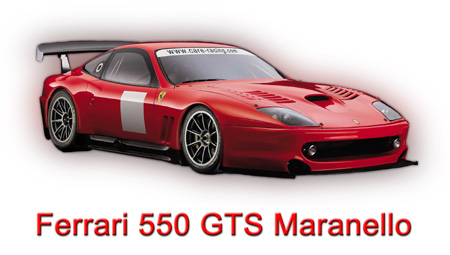
(ah.... the Care Racing Development Prodrive Ferrari 550 GTS... it shares almost no body panels with the street version, but looks oh so much better... AESTHETICS MATTER, AND AESTHETIC DETAILS MATTER EVEN MORE!)
15 June 2004 | Permalink | Comments (0) | TrackBack (0)
|
metacool Thought of the Day
“Design can unlock the technological performance we build into a product and help the consumer see it, touch it. Good design is serious business.”
– A.G. Lafley, Chairman, Procter & Gamble
14 June 2004 | Permalink | Comments (0) | TrackBack (0)
|
metacool Thought of the Day
“At some point, you’ve got to cut through the analytical logic that’s driven the automotive business for the past 30 years and say, 'Hey – what’s going to turn people on?'" -- J Mays
08 June 2004 | Permalink | Comments (0) | TrackBack (0)
|
metacool Thought of the Day
"I don't understand why enduring design is better than disappearing design"
-- Ettore Sottsass
04 June 2004 | Permalink | Comments (0) | TrackBack (0)
|
The Zausner Torpedo: to the hilt!
Do something to the hilt, and you’ll end up with something that makes you want to cry “mama mia”.
How does a built-from-scratch hot rod with a 5.5 liter, 485 horsepower Ferrari V-12 grab you? Draped in aluminum bodywork still dripping from the classic Alfa + Touring gene pool, with an interior of ostrich hides and precision, machined controls. Craftsman Steve Moal and patron Eric Zausner did it, and they call it the Torpedo.
Too cool!
03 June 2004 | Permalink | Comments (0) | TrackBack (0)
|
Art, Aesthetics, and the Meaning of Life
My peer, coconspirator, and friend John Kembel turned me on to this statement from MIT Media Lab prof John Maeda:
Amidst all the attention given to the sciences as to how they can lead to the cure of all diseases and daily problems of mankind, I believe that the biggest breakthrough will be the realization that the arts, which are conventionally considered "useless," will be recognized as the whole reason why we ever try to live longer or live more prosperously. The arts are the science of enjoying life.
A very compelling idea. And if you substitute the word “aesthetics” for “art”, you get very close to the “aesthetics matter – a lot” thesis advanced by Virginia Postrel. It's all good.
25 May 2004 | Permalink | Comments (1) | TrackBack (0)
|
Embedded Culture
Marketers, engineers, and designers are people too, and they are as much a product of their environment as the next guy. Their daily life experiences inform their way of thinking, which in turn shapes their professional output. The culture in which a product is developed becomes embedded in that product.
Fiat is a good case in point. Throughout its history, Fiat has been able to make fantastic, tiny cars, like the 500 Nuovo (whose design was cribbed in part from competitor Iso, which eventually became a BMW, but that’s another story). Its success in doing so stems from multiple factors, from the political landscape (tax laws based on engine displacement), to the state of the market market (expensive gas, relatively low per capita earnings), and culture (how and where do live and what do we value). In terms of automotive design, I find the cultural one to be the most influential: if you live in a city with small streets and limited parking, you’ll naturally develop spidey-senses that guide you toward tight, elegant, low-mass vehicular solutions. If, on the other hand, you dwell in the flat and open expanses of middle America, well, you’re going to have a hankering for lead sleds that can burn across Oklahoma all day long without jostling unbelted, DVD-watching kids lounging in the back three rows of seats.
In other words, it’s no wonder why the automotive marques who built their reputations for superior handling and braking all hailed from within shouting distance of the Alps and the kinds of switchbacky roads that make tires and grown men scream.
So, when putting together project teams, try and staff them with people who “know” from experience. They’ll be able to put that experience into the end product, resulting in a better experience for users.
All of this is a long way of saying that I’m thrilled to death by Fiat’s new Trepiùno concept car. It recalls the old 500 while being new, and it's a fresh, compelling package for a small car. While I’m not positive that it was penned by a native of Turin, whoever did it really gets what a Fiat is. Let’s hope they can get it to market.
09 May 2004 | Permalink | Comments (0) | TrackBack (0)
|
Jolie-Laide, part trois
The concept of jolie-laide (ugly-beautiful) isn't just about looks. An experience, a product, or a service can be simultaneously ugly and beautiful in other arenas, too, such as taste, feel, and sound.
As Seth Godin recently noted, having one part of your offering be ugly when all the rest is beautiful can be a bad thing for the brand experience you're trying to deliver. We've all had product and service experiences like this: the lobby of the hotel is incredibly clean, but your room reeks of marmot. Or the food in the restaurant is divine but the waiter is an asshole posing as a jerk -- you get the picture.
But a little bit of ugly isn't always bad. For instance, take the Finnish drink Salmiakki, which is a mixture of salty salmiakki licorice dissolved in a potent spirit, like vodka. The resultant brew is something to behold: it is highly viscous, even oily; it is black yet translucent, like tired motor oil; it hits the tongue with a syrupy sweetness, then transitions to a mouth-wrenching salty state, and finishes with a whoosh of strong alcohol vapor that takes your breath away. I've never been able to drink more than a thimble-full at one sitting (and wouldn't want to), but when I do, it's quite the rush, kind of like jumping off a roof.
Again, why not design some good tension into your product or service? Think jolie-laide.
08 May 2004 | Permalink | Comments (0) | TrackBack (0)
|
Defining Design, part 2
Stephen Bayley, whose writing stoked my interest in product design in the late 80's, writes:
"Presenting design as a self-dependent entity suggests that design is a transferable substance, inherent in some objects, but not in others. Instead of educating a public into an awareness that everything was designed, so therefore everything might as well be designed to please, the old-fashioned promoters of design suggested that only certain things were designed and that these were exclusive, precious, rare.
Of course, the truth of the matter is that anything which has been made has been designed: Whether it works well is a matter of engineering; whether it makes a profit is a result of strict financial controls. Whether it sells is a matter of comparative advantage and taste. All that really matters is the ability to make things, everything else is polite aesthetics."
Everything was designed. Think about it: every aspect of the built environment you inhabit was shaped by another human being. So, when people talk about Design with a capital D, or if they attach adjectives to the d-word, such as "good", "modern", "low" or "high", secure your wallet, engage your frontal lobes, and ask yourself, "what the hell are they talking about?". Just because something was created by a designer doesn't mean that its well-designed, even it is Good Design. If it works good, looks good, is a fit to nature and the environment, and adds to the sum of happiness on this blue planet, that's good design. And if someone in a village in Thailand made it, that's cool too.
Be wary of professional designers and their output. When it comes to aesthetics, creating an object or service or just a thang, is much like any other human endeavor; there are a few hideously talented individuals who make it look as easy as falling off a log, and then, well, there's the rest of us. Eminent designers like Ettore Sottsass can just see and produce things better than the average schmo, which means that when a less talented individual tries really really hard to make something notable, you can smell the over exertion a mile away. This is why I'm so wary of the kind of "high" design that's sold at museum shops and in expensive catalogs: it is generally so self-conscious, so determined to be beautiful and interesting, that it fails on all accounts.
Think of it this way: how many really interesting, timeless designs come out of the car industry in any given decade? I'm talking Porsche 911-quality designs here. One? Two? Then think about how cool the average race car or fighter airplane looks. Did a "designer" draw them? No! An engineer or some guy who just "knows" came up with their shapes. As Bayley says, it's really about being able to make things. The other stuff is just "polite aesthetics", fluff which is the realm of fashion.
Design is ultimately about the care and feeding of happiness. Designing something is not a self-dependent action, it's an expression of interdependence.
Oh my goodness, I'm beginning to sound like the protagonist of an Italian architecture manifesto, so I'd best stop while I'm ahead. My apologies.
06 May 2004 | Permalink | Comments (0) | TrackBack (0)
|
Defining Design, part 1
"In design there is styling, art, and other terms intermingled. Design means to me that every designing engineer has the opportunity to become at some stage an artist... that every craftsman who can do more than what he is trained to do is an artist." -- Ferdinand "Butzi" Porsche III
What is design?
Defining just exactly what design "is" can be a frustrating pursuit. To begin with, is the word "design" a noun or a verb? While I believe it is best used as a verb, I do like Butzi's definition of it as a noun -- and as the Porsche 911 is the product of his very capable hands, well, we should probably give his thoughts due consideration. And it's true: when you're a design engineer and you get into a state of flow, odds are you're going to crank out some tasty stuff. How'd you get there? Let's call it art.
03 May 2004 | Permalink | Comments (0) | TrackBack (0)
|
David H. Liu Memorial Lecture Series in Design

I'm posting this to all of you with a tendency to forget about cool stuff happening in your backyard (i.e., me):
The 2004 David H. Liu Memorial Lecture Series in Design at Stanford University is in swing through May 27. David was a great guy, and attending this series is a nice way to celebrate his life.
28 April 2004 | Permalink | Comments (0) | TrackBack (0)
|
Inside the Ferrari Factory
Ferrari's factory is off limits to mere mortals, so here's a nice peek inside from Automobile Magazine.
25 April 2004 | Permalink | Comments (0) | TrackBack (0)
|
How will it look in a month?
Or in 40 years?
Over the past year I've become increasingly interested in "cradle to cradle" design solutions that consider the entire lifecycle of a product, from manufacturing to marketing to use to end of use. A critical aspect of cradle to cradle design is considering how a product will age: will it get older gracefully, building a patina which enhances its value, or will it turn into a liability -- the kind of thing that ends up in a dump or (heaven forbid) your front yard? I'm convinced that most designers - or at least the marketers they serve - don't spend many brain cycles thinking about what their product will be like a month after purchase, let alone 40 years later.
A good case in point is my Sony Playstation 2 (yes, I justified it to my wife on the basis of it being a DVD player, not a videogame console). The day exterior drawings were due, some industrial designer must have had his CAD station lock up and drew the thing with a ruler instead:
It's a great product, but all those slots and ridges in the black plastic make it a dust magnet, a real pain to keep clean. As a result, it doesn't look Darth-Vader-cool. It just looks like dusty plastic.
24 April 2004 | Permalink | Comments (1) | TrackBack (0)
|
Jolie-Laide, part deux
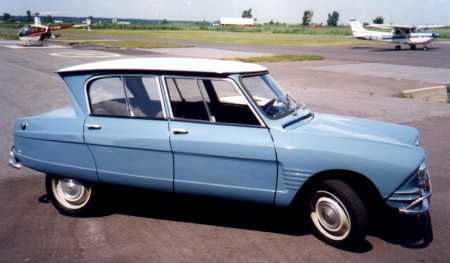
Another automotive design which I've long admired, the Citroen Ami 6. Quite polarizing, eh?
On the spectrum of "beautiful/ugly", this one is biased toward the ugly stick zone, but it does have a certain Gallic charm to it. I like the fact that it's not another anonymous, bar-of-soap-Camry-Corolla-Hyundai-rectal-suppository type of design.
03 April 2004 | Permalink | Comments (0) | TrackBack (0)
|
Jolie-Laide
"beautiful-ugly"
So much of design is concerned with the beautiful object. But beauty does not always equate to interesting. As time passes, I am increasingly intrigued by the notion of purposely baking-in tension when designing objects, hence my fascination with the French concept of Jolie-Laide.

Why be beautiful when you could be interesting?
02 April 2004 | Permalink | Comments (2) | TrackBack (0)
|
Favorite Posts
- A million reasons why...
- Mo Cheeks and a fundamental question of leadership
- Innovation Lessons from Garage Majal
- From Obama to Pink to Oprah
- Shinya Kimura and the primacy of doing
- A tribute to friends and friendship
- Strategy that makes your hands bleed
- Quality in a switch
- Travis Pastrana and the future of the world economy
on the nightstand
Principles for Innovating
- 1: Experience the world instead of talking about experiencing the world
- 2: See and hear with the mind of a child
- 3: Always ask: "How do we want people to feel after they experience this?"
- 4: Prototype as if you are right. Listen as if you are wrong.
- 5: Anything can be prototyped. You can prototype with anything.
- 6: Live life at the intersection
- 7: Develop a taste for the many flavors of innovation
- 8: Most new ideas aren't
- 9: Killing good ideas is a good idea
- 10: Baby steps often lead to big leaps
- 11: Everyone needs time to innovate
- 12: Instead of managing, try cultivating
- 13: Do everything right, and you'll still fail
- 14: Failure sucks, but instructs
- 15: Celebrate errors of commission. Stamp out errors of omission.
- 16: Grok the gestalt of teams
- 17. It's not the years, it's the mileage
- 18: Learn to orbit the hairball
- 19: Have a point of view
- 20: Be remarkable

